But now the debate has come to play out at the door of UK ports which puts it on my radar, whether I like it or not.
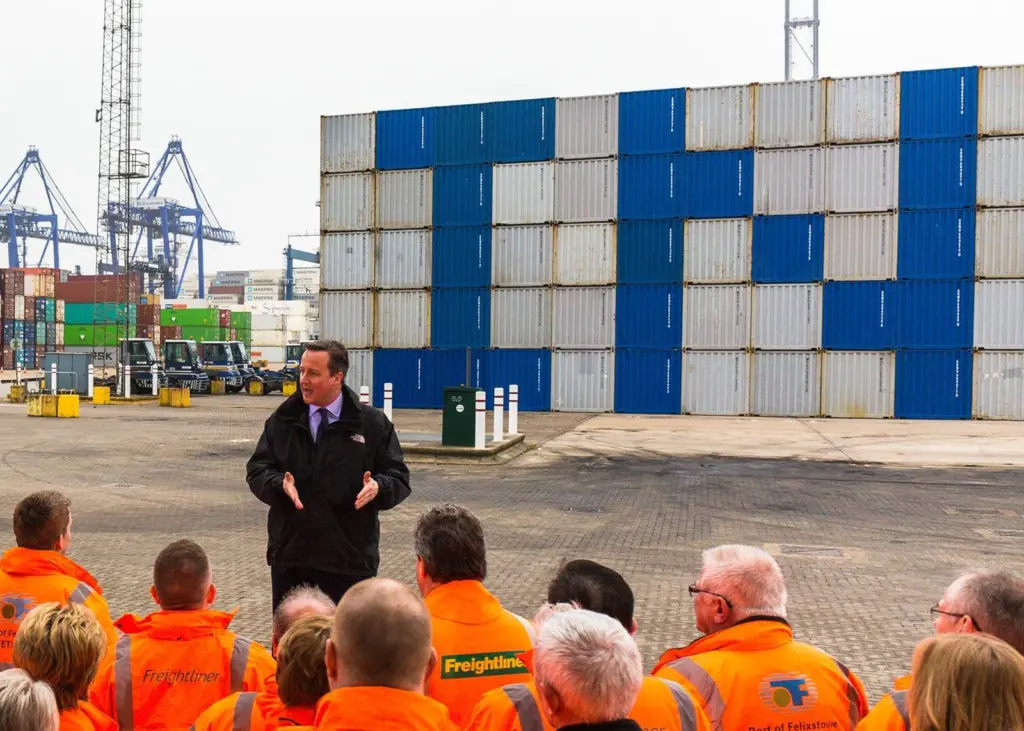
UK Prime Minister David Cameron chose the Port of Felixstowe for some grand tub thumping of his stance that Britain should stay in the EU. “I can’t think of anywhere better to talk about this issue of whether we should stay in a reformed European Union or whether we should leave,” he opined.
Local councillors jumped on the bandwagon in support of the UK premier’s stance, stating that a decision to leave will have “grave implications for the future prosperity of the Port of Felixstowe”.
The doomsayers have it that any UK ports that handle Europe inbound or outbound trade will suffer if Britain leaves the Union. They would have the general public believe that all European related trade will stop overnight if the British vote to leave in the nationwide referendum on its EU membership on June 23.
Will the containerships on the main east-west artery stop calling at Felixstowe on June 24 if we vote out? Of course not. So will there still be a need for feeders to ferry boxes over to the European mainland? Of course there will.
I should say here that I’m one of the many undecided, so this is not an intentional pitch for the out camp. I’m also one of the many that is fed up with the lack of facts and the surplus of spin. I don’t doubt that an out vote has the potential to materially change trading patterns, but it will be a gradual change and not necessarily a loss. The actual impact of an out vote on trade can only be borne out over time – years or more likely decades, not days or weeks.
With the vote over two months away, the British public will hear a lot more speculation on the ‘what ifs’ from both the in and the out cohorts. Whatever happens, the demand for goods whether inbound or outbound will not evaporate or swell overnight. If, with an out vote, Europe steps back as a trading partner, someone else will step in; demand is still there and so too is supply. The market will find its equilibrium, its Economics 101, and one of the few facts that we can rely on in this puffed up debate.