
Ammonia fuel drive
Ammonia will be explored as a clean shipping fuel with a new collaboration.
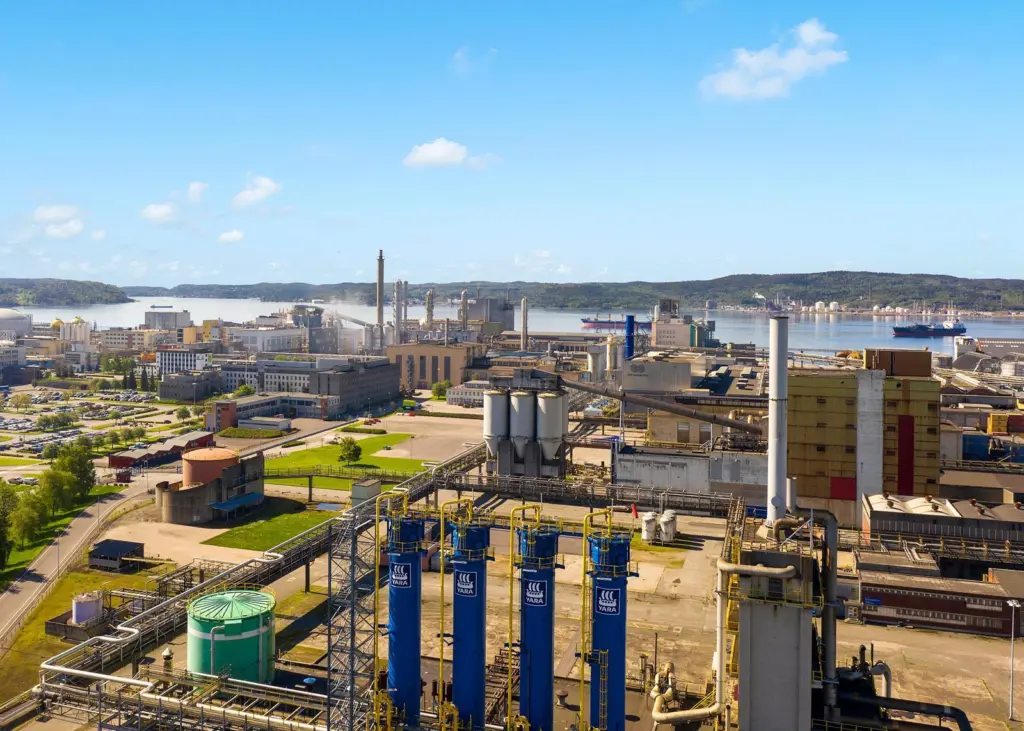
Commodity trading firm Trafigura Pte Ltd and Yara International ASA have signed a Memorandum of Understanding (MoU) to collaborate on the development and promotion of the use of ammonia as a clean fuel in shipping and to explore possible opportunities to work together on green and blue ammonia fuel infrastructure and market opportunities.
“This agreement is another good example of cross-industry collaboration to develop and promote zero-emission fuel in the form of clean ammonia for the shipping industry,” said Magnus Krogh Ankarstrand, President of Yara Clean Ammonia. “Building clean ammonia value chains is critical to facilitate the transition to zero emission fuels by enabling the hydrogen economy – not least within trade and distribution where both Yara and Trafigura have leading capabilities. Demand and supply of clean ammonia need to be developed in tandem.”
Under the MoU, Trafigura and Yara intend to establish themselves in the ammonia value chain by collaborating in the supply of clean ammonia by Yara to Trafigura Group companies, exploring joint R&D initiatives for clean ammonia application as a marine fuel, and developing new clean ammonia assets including marine fuel infrastructure and market opportunities.
Oslo-based Yara produces roughly 8.5m tonnes of ammonia annually. Yara employs a fleet of 11 ammonia carriers, including 5 fully owned ships, and owns 18 marine ammonia terminals with 580 kt of storage capacity – enabling it to produce and deliver ammonia across the globe. Yara recently established a new clean ammonia unit to capture growth opportunities in emission-free fuel for shipping and power, carbon-free fertiliser and ammonia for industrial applications.
Trafigura has co-sponsored the R&D of MAN Energy Solutions’ ammonia-fuelled engine for maritime vessels, has performed in-depth studies of transport fuels with reduced greenhouse gas emissions, and has published a white paper on the need for a global carbon levy for shipping fuels to be introduced by the International Maritime Organization (IMO).
Related Articles
 ALTERNATIVE FUELS GREENPORT
 ALTERNATIVE FUELS GREENPORT
 ALTERNATIVE FUELS GREENPORT