


Better mooring fewer emissions
Cutting edge technology is helping one city centre monitor and reduce harmful emissions.
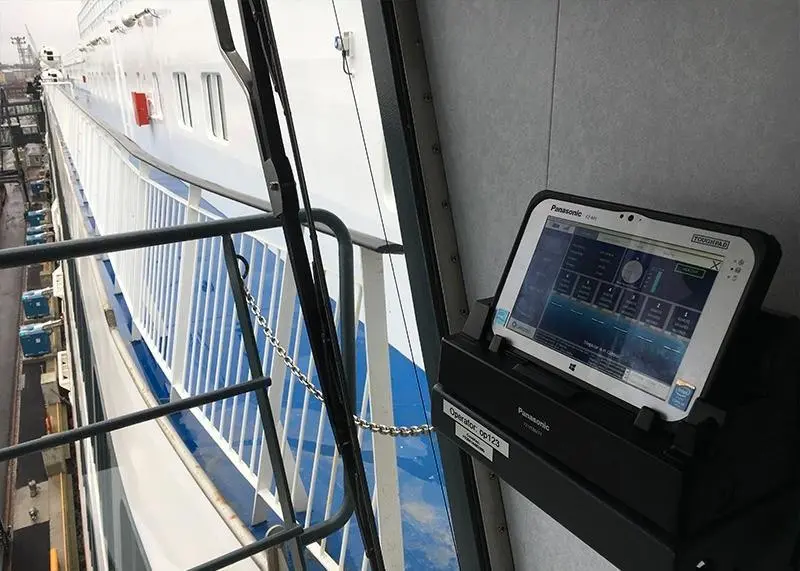
DNV GL Maritime Advisory said that the MoorMaster utomated mooring system deployed by the Port of Helsinki is reducing carbon dioxide and NOx emissions equivalent to taking 5,000 diesel cars off the roads.
“Auto-mooring systems at the busiest berths play a vital part in the successful reduction of vessels’ carbon emissions,” said Antti Pulkkinen, Harbour Master, Passenger Services, Port of Helsinki.
Efficiency tool
DNV GL Maritime Advisory has developed the tool on behalf of Cavotec, which makes the MoorMaster system, to help ports everywhere estimate the environmental benefits of automated mooring.
It’s estimated that Helsinki’s MoorMaster system reduces vessel fuel consumption by up to 2,800 tonnes every year, resulting in almost 8,000 tonnes less carbon dioxide.
It also reduces NOx emissions by up to 70 tonnes a year, of which 16 tonnes is at the berth.
MoorMaster replaces conventional mooring lines with remotely operated vacuum pads that moor vessels in seconds at the touch of a button. Rapid mooring and release let the vessel shut down its engines faster in port, reducing harmful emissions.
Every minute saved in port also increases the amount of time that ships can spend at sea, making it possible for ships to cruise at lower speeds, which saves fuel and further reduces emissions.
MoorMaster has been in use at a Ro/Pax berth in the Port of Helsinki since 2016 and another system will be installed in 2021.
From 2021, the connecting berths in Tallinn will also be equipped with MoorMaster, enabling vessels to sail between the ports without needing to use mooring lines at either end of the route.
Together, the four systems multiply the environmental benefits saving up to 8,100 tonnes of fuel each year.
Related Articles
 PRODUCTS & SERVICES GREENPORT
 ENERGY & TECHNOLOGY GREENPORT
 ENERGY & TECHNOLOGY GREENPORT