



Hard facts win the war against more and more myths
Let’s talk myths.
Well one of the biggest myths is now well and truly over – that Vladamir Putin would like to resolve the Ukraine crisis via a negotiated settlement. It is clear that this was never really on the agenda and sadly as PS goes to press we see the USA and Europe’s contention that a false justification for war would be forthcoming proved all too correct. What was it? It doesn’t really matter – it was just ‘speak’. It is self-evident that the attack on Ukraine was pre-meditated.
Consequences? At the fundamental levels of loss of life and human suffering in some ways too awful to contemplate – but clearly large-scale.
Economically? It is unlikely there will be any winners.
The potential curtailment of LNG and other energy fuel supplies to Europe pose problems in their own right but could, at worst, trigger a global energy crisis. Similarly, with the Ukraine unable to function in its role as a major grain exporter this has implications for food security around the world. Alternative sources of supply will be more expensive and it is the poorer countries such as those in Africa that will suffer.
Whatever the outcome of the war, it is clear that these and other commodity supply lines associated with the Ukraine will undergo fundamental structural changes, especially where linkage to Russia is concerned.
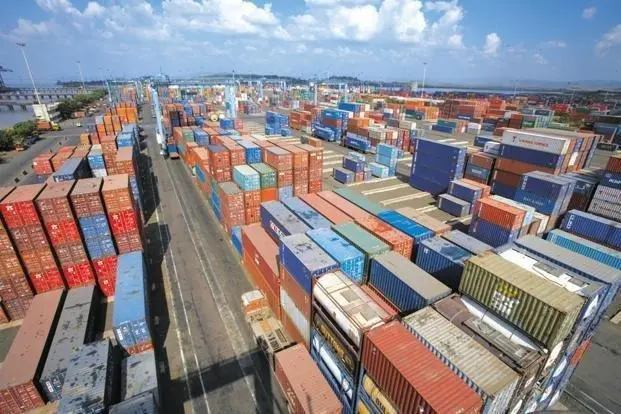
Myth number two: that container terminals are the cause of supply chain congestion. There has been quite a bit of finger pointing at container terminals recently as the cause of supply chain woes – not to mention by a certain leading container line – but as the article Box Terminals Take the Heat discusses they are by no means entirely to blame. To a large extent they manifest the symptoms of problems that lie elsewhere. Plus, as the comparisons drawn between Europe and the USA highlight, the ability of a given region to resolve port-side container congestion is to a large extent dictated by the regulatory climate it operates in and other influential factors such as timely capacity increases and workforce culture.
Myth number three: the article, Better The Devil You Know is a follow-on Q&A-based article to WAPPP’s November 2021 article on the often challenging subject of concession renewals. It includes comment on a mini-survey in this respect – what is the preferred option, extend with the incumbent operator or re-tender on a broad basis? Again authored by WAPPP, the Q&A reflects WAPPP’s stated mantra, namely to “incubate new approaches for public-private-partnerships, to promote best practices, and to debunk myths” (that lead to negative consequences).
Overall, you can count on PS not to generate or perpetuate myths – there are plenty of solid, hard facts accompanied by reasoned discussion to digest in the following pages. As always, if you wish to join any of the above or other ‘discussions’ in this issue we welcome your feedback.
Well one of the biggest myths is now well and truly over – that Vladamir Putin would like to resolve the Ukraine crisis via a negotiated settlement. It is clear that this was never really on the agenda and sadly as PS goes to press we see the USA and Europe’s contention that a false justification for war would be forthcoming proved all too correct. What was it? It doesn’t really matter – it was just ‘speak’. It is self-evident that the attack on Ukraine was pre-meditated.Consequences? At the fundamental levels of loss of life and human suffering in some ways too awful to contemplate – but clearly large-scale. Economically? It is unlikely there will be any winners. Our article, Ukraine – The Fall Out, featured, provides insight into this at a macro and micro level with special reference to the maritime sector.The potential curtailment of LNG and other energy fuel supplies to Europe pose problems in their own right but could, at worst, trigger a global energy crisis. Similarly, with the Ukraine unable to function in its role as a major grain exporter this has implications for food security around the world. Alternative sources of supply will be more expensive and it is the poorer countries such as those in Africa that will suffer.Whatever the outcome of the war, it is clear that these and other commodity supply lines associated with the Ukraine will undergo fundamental structural changes, especially where linkage to Russia is concerned.Myth number two: that container terminals are the cause of supply chain congestion. There has been quite a bit of finger pointing at container terminals recently as the cause of supply chain woes – not to mention by a certain leading container line – but as the article Box Terminals Take the Heat discusses they are by no means entirely to blame. To a large extent they manifest the symptoms of problems that lie elsewhere. Plus, as the comparisons drawn between Europe and the USA highlight, the ability of a given region to resolve port-side container congestion is to a large extent dictated by the regulatory climate it operates in and other influential factors such as timely capacity increases and workforce culture. Myth number three: the article, Better The Devil You Know is a follow-on Q&A-based article to WAPPP’s November 2021 article on the often challenging subject of concession renewals. It includes comment on a mini-survey in this respect – what is the preferred option, extend with the incumbent operator or re-tender on a broad basis? Again authored by WAPPP, the Q&A reflects WAPPP’s stated mantra, namely to “incubate new approaches for public-private-partnerships, to promote best practices, and to debunk myths” (that lead to negative consequences).Overall, you can count on PS not to generate or perpetuate myths – there are plenty of solid, hard facts accompanied by reasoned discussion to digest in the following pages. As always, if you wish to join any of the above or other ‘discussions’ in this issue we welcome your feedback.
Related Articles
 VIEWPOINT