
Hydrogen hinterland plans
Two European ports are strengthening their ties with a hydrogen hinterland network.
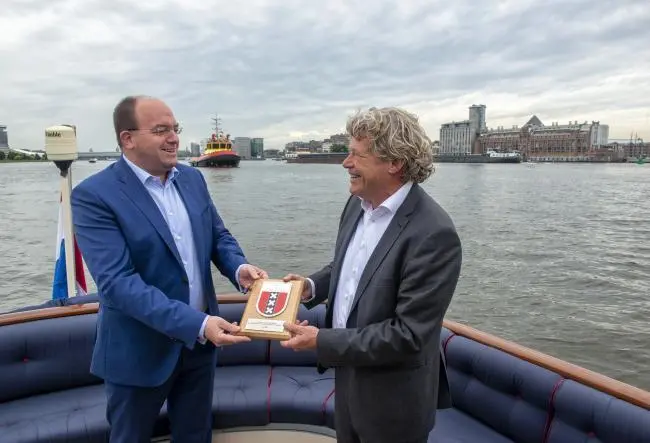
The ports of Amsterdam and Duisburg are directly connected via the river Rhine and multiple land routes and are logistical hubs for the European hinterland. In the past, these ports have partnered on facilitating trade flows between Germany and the Netherlands, a partnership reflected in their joint company, Hafen Duisburg/Amsterdam Beteiligungsgesellschaft.
“Both ports recognise the great value of joining forces in developing new corridors for sustainable energy carriers, with the aim of decarbonisation of international supply chains,” said Koen Overtoom, chief executive of Port of Amsterdam.
Green hydrogen
The ports will explore the potential of several hydrogen carrier technologies, with the aim of establishing an international supply chain for hydrogen on a commercial scale.
Port of Amsterdam is part of the H2A consortium, which aims to import one million tonnes of green hydrogen to the port of Amsterdam. Bringing duisport on board will help establish an end-to-end value chain for green hydrogen carriers between both ports.
“By expanding our trusting partnership with the Port of Amsterdam, we are sending an important signal across national borders: only together will we be able to overcome global challenges such as the energy transition,” said Markus Bangen, chief executive of duisport.
Joint hinterland network
The ports also plan to further develop their hinterland networks, promoting sustainable multimodal transport connections via rail transport, inland shipping and short-sea connections between the ports and other European destinations.
Related Articles
 ALTERNATIVE FUELS GREENPORT
 ALTERNATIVE FUELS GREENPORT
 ALTERNATIVE FUELS GREENPORT