


Key rail-shortsea upgrade
Procedures have been overhauled in a critical link between Europe’s rail freight and shortsea networks in Rotterdam, resulting in more than 98% of containers meeting their slots.
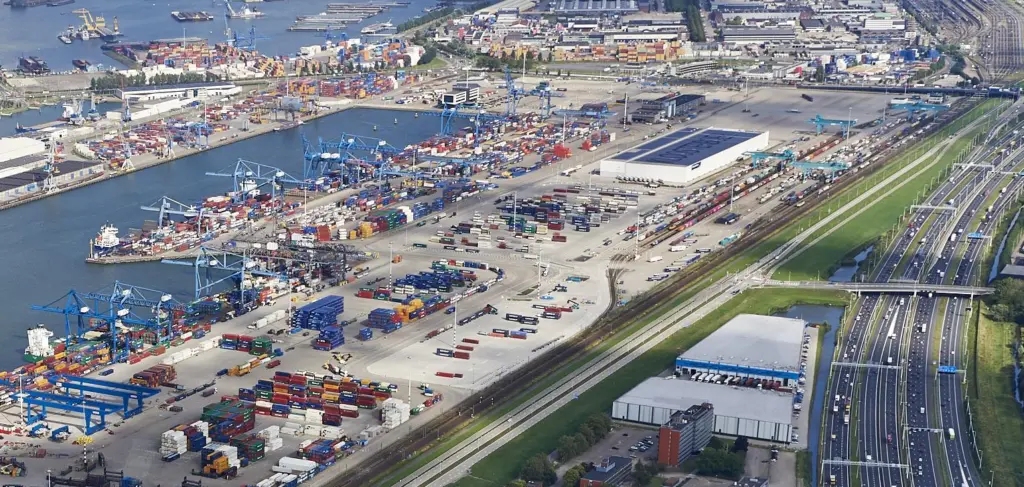
Around 70,000 cargo units are passed from Rail Service Center Rotterdam (RSC) to Rotterdam Shortsea Terminals (RST) each year. In a project initiated by two terminal companies and supported by Samskip, work began in May 2022 to eliminate inefficiencies in the connecting ‘shunt’ between rail and onward sea journey.
“Reliability and predictability are cornerstone advantages for multimodal freight compared to road transport,” said Peter Willemse, head of ports and terminals, Samskip. “Road freight not only causes more pollution – it faces increasing congestion, driver shortages and more bureaucracy than other options.
“It’s therefore critical we resolve challenges in the multimodal chain. RST needs high performance rail links and RSC needs shortsea traffic,” he added.
The partners have formed a ten-strong team to examine 14 operational areas. Key improvements have already been made, particularly by removing misinterpreted through-transport instructions and by aligning procedures.
Other gains have been made by better defining closing and peak times at each terminal and by a greater awareness of when shunting assets are under-used. More than 98% of containers are now meeting their allocated ship or train slots.
“Of course, 100% is the ideal, but the focus is practical – procedures and communication need to improve so that the overall performance gains are permanent,” said Arno Storm, chief executive of RST. “We have now implemented significant improvements in data flows and processes to ensure that shunt operations support the highest performance standards.”
Pierre van Dalen, operations manager at RSC believes that future work will squeeze out any remaining inefficiencies. “We have established a permanent framework so that the shunt operation between our two terminals contributes to – rather than frustrates – the efficiency of transport providers, rail networks and all of our shortsea clients,” he said.
Related Articles
 PROJECTS & INITIATIVES GREENPORT
 PROJECTS & INITIATIVES GREENPORT
 ALTERNATIVE FUELS GREENPORT