

Green hydrogen on Teesside explored
Energy infrastructure company, Kellas Midstream, and RWE are teaming up to explore the potential for large-scale green hydrogen production on Teesside on England’s north-east coast.
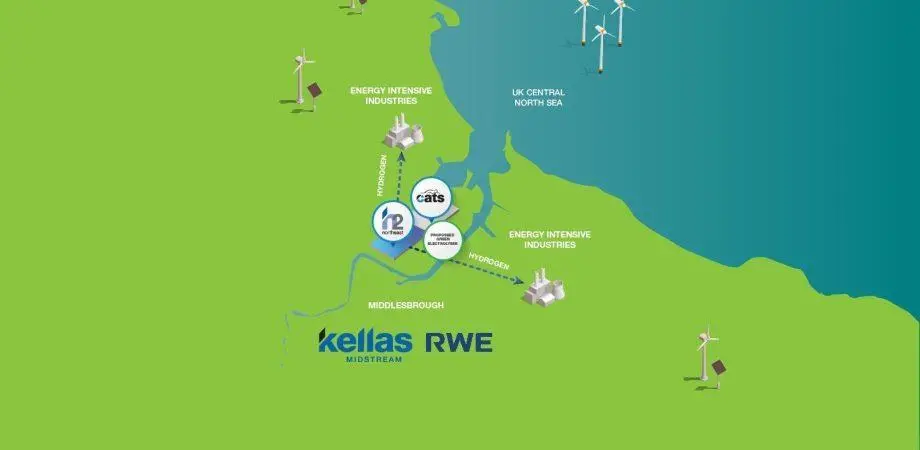
The memorandum of understanding will see the creation of a production site close to emerging hydrogen infrastructure and will help the region achieve its ambition to become one of the world’s first decarbonised industrial clusters through the production, use and export of green hydrogen.
Tees Valley Mayor, Ben Houchen, said the deal was a big step forward for hydrogen production on Teesside. “Our region already produces around half of the UK’s hydrogen and we’re on track to become one of the world’s first decarbonised industrial clusters by 2040,” he said.
“It’s great to see that our growing hydrogen infrastructure is attracting yet more massive international companies that will drive forward the UK’s clean energy ambitions and – vitally – create good-quality, well-paid jobs for local people in the cleaner, safer and healthier industries of the future.”
Kellas operates a portfolio of energy infrastructure in the North Sea, including its Central Area Transmission System terminal on Teesside that transports and processes around a quarter of all UK gas production. CATS is also the location for Kellas’s H2NorthEast blue hydrogen project that will contribute as much as 10% of the UK’s target hydrogen production by 2030.
RWE is exploring hydrogen opportunities across the UK including the potential development of green hydrogen plants at Pembroke, Didcot and in Markinch near Fife. The company is targeting 2GW of green hydrogen development in its core markets by 2030.
Related Articles
 ALTERNATIVE FUELS GREENPORT
 ALTERNATIVE FUELS GREENPORT
 ALTERNATIVE FUELS GREENPORT