



Buena vista
Argentinas leading port is sitting pretty on strong volumes, but will capacity come on stream quick enough to cater for increased demand? Rob Ward investigates
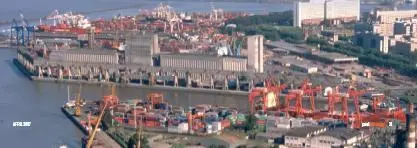
With the Argentine economy growing at an average of 7.5% over the past four years, the terrible – but thankfully short-lived – recession that hit the South American country back in 2001 now seems light years away.
And, as a consequence of this, the port of Buenos Aires is starting to stack up some impressive throughput figures.
And like its Brazilian port counterparts these increases are starting to ratchet up problems of congestion for the ports of the Capital Federal – which include Puerto Nuevo in the centre of the city and Exolgan, at Dock Sud, in the south of the city.
In 2006, the port of Buenos Aires handled 1.5m teu, which was a healthy 9% up on the volume handled in 2005 and these two years have returned box volumes to a level higher than before the “crash”,triggered by the Argentine government removing the 1:1 peg between the Argentine Peso and the US dollar, which had stemmed hyper-inflation but had also made it very difficult for Argentina to export anything, so expensive were its goods and commodities.
Robert Triay,the commercial manager for Terminales Rio de la Plata (TRP),which is the largest box terminal in Buenos Aires (and therefore in Argentina, as the capital handles about 96% of all container movement in the country) says that the “economic crisis” had led to a sharp increase in poverty and deep anxiety all round.
But now confidence was growing, which is good news for President Kirchner as he tries to get re-elected for another four-year term in October. With another 10% increase in container movement forecast for Buenos Aires this year, there is a feeling among many carriers, and notably MSC, (See Port Strategy,December 2006 issue) that the port is running out of capacity and the terminals don’t mind too much because, some in the port community allege, it allows them to keep handling charges artificially high.
MSC and other lines were hoping that the plan to develop Terminal 6 – formerly run by Intefema which went bust – would lead to another entrant ICTSSI, but the whole process has now been suspended,some say indefinitely. However, Mr Triay tells Port Strategy: “We are expecting another good increase this year so we at TRP are doing everything to create more capacity.”
And “everything” includes bringing in an extra postpanamax gantry crane to be ready for use by April,2008 from ZPMC and that will give the terminal 800,000 teu annual capacity, across its six berths and with a possible in-fill of part of the harbour that could then rise to an eventual 1m teu per year capacity. With 640,000 teu handled at TRP in 2006,Mr Triay reckons that the terminal is keeping a couple of years ahead of its capacity with its current throughput projections of between 8%-10% growth each year for the next two or three years.
He says,too,that with port authority AGP starting up its much delayed dredging of the entrance channel – from 32 ft down to 34 ft – more efficiencies will also be derived by vessels being able to load more containers on to fewer vessels.TRP’s biggest client is MSC,followed by Argentina’s only surviving deepsea carrier Maruba and then Costa Container Line.
Although Mr Triay admits it is becoming very tight at Puerto Nuevo’s other three terminals,he does not believe that TRP has any problems in increasing its capacity.
The others are hemmed in, though, by the city of Buenos Aires, and the mayor of the City has hatched a plan to turn Puerto Nuevo and the surrounding areas into real estate so it can become Puerto Madero Two, a copy of the original Puerto Madero, the Old Port of Buenos Aires which is now a delightful mix of offices and chic restaurants and apartments. But most maritime watchers in Buenos Aires don’t think Mayor Telerman will do anything before the current tender contracts (mostly for 20 or 25 years) run out.
Alejandro Tanoue, the managing director for Mercosur Shuttle Group, a container barge operator in the River Plate, talks a lot of sobering good sense about maritime issues in Argentina. He says: “Although it is unrealistic to expect the operators of Puerto Nuevo to move out in the short or medium term there is decentralisation of movement throughout the world and BA cannot forever be the only container port in Argentina, which it virtually is today.”
And Guilherme Brasesco, the logistics manager for the Argentine flag deepsea carrier Maruba, says that operators in Puerto Nuevo are indeed facing many “capacity problems” and that, apart from at TRP, the other operators would have to “invest a lot of money” on some “mega projects” if they were going to expand any more.
One logical way to expand beyond Buenos Aires would be for one or two carriers, using smaller vessels, to start using Terminal Zarate again. The VSA 4 joint service – including CSAV,Libra Navegacao and CP Ships – used to call at the upriver port, some 90 km from Buenos Aires – but when it decided to bring in bigger vessels, of more than 243 metres in length, these contravened Argentine Coastguard rules and the service had then to switch to Puerto Nuevo. If these rules could be relaxed then more capacity would immediately come on tap as Terminal Zarate has a great deal of space in which to expand.
Related Articles
 CONTAINER & CARGO HANDLING
 CONTAINER & CARGO HANDLING