


Benefits of boom
Ports are welcoming the unexpected benefits of the current tug building boom, as Jack Gaston finds out
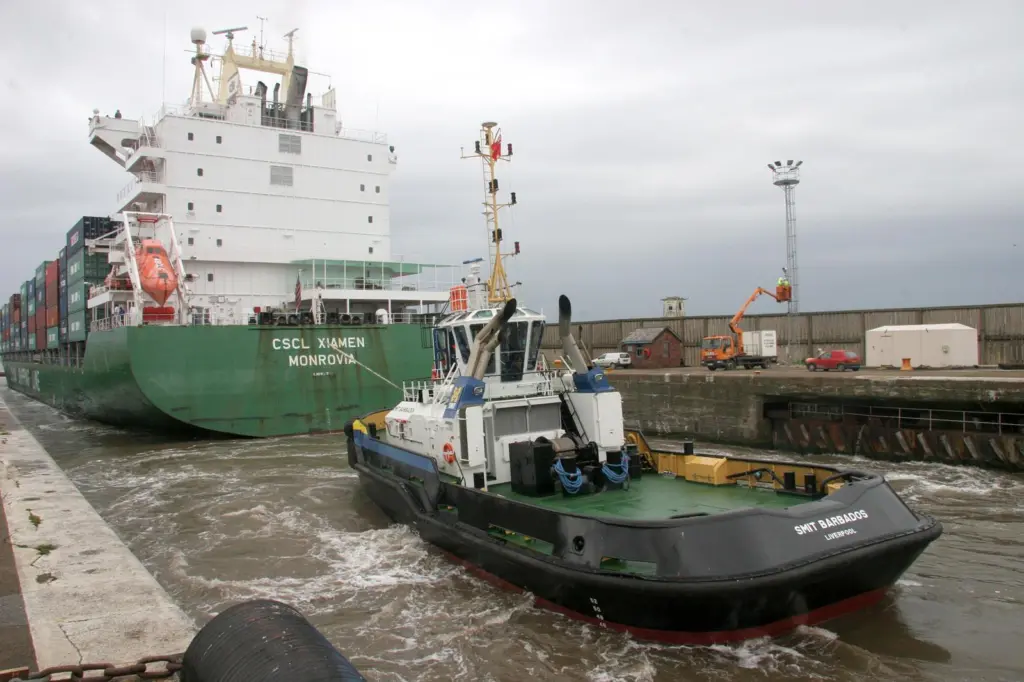
Much has been written recently in the maritime press on the huge demand for new tonnage throughout the towage industry. That unprecedented global demand for new tugs has persisted for at least two years and continues unabated and ports are now beginning to see the results.
Even the most reliable shipping intelligence sources are finding it difficult to assess accurately the current rate of construction and numbers of orders placed worldwide.
Unlike the parent shipping industry many of the vessels built for the towage industry fall below the tonnage threshold of many registers. The best estimates available, however, show that the number of tugs and pushing vessels currently on order and/or under construction exceeds 600 units and the total for offshore supply ships, which may or may not have towing/anchor-handling capability, is around the 700 figure.
All of the established specialist shipyards with tug building as a major part of their workload are working hard to meet the demand. This has resulted in an increase in tug construction throughout the Far East and in many locations elsewhere with no real history of that type of work. Most industry pundits are of the opinion that demand will remain at the current level until at least 2011. That prediction is substantiated by the current state of orderbooks and the continuing demand for engines and propulsion systems to equip future projects.
Tug owners in almost every sector are placing orders for new tonnage as part of routine fleet replacement programmes and to support new business. From recent high profile takeovers and amalgamations have emerged a number of global players such as Svitzer, Smit and Crowley, with the massive buying power needed to modernise and develop tug fleets comprising hundreds of vessels. This situation has promoted a rapid change in attitude, forcing even the most parochial tug owners to take a global approach to purchasing and new construction.
Although, high powered, sophisticated, escort tugs and vessels involving advanced hull designs and technology receive most of the attention, about a third of the tugs under construction are conventional or azimuthing stern drive (ASD) vessels in the 3,000bhp-4,000bhp range. Ship-handling and escort tugs dominate the newbuilding scene but the order books of specialist shipyards include a significant number of multi-purpose tugs and work vessels destined for ports around the world.
The tugs presently being delivered show that in spite of a much more pronounced ‘global’ approach to purchasing and vessel deployment, owners are continuing to give considerable thought to the types of vessel specified for particular work and geographical locations. In this regard the tug owner now has a wider choice of vessel size, power and propulsion technology than ever before. In today’s market, those basic choices will be made with efficient manning, fuel economy, ease of maintenance and low emissions high on the agenda.
Dutch-based towage specialist Smit is about halfway through a huge fleet renewal programme that involved the expenditure of $152m in 2006 alone. Around 100 newbuildings will have joined the fleet between the 2004 and 2009 period, with no less than two-thirds representing fleet expansion rather than renewal. By the end of 2009, the fleet will comprise over 450 vessels of all types. This build programme is ‘global’ in terms of its implications for Smit’s activities worldwide. New vessels for harbour towage and other duties are already working in Rotterdam, Antwerp, Brazil, Singapore, Panama and other centres around the world.
The design and specification of several new vessels for Smit reflect the current boom in global trade in liquefied natural gas (LNG). They include four to be built to the new Damen ASD Tug 3213 design with a predicted bollard pull (bp) of 85 tonnes. They will be equipped for fire fighting to FiFi1 standard and feature water spray protection and gas detection systems and a stern-roller for towing and anchor-handling. The first two new will be delivered in June 2009, with the remaining pair following in the second half of the year. They are initially scheduled to join the Smit Harbour Towage fleet in Rotterdam and Europort and will be ideal for assisting large LNG carriers and working at Rotterdam’s new Maasvlakte 2 facilities.
Another popular vessel with Smit is the Damen ASD Tug 2810, a small versatile ship-handling tug that is being used in the Netherlands, Panama and with the recently acquired Liverpool fleet in the UK. Recent orders include six more of these 60 tonnes bp tugs to be delivered by mid 2009. Two Robert Allan RAmparts 3200 series tugs, of 65 tonnes bp, are under construction in China and will be delivered to Smit by September of this year.
Smit’s Belgian subsidiary URS has its own building programme. The new 65 tonnes bp compact tugs Union Jade and Union Amber are now working in Zeebrugge’s inner harbour and two RAmparts 3000 vessels Union Grizzly and Union Kodiak are in use in Antwerp.
Other new arrivals include Smit Europe, a 65 tonnes bp tug built to a Cintranaval design at Bogazici, Turkey, and deployed to South Africa for terminal support/coastal towage duties. A sister tug Smit Africa has a two-year contract in Angolan waters.
With a worldwide fleet of some 600 vessels, Svitzer also has a significant ongoing construction programme for fleet renewals to support new contracts. Over 90 new vessels were introduced between 2001 and 2007. In 2007 alone, 24 vessels were delivered, including four 70 tonne bp high specification ASD ice-breaking tugs built for the first LNG export terminal in Russia at Sakhalin Island. They are designed to operate in ambient temperatures of -25 degrees C and can break ice up to 0.85 m thick continuously at 3 knots.
Also completed last year were four 70 tonne bp Damen ASD Tug 2411 ship-handling tugs for Australia and the UK, and four 65 tonne bp ASD tugs for various projects. Four purpose-built line handling boats were delivered, two for Sakhalin and two for Milford Haven in the UK. The first of six, the boats are 12.8m long and designed to fit into a flat rack container, enabling fast and cost effective mobilisation and transportation on board containerships.
Svitzer currently has around 60 newbuildings on order at shipyards around the world. These include a large number of 65, 80 and 100 tonne bp ASD’s, an escort Voith, five multi-purpose support vessels, and six standby/rescue vessels for ESVAGT. The 80 tonnne bp tugs are to Svitzer’s own design and are the result of feedback from the operators and an extensive model-testing programme carried out at the ‘Force Institute’ in Copenhagen. This wide variety of vessels demonstrates Svitzer’s involvement in all areas of marine services and the increased bollard pull requirement reflects the high specifications needed to meet the demands of LNG terminal operators. Svitzer says it is deeply committed to this market and does not envisage that this programme will diminish in the near future.
Related Articles
 EQUIPMENT