




Hidden Assets Challenges and Opportunities in Todays Dynamic Environment
Port authorities own or control an impressive portfolio of strategically located waterfront land worth billions of dollars, most of which is underutilised and underperforming as an asset class. Frank Pigna casts an expert eye.
Three major events have pushed to the forefront the need to professionally manage port properties: big ships and the corresponding operational efficiencies required and achieved to properly service them; port authorities’ changing role from being primarily port operators to asset managers, and from local to regional and international business enterprises primarily for profit; and lastly, congestion pressures on global supply chains requiring expansion and modernisation of existing and development of additional ports – all requiring considerably more capital and competitive returns on stakeholders’ assets.
Now that port authorities have for the most part jettisoned their operational roles and are almost exclusively asset managers, their overriding mandate is to maximise the income and values for all their asset classes, particularly the largest one on their balance sheet: the land on which the port is located and other land holdings assembled over the years. Certainly, the relationship port properties have had heretofore with their owners and managers should now become a critical element of both port operations and their financial management, requiring a fresh outlook and a more disciplined approach as to how to manage these assets under this new set of objectives.
Today’s increasingly competitive marketplace has resulted in numerous new challenges and opportunities for port authorities and their stakeholders relating to their properties and land banks, resulting in the need for new objectives for this asset class. These new objectives and the new role port authorities now play as asset managers, require a decidedly different skill set than the previous operational role port authorities had, namely the skills to maximise the value and utilisation of their largest asset – property.
These new challenges confronting port authorities can be grouped into three major areas: asset and property management; financial engineering; and the overarching of property objectives with the port’s core business goals.
RELEASING EQUITY Meeting these challenges will bode well for any port when meeting its traditional challenges of postponing functional and economic obsolescence by extending the port’s life cycle through operating more efficiently by developing port lands and hinterlands with facilities which will retain and attract clients plus releasing much needed equity with which to modernise and expand the existing port.
Effective asset management of a port property portfolio entails having both a strategic management plan to maximise revenue and values as well as operational controls to execute asset management strategies, maintain properties and facilities and service clients.
There are a number of ways to address each function whether through using in-house capabilities or outsourcing some or all of the requirements. The most important item to note is that ports today need to have strategic property plans in place if they are to maximise both the value of the port and its property holdings.
There are three distinct areas of management of the port’s property holdings: ensuring the global portfolio is operating and producing at the highest possible levels giving both a return of and on capital i. e. asset management; managing properties from an operational standpoint to ensure they are properly maintained and functioning at economical levels while properly servicing tenants and clients i. e. property management; and possibly managing all required functions in operating and maintaining a facility on behalf of a client leasing a single-purpose building at the port.
Aggregation of land holdings and property portfolios is another major challenge a port needs to undertake in order to develop effective strategic property plans. It is surprising how many ports today make do with antiquated databases of exactly what they have and control with little if any ability to integrate required property data into overall financial models. The amount of unrecognised value in this asset class is substantial throughout the maritime industry and readily having this data would greatly facilitate the management of port properties and enhance the overall value of any port.
Although increasingly some port operators do have property backgrounds and capabilities, traditionally port properties have been overlooked by port operators and as an asset which needs to be professionally managed to generate revenue and capital appreciation.
So there is a real need to institute ‘best practices’ from the property and finance industries if the most is to be had from this asset class.
BENCHMARK THE PORTFOLIO To assist in accomplishing this, certain financial engineering needs to be undertaken, namely identifying accurate market-based property values, benchmarking the financial performance of the port’s property portfolio, proper lease administration and structuring and vigorously staying on top of property taxation issues, assessments and ratings.
A port’s need to benchmark the financial performance of their property holdings is a crucial element to developing, executing and managing an effective strategic property plan. This is more difficult than it sounds as little historical information pertaining to this activity exists today. Nevertheless, without realistic and timely benchmarks and key performance indicators, it will be very difficult to effectively navigate these waters and reach any reasonable performance goals. Benchmarking will require the development of various models with which to compare properties using quantifiable and comparable indicators for like-kind properties, leases and uses.
Tied in with benchmarking is having accurate indicators of the port’s landholdings market values. Although seemingly straightforward – just have them appraised or valued – obtaining true market values is more challenging than one would think. Traditional property valuation methods typically require three approaches to obtaining value: income, comparable and replacement. The income approach will require an in-depth knowledge of the economic value a port can generate and the various specialised maritime uses land can be put to. Comparables typically are not located across the street but across the world in like-kind facilities and ports, requiring an extensive database of port facilities worldwide. Using the replacement cost to obtain a value again requires specialised knowledge of maritime facilities and their costs. Obviously, to obtain accurate ‘market’ values for port landholdings will require the effective bridging of specialised knowledge and experience in both property and maritime industry, a bridge not too readily found.
Another area requiring careful consideration is property leases.
Although traditionally ports were funded through their respective municipalities more and more they are being required either by the same municipalities which own them or by private operators to be able to access capital on their own. Entering the capital markets requires a certain discipline where releasing equity from property will be based on the strength of the covenants of a port’s tenants and the ‘financiability’ (ie, standardisation) of its leases.
PORTS UNDERVALUE THEIR LANDHOLDINGS Today, most leases on port properties are based on port business objectives (i. e. how much throughput can we generate from this client will depend how much we will charge them for the use of the land) and other issues together with some rather outdated ‘rules of thumb’ and assumptions regarding property values and yield rates. These have little to do with the dynamics of supply and demand or the underlying true value of the property in question, resulting in most ports undervaluing their landholding. This of course can and will significantly affect a port’s ability to obtain optimum positive gearing (leveraging) of a port’s income-producing properties.
To accomplish this a port needs to be careful on how it structures its leases on properties and make sure that they meet certain minimum levels of standardisation not only in language, but in terms and conditions. Additionally, leases should be properly aggregated into specialised databases which optimally should allow the information to be accessed by treasury.
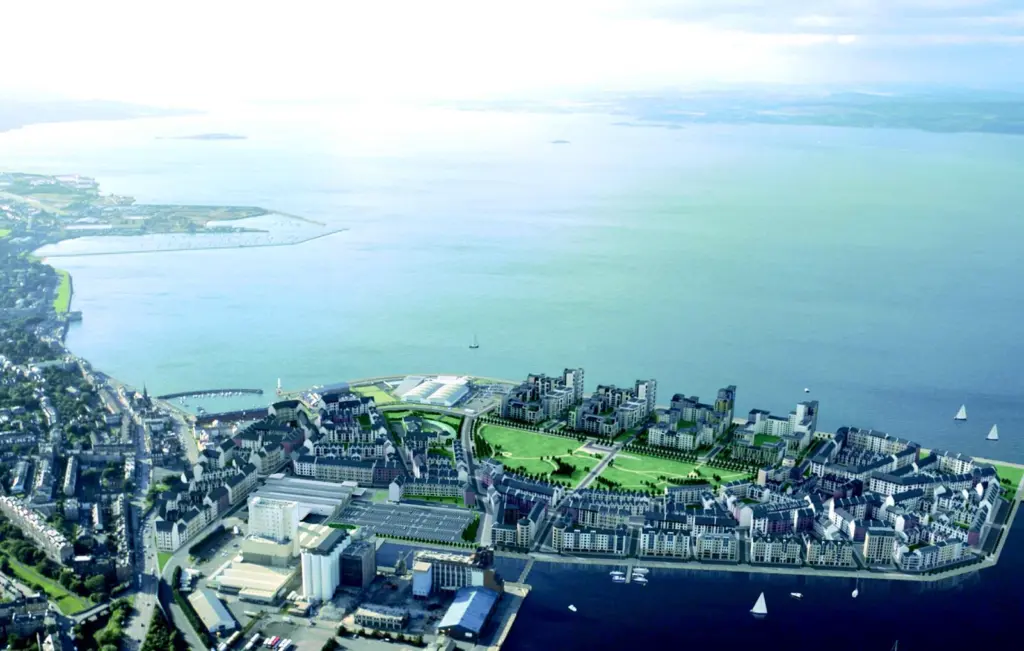
Attention also needs to be given to how long-term land leases, build-to-suits and development joint ventures will be structured on port properties. Many ports are both strategically located and in close proximity to major population centres. This results in the real possibility of a port reaching a level of economic obsolescence before its time (i. e. the economic value of the land where the port operates from is worth more for an alternative use, say high-rise office, shopping or residential, than as a port). To delay this as much as possible careful development and use of port lands must take place always keeping in mind how these uses can support the core business of operating as a port, servicing port clients as part of the intermodal supply chain.
An effective port property strategy will always seek to overarch its objectives with the overall ones for the port as a whole. This said, once it is clear that a port, at its current location, has a finite operational life left, it should develop a well planned exit strategy which will extend its ability to operate at its current location and finance the possible expansion of the port at an alternative location.
Franc Pigna is managing director of Aegir Port Property Advisers, and a director of Drewry Shipping Consultants for the Americas.
Related Articles
 CONCESSIONS & INVESTMENTS
 CONCESSIONS & INVESTMENTS