



Awed by ore
The loading of iron ore is fraught with danger. Michael King investigates means of reducing risk
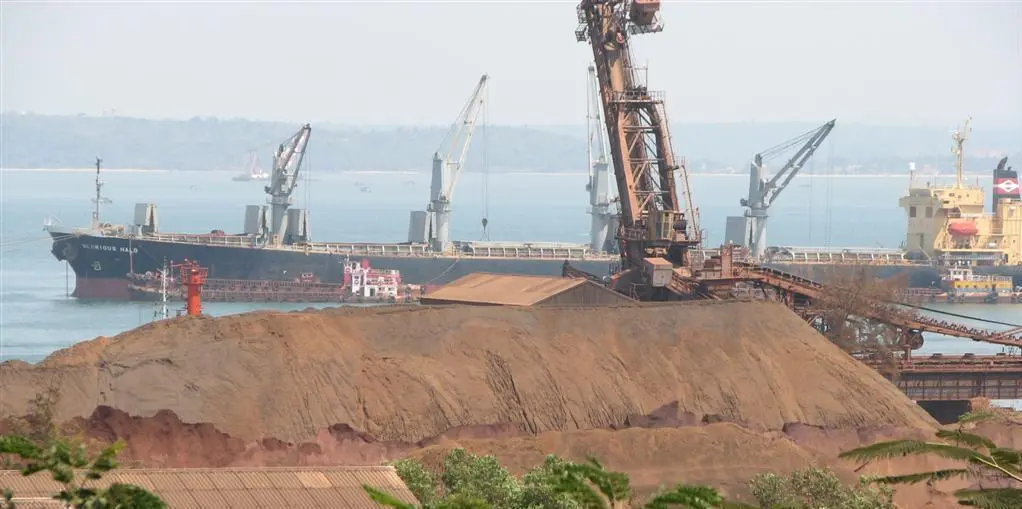
The dangers posed by the liquefaction of certain iron ore cargoes in the holds of bulk carriers have been apparent for many years. But the rapid recent upsurge in iron ore exports to China from monsoon-prone India have revealed just how unstable the commodity can become when not stored and loaded correctly at ports.
Preliminary casualty figures for 2009 produced by Intercargo, which represents bulk carrier owners, recorded two major incidents linked to the port-ship loading process on the iron ore trades out of India. The Black Rose handymax bulk carrier was sailing from Paradip to China when the vessel began to list six miles offshore from the loading port. The excessive moisture content of the iron ore loaded was reported to have caused flooding and the subsequent loss of one life.
The 2007-built general cargo/bulker Asian Forest was also carrying iron ore from India to China when the vessel encountered difficulties after leaving New Mangalore Port in July last year. No lives were lost as the crew on this occasion escaped the vessel in lifeboats or were rescued.
Shippers, according to Intercargo, should accept that iron ore cargo presents a degree of risk “which can only be mitigated through a fully transparent and completely independent professional survey of the cargo before carriage”.
IMO Blu Code obligations should be met to ensure the terminal and master are in 100% agreement over the safety of the vessel before the cargo is accepted and loaded. “We hope to work with all parties to ensure that there no more incidents involving iron ore loaded in the Indian monsoon period during the coming years,” said an Intercargo report.
North P&I Club tells Port Strategy that iron ore fines loaded from any destination should be treated as liable to liquefaction but in India the danger was particularly acute because the cargo is usually stored in open stockpiles and subject to rain, especially during the monsoon season. “The most significant consequence for the vessel resulting from liquefaction is cargo shift leading to loss of stability,” says Colin Gillespie of North P&I club’s risk management department. “This may produce dangerous angles of list and, in some instances, the resulting loss of stability can be such that the vessel and the lives of those onboard are lost.”
Terminals and masters should act in accordance with the International Convention for the Safety of Life at Sea (SOLAS) cargo carriage requirements and BLU Code guidelines on safe loading and unloading of bulk cargoes with masters taking the final responsibility for safety. “Terminal representatives bringing commercial pressure on masters to load their vessels before receiving the shipper’s cargo declaration are acting in contravention of the BLU Code and therefore SOLAS,” says Mr Gillespie. “Masters are urged to resist such pressure.”
The loading of iron ore will be addressed next year in the new International Maritime Safety Bulk Cargo (IMSBC) Code. This was adopted by the IMO in December 2008 and enters into force on January 1 as a mandatory regulation replacing the voluntary BC Code.
Although the Code addresses a range of hazards related to loading and stowage, it also for the first time classifies Direct Reduced Iron (DRI) into three types of product based on the hazardous nature of each sub-category.
The cargo DRI (A) in the Code is made up of hot moulded briquettes and is the least dangerous of the three classes. DRI (B) is made up of lumps, pellets or cold moulded briquettes and is considered under the new rules to be highly reactive to moisture. Even more dangerous is DRI (C) which comprises by-products such as fines and small particles which are not dealt with in the BC Code. DRI (C) has very similar properties to DRI (B) but because it is more finely divided is considered to be more reactive to moisture than DRI (B)
However, while the Code deals in depth with DRI, iron ore fines are covered in less detail, according to Mr Gillespie.
“The present situation with iron ore fines is exacerbated by the lack of an explicit entry for this cargo in the Code,” he says. “However, section 1.3 of the Code introduces a mechanism whereby the competent authority at the load port can submit an application to the IMO for the cargo to be included in the Code.
“The current situation with iron ore fines is just the type of situation for which the application process is designed. It is our understanding that a submission has been made by India and that discussions concerning iron ore fines are underway at IMO. We would urge all parties to work together to ensure an appropriate entry in the Code for iron ore fines in the near future.”
Gijsbert de Jong, product manager for dry bulk carriers at classification society Bureau Veritas, said that monitoring the moisture content of cargo should by the foremost priority of ports and terminals.
“This [liquefaction] has happened in a number of cases in India with serious consequences,” he tells Port Strategy. “From the Intercargo data it becomes clear that most recent losses concern handysize bulk carriers of more than 20 years old.”
The Indian government has now taken action to improve the supply chain management of iron ore transported into leading terminals. Circulars issued to users and operators at Mormugao port and New Mangalore port obtained by Port Strategy warn that following the loss of a number of vessels carrying “iron ore fines, “processed iron ore fines” and “blended lumpsum fines”, such cargoes should only be transported in covered trucks and barges and stored in permanent covered sheds to avoid the ingress of moisture. Independent analysis of moisture content should be carried out by an independent sampler and assessor and loading should be suspended during heavy rain conditions.
Once the data obtained by the independent sampling and assessment organisation has been accepted by the ship’s P&I Club, according to the Mormugao circular issued on June 3, the information then needs to be submitted to the Surveyor of the Mercantile Marine Department (MMD) for “further necessary action”.
“Only after obtaining clearance from the MMD should the vessel be permitted to sail out of the port.”
Related Articles
 CONTAINER & CARGO HANDLING
 CONTAINER & CARGO HANDLING