


Boxed in by trade growth
Booming intra-Asia box movements have increased the clamour for more port investment in South East Asia. Michael King investigates
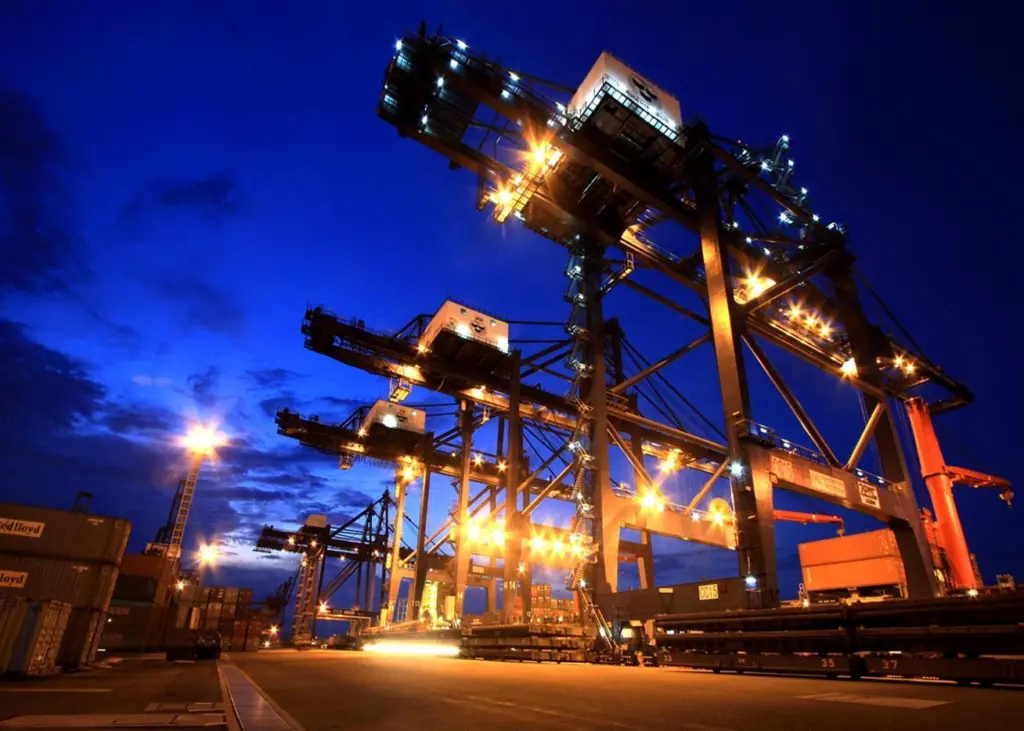
The rapid growth of the intra-Asia trade is creating both problems and opportunities for terminal operators. The global economic downturn of 2008 and 2009 hit container volumes the world over. But the rapid recovery from late-2009 saw a huge surge in volumes on most trades – led by intra-Asia lanes – just as decisions by many port managers to cut investments in capacity came into effect.
New vessel deliveries also saw the size of vessels used by Main Line Operators (MLO) increase, which had a trickle down impact on regional trades as lines sought to find a home to deploy their medium-sized container vessels.
One upshot, says Truong Bui, a senior consultant at Drewry’s Singapore office, has been that the vessels deployed on many intra-Asia trade lanes has increased. “It’s up to about a maximum of 4,000 teu now with many more in the 3,000-4,000 teu range and it could increase in the future,” he explains. “Before it was more like 1,000-2,000 teu.”
This has created capacity issues at many ports in Asia, both at berths and on shore. Manju Chandrasekhar, vice president – Economics & Business Solutions at port consultancy Halcrow, says congestion is – and will remain – an issue at many key ports in South East Asia. Harsher regulatory environments and approval processes, and the greater difficulty of marshalling resources in countries where state-led activities face more scrutiny than in China, slows the building of new berths in the region. “These countries are unable to add capacity at the pace that, say, China is able to,” adds Mr Chandrasekhar.
Even where obstacles to terminal investment have been overcome, congestion to and from the port often blights operations. “Mostly, ports and terminals are located in areas that historically attracted maritime trade, and the development of an urban core ensued thereafter,” says Mr Chandrasekhar. “As a result, it is often almost impossible to accommodate increased demand at these facilities without encountering significant capacity constraints to the intermodal connectivity.
“The real challenge often ends up being the lack of coordination between the maritime, surface transportation and urban planning legislative bodies in the public sector.”
Port managers do have some short-term fixes available. Typical options include a combination of increased labour productivity, technological enhancements and differential pricing – for example, a reduction in free dwell time and/or punitive increases in demurrage rates for on-terminal cargo that exceeds the free dwell time limits. But none of these options offer the sort of meaningful capacity boosts that some leading regional hubs clearly need – that requires new berths and terminals.
“Though the labour laws throughout South East Asia are mostly structured in such a manner that the bargaining power lies with the terminal operators, there is a limit to the capacity that can be created solely through productivity enhancements, as opposed to physical expansion,” says Mr Chandrasekhar.
Luckily then, the many regulatory and hinterland challenges that must be overcome to invest in South East Asia’s fastest growing economies are not preventing global port operators from eyeing the region with budding interest.
“While demand grows in South East Asia we will expect more investments in infrastructure – including ports – driven by local governments to meet increasing trade activities among [the region’s] countries,” says a company spokesman for Hutchison Port Holdings (HPH).
Ed Abesamis, executive vice president and head of business development at ICTSI, which runs a string of terminals in the Philippines and around the world, also admits an interest in investing in the region. “If we got an invitation for a tender we’d respond,” he says. “At the moment we don’t have a particular one we’re involved with, but we are interested.”
Asked about investments in South East Asia, a company spokesperson for DP World says the company is “always exploring opportunities for potential investment when and if our customers require it”, with Indonesia and Malaysia both of potential interest.
DP World currently operates terminals in the Philippines at Manila – South Harbor and Batangas, at Laem Chabang in Thailand, Ho Chi Minh City (HCMC) in Vietnam, and Surabaya in Indonesia. “All businesses – except Thailand – are mainly regionally-focused,” says the spokesperson. “Manila is dominated by imports from China and Taiwan. HCMC and Surabaya are principally focused on intra-Asia import and export. Laem Chabang is mainly main line. Once dredging of Soai Rap is completed, HCMC will be able to handle main line calls.
“HCMC is a recent addition, officially opening in January 2010 with terminal capacity of approximately 950,000 teu. Our aim has been to enhance efficiency and provide facilities that meet the needs of our customers over time.”
DP World is currently improving capacity in Manila with two new quay cranes and the construction of additional container yard areas. Further investment over the next five years are also planned at Surabaya, she says.
HPH, which operates multiple facilities in South East Asia all of which it claims can handle container vessels on main line and regional trades, is concentrating current investment on Jakarta, the main gateway to Indonesia and one of the key ports in South East Asia most often cited by users as requiring additional capacity.
“Our terminal in Jakarta – Jakarta International Container Terminal – has recently received 12 new RTGs [rubber-tyred gantry crane],” she says. “Those are the ‘one over six’ cranes which will enable JICT to stack containers to six high in the yard, increasing the yard capacity of the terminal by 500,000 teu per annum.”
The RTGs are equipped with Position Determination Systems (PDS) which enable the exact position of the container to be determined, while Automatic Gantry Steering Systems allow more accurate gantry crane movements. HPH will also equip JICT with two additional super post-panamax quay cranes and 20 new head trucks later this year, and plans to implement an auto gate system to streamline gate processes and transactions.
ICTSI is also investing heavily in its flagship Manila International Container Terminal (MICT) where a new berth will be opened later this year. Mr Abesamis says MICT is one of the region’s few facilities able to handle the larger vessels now being cascaded into intra-Asia trades without significant draught and berth adjustments.
“Trade with China is our fastest growing trade but more bilateral agreements will also increase volumes on other intra-Asia trades,” he adds.