

Beyond electricity
Electricity could become the poor cousin to hybrids and LNG. Martin Rushmere reports
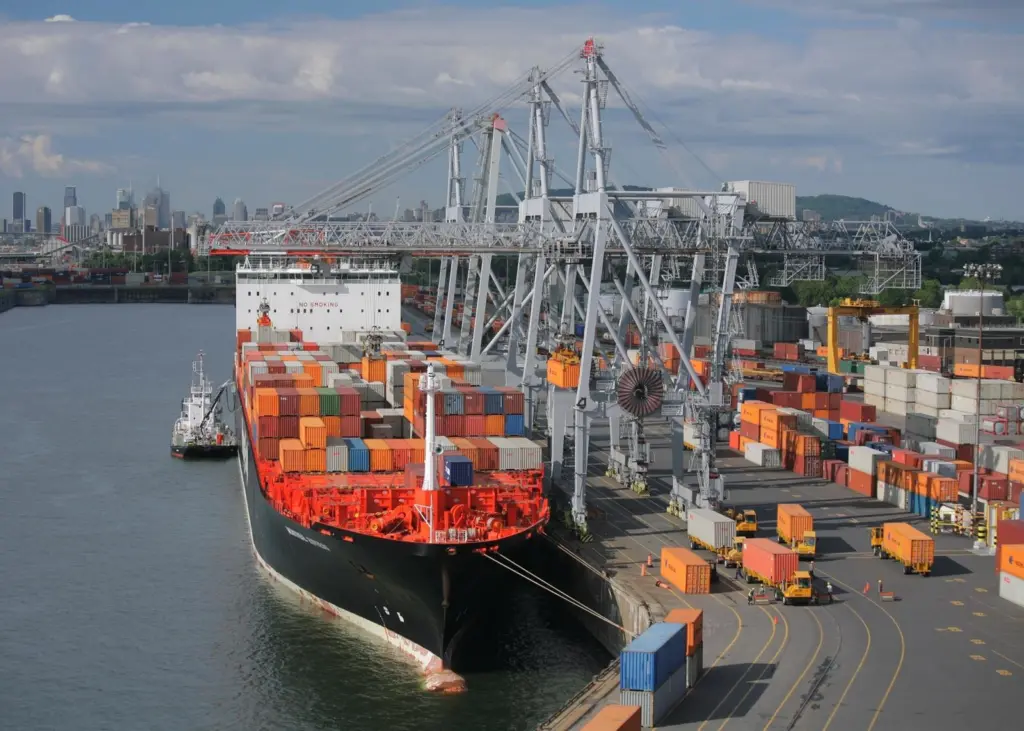
Two topics are occupying the minds of green-conscious international port authorities and industry groups: the idea of an international fund to accelerate energy savings and research and the effect that cleaner fuel/ green policies has on actual savings.
“A noble idea” sums up industry experts’ views of the world levy, “but without a hope of coming to fruition in the next five years”.
“Fuel technology and usage would change dramatically overnight if it came in,” comments an ecology consultant.
Chris Koch of the World Shipping Council pinpointed the main problems when he spoke to a US Congressional committee. He sees the idea as “an international levy or tax on marine fuel that would raise tens of billions of dollars of revenues each year to be dedicated to an international fund, which would expend such revenues on various kinds of proposed uses, such as climate mitigation projects or carbon “offset” projects in lesser developed countries.”
The difficulty? “Opposition from various governments arguing that whatever regime may be considered, it should not be applied to the ships and goods of developing nations or those identified as non-Annex I countries as defined in the Kyoto Protocol to the United Nations Framework Convention on Climate Change,” says Mr Koch. “Such a treaty would not be self-implementing, and thus, for US ratification, would need not only the advice and consent of the Senate, but also the enactment of implementing legislation by this Committee and both Houses of Congress.”
Possibly he was being sincere, but he also said: ”We trust that the Administration will keep the Congress informed of the US position with respect to these negotiations at the IMO.” An analyst terms the likelihood of such close interest as “good luck with that”.
Low load
Kris De Craene of the Port of Antwerp made the point at a recent IAPH meeting that a cargo jumbo jet on a 1,200km flight lets loose 540 grams of CO2 per tonne/km compared with only 15g/tonne/km for a cargo vessel over 8,000 tonnes deadweight (and 50g/tonne/km for a heavy vehicle with trailer).
Mr Koch reminded Congress, which is always ready to find a handy culprit, that shipping produces only 2.7% of world CO2 emissions.
Ports are trying to correct the widely-held belief that there is an automatic and direct correlation between green initiatives and energy savings – in some cases environmental measures have no effect on fuel use – while also pointing out that more economical energy usage means more money to spend on green controls.
The main energy savings route continues to be swapping diesel for electricity on cranes and gantries.
At Jebel Ali, DP World is converting nine diesel powered rubber-tyred gantry cranes to electrically powered systems in Phase 1 of a conversion plan for the fleet of more than 90 RTGs. The size of the project is ho-hum, but the significant point is that there will be an initial saving of 90,000 litres of diesel a month, while CO2 emissions will drop by 2.8m kg a year.
Canada bound
Elsewhere, Montreal Gateway Terminals is installing a further 280 new electrical reefer plugs that will allow temperature-controlled containers to run on hydroelectric-generated energy rather than diesel-generated energy, bringing the total to 580.
Chief executive Kevin Doherty says that although the benefits are not immediately measurable: ”We will obviously save millions of litres in fuel. Regardless, we are continuing to reduce our carbon footprint as much as possible. We all live in the same community.” Another measure at the port has been to install idler controls on heavy vehicles that shut down the engine after 10 minutes.
Montreal Gateway Terminals is the first privately owned container operation in North America to earn an ISO 14001 environmental management certification. In conjunction with this is their membership of Green Marine, the voluntary environmental alliance of 20 Canadian and US Great Lakes ports plus terminal operators, stevedores and, mostly, Canadian shipping lines.
“It has given a tremendous boost to environmental improvement and we would like more people to join.”
Switching to pure electricity is effective (especially in Quebec province and its total reliance on hydro-power) but hybrids are becoming more popular (Konecranes has introduced a Hybrid (diesel/electric) power option for its RTGs, which can reduce diesel fuel consumption by over 60%), while the industry is taking a closer look at liquefied natural gas. Antwerp is jumping on this and reckons it will have bunkering in 2015.
And not for nothing has Singapore won the accolade of being the greenest port in Asia, with LNG figuring large in its environmental plans.
One of its fiercest business competitors, Hong Kong, is not about to win similar awards. Industry concern continues about lack of regulation of bunker fuel quality and other standards. At the heart of the problem is that the port has no governing board of its own, but comes under the Marine Department of the Special Administrative Region, which is concerned only with navigation and safety standards on vessels. “Most of the port facilities are privately owned and operated, with minimal interference from government,” the department admits freely.
In the end, the port’s progress is seen as depending on orders from Beijing. Hong Kong is perhaps a management structure to be avoided.
Related Articles
 EUROPE
 TERMINAL OPERATIONS
 TERMINAL OPERATIONS