


Every last detail
Grab manufacturers are meeting the demands of the job, as John Bensalhia discovers
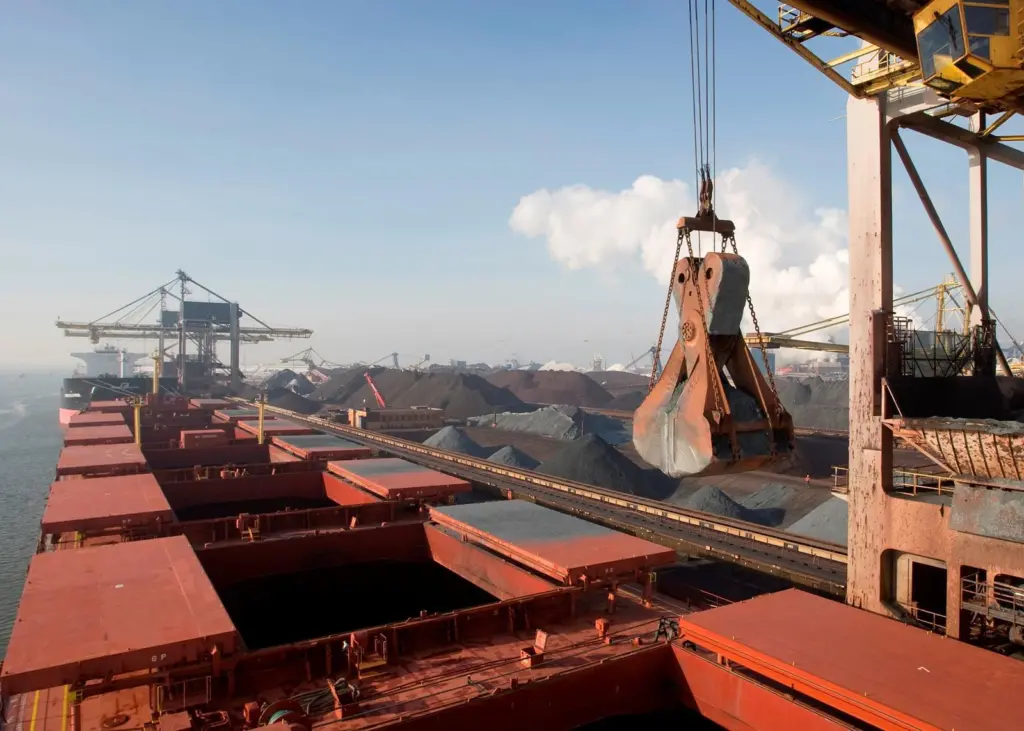
What people want and what people get can be two very different things. A meal on a restaurant menu may not be the same as the dish that’s gently placed under the customer’s nose. A well-deserved holiday may be hampered by a delayed flight and pouring rain instead of brilliant sunshine. But in the world of crane grabs, it’s a different story – and one that has a happy ending, thanks to both advances in technology and manufacturing, and to the efforts of the manufacturers.
Last year’s crane grab feature looked at the expectations of port operators, and what they hoped to get out of a good crane grab. The three core requirements were efficiency, performance and high health and safety levels. A good crane grab makes cargo handling that much speedier and considerably more productive. With these requirements in mind, some of the main players in crane grab manufacturing have taken these on board and have come up with high quality products that manage to tick all the boxes.
In the case of ORTS crane grabs, this is because the emphasis is on paying close attention to making sure that every detail of the crane grab is finely tuned. “We improve our products continuously,” says managing director, Sigvard Orts jnr. “The regular, small improvements, together with our customers ensures high quality, high effectiveness and reliability.”
The best-selling ORTS products are the electro-hydraulic grabs (EHS-B and EHM) – despite a higher price tag, the electro-hydraulic grabs still offer a number of benefits: “Because of our different construction design and some technical features, our electro-hydraulic grabs are a little bit more expensive in purchasing, but over the years of operation they give a higher benefit to the customer because of low spare part consumption, long life time, more t/h and high effectiveness.”
Additionally, ORTS’ fully radio controlled diesel-hydraulic grabs (DHS-B and DHM), developed 20 years ago are the faster and more productive alternative solutions to the mechanical single rope grabs (also the ones with radio control for opening).
Design gains
“The benefit of our grabs are various,” says Mr Orts Jnr. “Because of the different construction design, they have more force on the clamshells (which ensures a good grade of filling), they can work effectively in heavy bulk cargo, have low spare part consumption and a long life time. Some parts, like the clamshell bolts or cylinder bolts, are never subject to exchange, if they are properly greased.”
One important aspect of a good crane grab is its impact on the environment. “A very important factor in the entrepreneurial thinking are the issues of environmental protection and sustainability,” says Ninko Mijatovic, area sales manager for PEINER Grabs (part of Salzgitter Maschinenbau AG – SMAG).
“The environmental protection does not begin only when the grab is finished. Both at the work preparation stage and in the production process, care is taken to reduce the impact on the environment.” Mr Mijatovic says that an example of the current development is an orange peel grab with a capacity of 54m³ and a weight of 26 tons for handling woodchips in Indonesia.
NEMAG has also put an emphasis on creating environmentally friendly grabs, in order to provide not only an efficient product, but one that also allows for minimal waste and minimal pollution. The company has seen an increase in demand for environmentally friendly grabs at the request of global port operators who wish to carry out efficient operations with minimal risk of pollution.
“Our best selling products are clamshell and scissors type of grabs,” says Riny Stoutjesdijk, sales manager of NEMAG. “They are fast selling products and continue to sell well.”
Quality counts
NEMAG grabs are made from high quality steels, including Dillidur 400, Hardox 400 and Weldox 700. They are suitable for handling most types of bulk material, and furthermore can handle weights of more than 85 tons. The grabs can be used for coal, ore, minerals, biomass, fertilisers, phosphates, concentrates and bauxite.
A big selling point of the NEMAG grabs is that they have the lowest running costs per ton material transferred: high performance productivity, low maintenance cost, high reliability and long service life, according to the manufacturer. With that in mind, new NEMAG grab types look set to follow in the success of the existing designs. For example, one of the company’s latest product developments is a special closed clamshell grab that is devised to handle wood pellets and biomass.
But an important requirement of a crane grab is that of compatibility. Many crane grab suppliers are making grabs that can be used in conjunction with different makes of crane. Fredrik Österström, vice president of sales and marketing at Multidocker says that it is possible to use a different make of grab on another crane, “as long as you can use the same quick release system – with respect to the warranty, as long as you stay within the specified product density and type of cargo, it should be OK”.
Attaching a grab to a different make of crane has a number of advantages, as Riny Stoutjesdijk of NEMAG explains: “Fitting one of our grabs to a crane provides a number of benefits. It allows for high performance, particularly with bulk handling; it’s very reliable; and also allows for low maintenance costs.”
Right fit
Mr Stoutjesdijk says that NEMAG can make a grab for any type of crane – the company is highly specialised in creating tailor-made grabs. NEMAG works in close conjunction with the customers, who provide the specifications and the layout of the crane, in order to make sure that the grab fits perfectly.
Sigvard Orts Jnr says that ORTS grabs can be attached to every kind of crane. “For the electro-hydraulic grabs, however, an external power-supply is necessary, which means some additional equipment. Our radio controlled diesel-hydraulic grab operates independently without any additional equipment on every crane.”
Compatibility between crane and grab has also been acknowledged by PEINER. Ninko Mijatovic comments: “PEINER grabs are adapted both for lifting devices and for each application to always find an optimal solution.
“The large product range also allows to serve customers in countries with weak infrastructure. Our radio-controlled single-rope grab is particularly suitable in this case because it is not only compatible with many lifting devices (a simple crane hook is enough), but also impresses with its user-friendliness and versatility. An external power supply is not required.”
Once upon a time, compatibility between the make of grab and the make of crane would have been a problem – but breakthroughs in modern technology and manufacturer solutions have meant that the purchase of a grab is now a smoother process.
With the customers making their product requirements clear from the start, grab manufacturers have enough detailed information to provide a good, high-quality product that is tailored to the right specifications.
The humble grab has become a highly sophisticated piece of equipment, and one that’s integral in cargo handling – and with advanced solutions, the manufacturers have made sure that what the customer wants is what the customer gets.
Related Articles
 CONTAINER & CARGO HANDLING
 CONTAINER & CARGO HANDLING