


Back to basics
Alex Hughes asks the leading spreader manufacturer whether greater sophistication equals more maintenance
While modern spreader technology is complex, it is also efficient, robust and gets the job done. But is there still a financial case to be made for terminals to stick to more basic equipment?
According to Bromma, there are definitely differences between the various brands of spreaders on the market and these differences are embedded within the equipment itself and in the options that are available to customers.
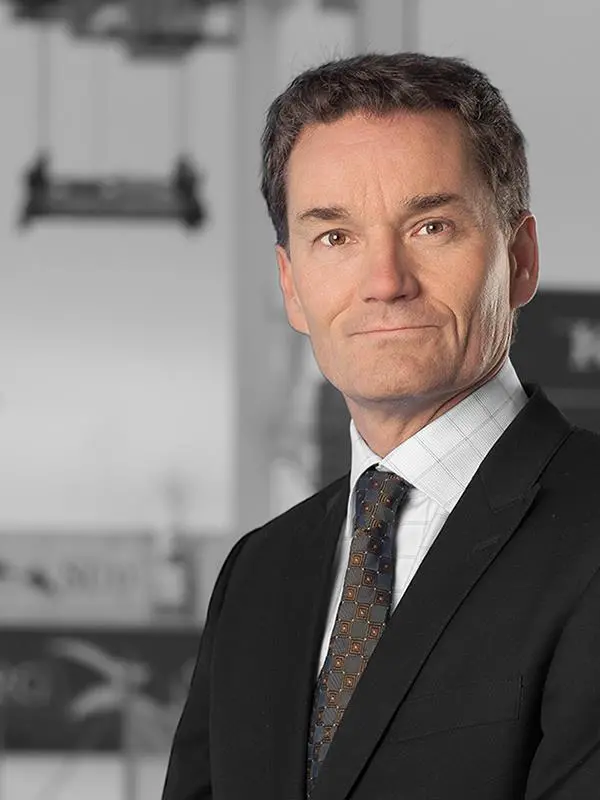
“Across the board, our spreaders tend to have lower weight than, for example, spreaders designed in China, which creates huge differences in lifetime power consumption. So these are embedded distinctions,” says Lars Meurling, vice president marketing.
He says that Bromma has a vastly more robust and feature-rich communications and spreader diagnostics system, too. As for optional extras, such as container weight verification, Green Zone productivity software, and so on, these have to be assessed apart from the existing qualities within the basic spreader itself.
“You also have to evaluate them based on the consequences of embedded design. Bromma’s lighter all-electrics, for example, generate 200 tonnes fewer emissions over their lifetime in comparison with competitor spreaders. That is not an add-on; that is a feature embedded in all basic Bromma spreaders.”
A decade on
Today’s basic spreader is quite different from a basic spreader even 10 years ago. Then, 100% of Bromma’s yard crane spreaders were hydraulic; today 85% are all-electric. Ten years ago, Bromma spreaders were heavier, diagnostics and predictive capabilities were much less robust, and you could only twin-lift 20′ containers. Today, with a Bromma Tandem you can twin-lift 40′ and 45′ spreaders.
“What constitutes a basic spreader nowadays is radically different from what you got a decade ago,” says Mr Meurling. He nevertheless concedes that, of course, there is still some market for fixed length spreaders, semi-automatic frames, and “fully automatic” spreaders with flipper arms.
“In general, the notion that customers are more price-oriented today than they were five years ago is over-stated. Customers that are productivity-oriented in their thinking tend to look at technology that will advance productivity. Customers that are price-orientated in their thinking are less productivity oriented,” says Mr Meurling.
He observes that what you hear from customers typically depends on who you are talking to and where the capital investment money is coming from.
Different view
Purchasing managers, he argues, tend to be more price-oriented, and may lack interest in or knowledge of engineering issues; their mission is to negotiate the best deal possible for the terminal.
Engineering managers tend to be quite interested in design and features, whether embedded in the spreader or available as add-ons; their mission is to secure the best technology for their terminal.
Maintenance managers are very interested in lifecycle costs and in features, software and technology that enhances servicing and reliability; their mission is to deliver higher uptime.
Senior management is very focused on achieving higher productivity; their mission is to turn around ships faster, and reliable spreaders with high mean moves between failures is part of that task. “The premise that terminals are more focused on cost than they were five years ago depends on who you are talking with, but in general, at Bromma we think that terminals, more than ever before, are focused on productivity, not price,” says Mr Meurling.
Strong performance
Terminals are increasingly becoming performance cultures, he argues, where it is the performance that matters most of all. “The other issue related to price is that capital budgets are different from operational budgets. If a maintenance department has to buy one spreader – and fund it out of its annual operations budget – that is often going to create greater price sensitivity than a terminal that is buying 10 spreaders and funding it out of a longer-term capital investment bucket.”
Return on investment calculations, he adds, are primarily driven by productivity enhancement. It is an earnings-driven equation, not a cost-driven equation. Terminal profit is dramatically impacted by equipment uptime. Better spreaders deliver higher uptime; higher uptime boosts profit. This is why terminals which have significant investment tied up in infrastructure and crane costs have a clear reason to not cut corners on spreaders, but to buy the best and most reliable spreader equipment out there.
It is usually possible to upgrade spreaders with add-ons, he says, but of course the overall cost is less if the equipment is installed in the spreader from the beginning. Actions such as upgrading a single lift spreader to a twin lift spreader is not easy, if at all possible.
However, he wholly rejects the notion that the more sophisticated a spreader, the more that can go wrong, stating that there is a difference between reliability and productivity. “A reliable spreader is not necessarily very productive. A semi-automatic fixed frame is probably more reliable than a separating twin STS45, but the Bromma separating twin-lift spreader is by far more productive.
“What most terminals need are both attributes: high productivity married to very high uptime,” says Mr Meurling.
He stresses that Bromma welcomes sophistication in electronic design and software, but wants mechanical simplicity. “In the disciplines of mechanical or structural design, sometimes the most sophisticated and elegant solution is the simplest: it’s the one with the fewest moving parts. This, for example, is one of the strengths of our multi-lift spreader solution, the Bromma Tandem. It is simpler in design and mechanics, which we believe will enhance its reliability and performance.”
Related Articles
 CONTAINER & CARGO HANDLING
 CONTAINER & CARGO HANDLING