

Building alliances
HFWs Anthony Woolich discusses the implications of the fall of P3 and the rise of 2M
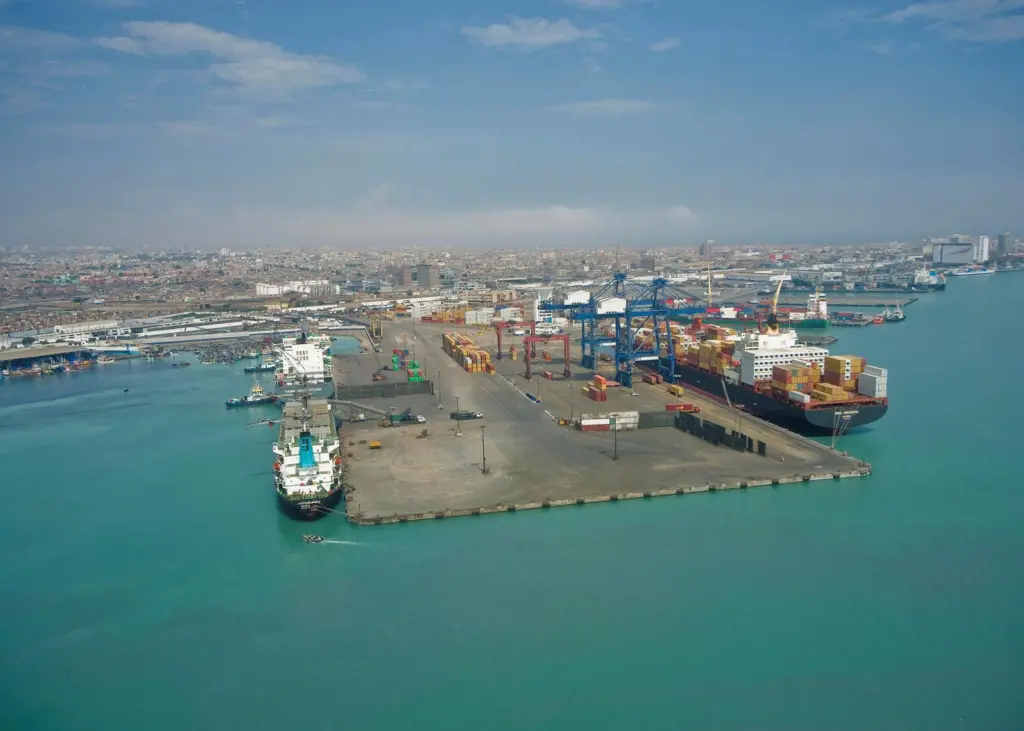
Since the announcement in June 2013 of a proposed global operational alliance between the world’s three largest container shipping lines, Maersk, MSC and CMA-CGM – known as the P3 alliance – there has been much speculation within the industry relating to the form and substance such an alliance would take and the effect that it would have on both port and terminal operators and the industry at large.
However, against industry expectations, the proposed P3 alliance was blocked by the Chinese Ministry of Commerce (MofCom) on June 17. MofCom’s decision meant that the P3 alliance did not go ahead and has led to further restructuring in the container shipping market.
Maersk and MSC have since entered into an exclusive Vessel Sharing Agreement (VSA) – dubbed the ‘2M’ – on east-west trades, whilst CMA-CGM have announced details of their collaboration with CSCL and UASC – to be named ‘Ocean Three’. Ocean Three will also cover east-west trades and therefore compete directly with 2M and the two other global alliances, G6 and CKYHE.
P3 had already received regulatory approval from the Federal Maritime Commission in the US. In addition the European Commission (the Commission), which does not have a formal clearance procedure for VSAs which fall short of a full-function joint venture, had indicated that it would not open proceedings against P3 when it started operations. However, both regulators stated that they would closely monitor P3 to ensure that its impact over time did not lead to a restriction of competition, which might be evidenced by higher prices or less choice for consumers.
China’s clearance
Unlike the regulators in the EU or the US, MofCom required P3 to obtain merger clearance. MofCom had not required this clearance for the G6 or CKYHE alliances. In making the decision to reject P3, MofCom drew a distinction between what it termed as ‘traditional’ VSAs, which it would not treat as a ‘merger’ and ‘non-traditional’ VSAs between container lines.
MofCom reasoned that in a ‘traditional’ VSA individual members retain the ability to have an impact on the decision making of the alliance, as operational decisions are taken by a committee that involves all the members of the agreement. In contrast, P3’s day-to-day operational decisions would have been taken by a dedicated arms-length network service centre. In this regard, MofCom was particularly concerned that the proposal of P3 to pool costs through the network service centre would have reduced the ability of P3’s members to compete effectively on price. It was also concerned that P3’s market share, which it said was 47% on the Asia-Europe trades, may have given P3 the power to control prices in a concentrated market with barriers to entry.
MofCom’s decision indicates that competition authorities are prepared to place limits on the level of integration VSAs can achieve if those authorities feel that increased integration would have a negative impact on customers such as shippers, freight forwarders and terminal operators.
2M has been structured as a ‘traditional’ VSA in response to MofCom’s P3 decision. Press reports indicate that there will be no joint service centre, and that Maersk and MSC will each be responsible for their own bunker costs and will enter into separate service contracts.
Shippers’ gripes
However, 2M may still face difficulties from regulatory authorities. For instance, shippers’ forums in a number of jurisdictions including China, have expressed concerns about 2M’s market share, which, although smaller than P3’s, could, according to press reports, still be as high as 42% on transatlantic trades and 35% on Asia-Europe trades. These market shares would mean that 2M would be unable to benefit from the EU block exemption for liner consortia permitting co-operation between carriers short of price fixing and market allocation where market shares do not exceed 30%. Instead, like P3, it will have to ‘self-assess’ its agreement to ensure compliance with EU competition law. While it is unlikely that the Commission will stop 2M from starting operations, it could place its operations under significant scrutiny in the future if freight rates were to rise.
In addition, whilst 2M may not be viewed as a merger by MofCom, the Chinese Ministry of Transport may investigate a VSA for anti-competitive practices if it carries more than 30% of the volume carried through Chinese ports on any trade route in a particular year. We understand that the Chinese Ministry of Transport may order a VSA to be amended or limited if it finds that the VSA is detrimental to fair competition.
Since filing for regulatory approval from the FMC in late August, two FMC commissioners, William Doyle and Richard Lidinsky, have expressed concerns about 2M. This has led to speculation that the FMC may stop the clock on the 45-day review in order to obtain further information about the proposed alliance.
However, rather than wait to hear what questions the FMC wishes to raise, Maersk and MSC have sent representatives to Washington for urgent meetings with the FMC. Press reports indicate that the visit sought to persuade the FMC not to delay the launch of the alliance as part of its review. In any event, if the FMC issues a request for further information and stops the clock on the review, there will be insufficient time for the two lines to prepare 2M for its intended start-up early next year.
Ocean three
In contrast to 2M, Ocean Three is based on a series of vessel-sharing, slot-exchange and space-charter agreements which allow member lines to keep existing deals with other carriers. This collaboration will require approval from the FMC and will need to be notified to the Chinese Ministry of Transport. However, with an estimated 13% share of transpacific trades and 20% on Asia-Europe trades according to market reports, it may be unlikely that the new partnership will alarm competition regulators.
One of the primary objectives of alliances is rationalisation – an improvement of the partners’ operational efficiencies and vessel capacities. However it is clear that the impacts of alliances are far-reaching, affecting not only the alliance partners, but ports, terminal operators and the industry at large.
As ports and terminals are jointly selected by alliance partners, this is likely to mean that there will be fewer ports of call. However those ports and terminals which are selected, will have to handle much larger ships and container exchanges, and must have in place systems that are geared towards handling more hub-and-spoke and interline relay traffic. This is likely to culminate in a higher concentration of activity taking place in key locations. Nevertheless, all ports and terminals globally will be affected with greater ship sizes due to the effect of vessels being displaced on to other routes.
The knock-on effects caused by alliances and larger ships are already becoming apparent. There has been a restructuring of the physical layout and location of certain terminals as well as changes in ownership. For example, in Hong Kong, Hutchison’s HPH Trust has sold stakes in Asia Container Terminals to Cosco Pacific and China Shipping Terminal Development. The acquisition has created common ownership of continuous berths and will assist with berthing and handling larger ships.
Come together
It is also evident that global terminal operators are increasingly seeking opportunities to work together more closely in particular locations in the face of growing ship sizes and alliances. For example, APM Terminals and Terminal Investment Limited now have joint ownership of terminals in Santos, Callao and Marseilles-Fos, while the AP Moller-Maersk Group has signed a strategic MOU with China Shipping (Group) on container terminals.
MofCom’s decision to reject P3 and the legal uncertainty faced by 2M and Ocean Three in obtaining regulatory approval highlight the challenges faced by container shipping lines seeking alliances to rationalise their activities. The establishment of a single global set of competition rules for the container shipping industry might be desirable, but for now the liner companies will have to continue to seek competition law advice in separate jurisdictions when entering into VSAs or mergers.
In any event, it is clear that once alliances are given regulatory approval, their impact will affect the industry as a whole and pose particular challenges to ports and terminal operators. We have already seen a trend towards the physical and commercial consolidation of terminals and increased cooperation between global and international terminal operators.
While it is not clear to what extent these agreements are being driven by the effects caused by alliances and larger ship sizes, it is evident that greater cooperation between ports and terminal operators is one way to mitigate these challenges.
Anthony Woolich is a partner at Holman Fenwick Willan, an international law firm advising businesses engaged in international commerce. Research by Kiren Dillon, trainee solicitor at Holman Fenwick Willan.
Related Articles
 BULK HANDLING
 BULK HANDLING
 BULK HANDLING