



Breaking point for US west coast ports
The US west coast ports are reaching breaking point after the Pacific Maritime Association (PMA) suspended operations over the weekend because of ongoing labour disputes.
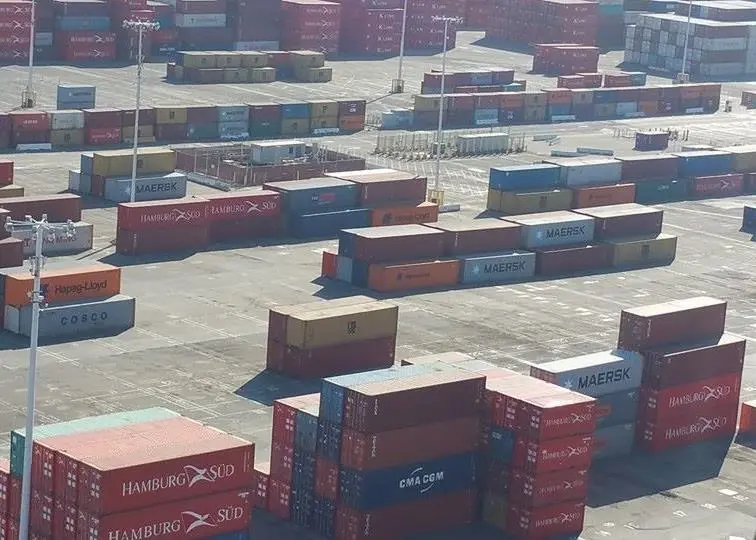
PMA said that ships would not be loaded or unloaded because its members had decided they would no longer continue to give workers premium pay for diminished productivity.
Over the weekend, yard, rail and gate operations did continue as normal at terminal operators’ discretion and cargo was cleared off the docks, but ships were not loaded or unloaded.
Phillip Sanfield, Port of Los Angeles (POLA), told Port Strategy that there are currently 16 container vessels and 7 non-container vessels at anchor waiting to the get into the LA and Long Beach ports (as at Monday 9 Feb).
Lee Peterson, Port of Long Beach (POLB), added that ship operations have resumed at POLB but confirmed the delays for ships coming into port.
“Trade that moves through the ports of Long Beach and Los Angeles sustains more than 500,000 jobs in the Southern California region alone – from manufacturing to warehousing to goods movement and more. So it’s vital that our partners – the PMA and International Longshore and Warehouse Union (ILWU) – reach agreement quickly,” he said.
“Business has already been lost to other ports due to congestion. We need to stop this loss of business immediately, and avoid sending our job-sustaining trade to other ports,” he said.
Seeking to break the deadlock in the dispute, the PMA made an “all-in” contract offer to members of the ILWU last week.
The package included a wage rise of roughly 3% per year, along with fully paid health care costs and a maximum pension rise, under a proposed five-year contract.
PMA’s offer was designed to bring contract negotiations to a close after nearly nine months, and follows three months of severe ILWU slowdowns that have crippled productivity at US west coast ports.
The PMA said that its members have suffered drops in productivity by as much as 50% with individual reports of shippers rerouting cargos away from the ports.
But the union has hit back at PMA and accused it of deliberately leaving ships at sea. It said that claims of no space on the docks or longshore workers ready to unload containers are unfounded and accused the PMA of deliberately worsening the existing congestion crisis to gain the upper hand at the bargaining table.
Neil Davidson from Drewry Shipping Consultants, told PS: “As ever with this process, it’s hard to draw firm conclusions as there is much posturing going on. The employers say the ports are close to gridlock, the union says there is capacity. The employers say there are still a lot of unresolved issues, the union says the two sides are close.”
He added that things cannot go on like this for much longer. Either an agreement will be reached, or if work stops, the Taft-Hartley Act may be used to force work to resume as was the case in 2002.
Related Articles
 CONTAINER & CARGO HANDLING
 CONTAINER & CARGO HANDLING