



Benefits of environmental ratings
RightShip’s Warwick Norman explains why ports are getting on the emissions-cutting bandwagon
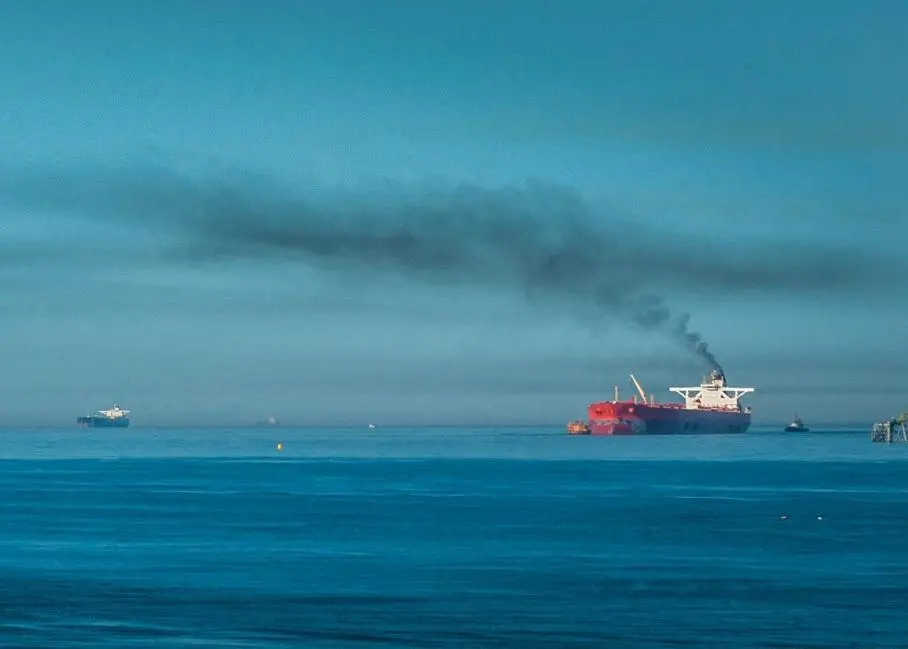
Despite being the most carbon-efficient form of international transport, the IMO’s Third Greenhouse Gas Emissions (GHG) study, released last year, delivered the alarming news that a best-case scenario of shipping’s CO2 emissions were a 50% increase by 2050 – with worst case an extraordinary 250% increase. This is despite expected average fleet efficiency improvements of around 40%.
The normalisation of slow steaming and unprecedented oversupply of ships over the last couple of years has clearly affected the industry’s CO2 output, but as we’ve recently seen these market forces are volatile and temporary. As individuals we are unable to influence factors such as the huge swings in global commodity prices and the resultant impact on the price of oil.
However industry leaders can – and are – driving change. Environmental port incentive programs are gaining in popularity, with easy-to-administer yet sophisticated tools available for ports to reduce local emissions and drive the push for a more sustainable industry.
In 2011, RightShip launched the GHG Emissions Rating which measures the theoretical CO2 output of ships and compares it against other ships of a similar size and type. Using a simple A to G graph (where A is the most efficient), it is an easy-to-use online tool which enables us to identify the more efficient ships. The methodology is based on the IMO’s EEDI, however the GHG rating allows comparison of existing ships with new builds – something that hasn’t been easily achievable in the past.
Industry has voted with its feet. Since inception the uptake of RightShip’s GHG Rating has been extraordinary. Currently 37 charterers, shipowners, insurers and banks use it as a vessel selection tool, accounting for almost one-quarter of the world’s non-containerised cargo – or almost 2bn tonnes per annum.
Positioned – quite literally – at the forefront of the effects of global warming and rising sea levels, ports are increasingly aware of the impact of CO2 emissions. Pioneering ports such as Canada’s Port Metro Vancouver and Prince Rupert Port Authority now use RightShip’s GHG Rating to offer incentives for more efficient ships, and are enthusiastic about the benefits experienced since introducing their environmental incentive programs.
The benefits include improved sustainability in the port area, with links to potential health benefits for local residents from emissions reductions; improved community relations, generating significant social capital within the local community as well as the wider maritime industry; reduced terminal fees for port customers and savings on fuel costs.
Preliminary analysis conducted by RightShip has established a link showing that ‘greener’ ships (the higher rating A – C vessels) are also safer ships, registering fewer incidents. If this holds true, the benefits to ports of promoting the more efficient ships means fewer breakdowns in shipping channels, fewer incidents and delays, and greater throughput for terminals.
Port Metro and Prince Rupert have positioned themselves as leaders with their respective programs, pioneering a recent and growing global movement to increase focus on emissions and efficiency. A positive spin-off has also been the significant amount of positive media exposure the incentive programs have generated for their ports, recognising their efforts in driving sustainable shipping.
RightShip, together with global NGO the Carbon War Room (CWR), have teamed up to develop www.shippingefficiency.org to enable free access to the GHG Emissions Rating. RightShip and CWR also consult with individual ports (at no cost) to assist in the development of an environmental incentive program that is tailored to their requirements.
Warwick Norman has been chief executive of RightShip since its inception in 2001.RightShip helps shippers, terminals and ports, ship owners and managers and maritime finance organisations to minimise their maritime and environmental risk.
Related Articles
 PORT TALK
 PORT TALK