



Beware trucks bearing gifts
TT Club’s Laurence Jones urges ports to look beyond the container weighing headlines
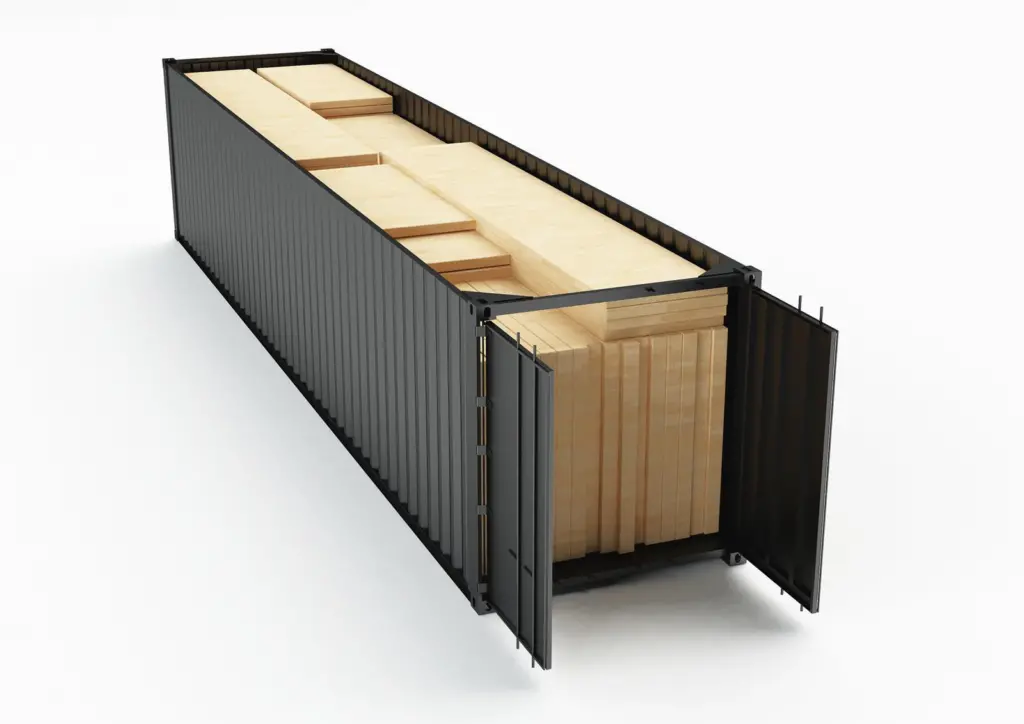
Have you felt nervous driving next to a truck on a bend or roundabout? Your apprehension could well be justified. There are too many incidents where trucks, especially those carrying containers, overturn when cornering and discharge unwanted gifts on to adjacent vehicles. Unfortunately fatalities often result – never drive next to a truck on a roundabout.
While speed is often a cause, it is also becoming evident that the container being over-loaded, eccentrically loaded or the contents unsecured is often a contributing factor.
Attention has recently centred on the revised IMO regulations being enforced from July 2016 to forbid containers being loaded onto a ship unless the actual weight has been verified. The main principle of these IMO regulations is to highlight that the responsibility for obtaining and documenting the verified gross mass of a packed container still lies with the shipper. In addition, the regulation stipulates that a container should not be loaded onto a ship unless the master or his representative and the terminal representative have obtained, in advance of ship loading, the verified gross mass of the container.
It should, however be recognised that the way containers are packed, or incorrectly packed, also poses a major threat to safety throughout the supply chain. The aim of the new IMO regulation is primarily to protect the ship; it does not necessarily improve safety in other transport modes (road and rail) or at terminals.
ICHCA, supported by the TT Club, has been raising the awareness of the container packing issue under the slogan ‘PACK IT IN!’ Seminars have been held in the UK and South Africa to provide maritime professionals with practical education and advice on the contents of the IMO/ILO/UNECE Code of Practice for the Packing of Cargo Transport Units (CTU Code), which was approved during 2014. While the use of such units substantially increases the protections afforded to individual cargoes, improper packing works against this and may increase the risk of incidents.
Analysis of the TT Club’s claims indicates that as many as two-thirds of accidents involving damage to containerised cargo are likely to have been caused by improper packing and securing of cargo inside the unit.
Moving issues
Often those involved in packing CTUs struggle to get a heavy item in and then believe that it will never move in the unit during transit. Even if consideration of such potential movement is made, they may be inclined to believe that a 25 mm square batten nailed to the floor will stop it. Additionally, many also assume that placing the heavy load near the door will make it easier to get it out again, without thinking of the consequences of such weight distribution in different modes of transport. Cargoes covering the majority of the floor of a CTU are often not secured in the belief that, since there are few gaps, they will not move or not by much.
As a result of such practices, we see heavy cargo items breaking through the sides of containers, coils falling through the floors or simply the discovery at destination that the entire cargo has been smashed. Furthermore, there is inadequate awareness of the dynamic forces imposed on cargo during transit. In order to make the nature of these forces more understandable, consider this: a domestic washing machine goes through about 6,000 movements in a typical wash cycle; in comparison a transatlantic voyage on a container ship may put cargo through some 160,000 similar movements.
Terminal operators are clearly very much involved in the ‘where and how to weigh containers’ debate, but they also face more immediate, on-going safety issues as a result of poorly packed containers. Chief among these are truck rollovers due to containers overloaded, eccentrically loaded or contents being unsecured and moving. It is possible to mitigate these risks by implementing and enforcing speed limits, and establishing one-way traffic flows within the terminal facility. Further, technologies already exist to measure the eccentricity of a container, which support safety.
However we need to fix the problem at the source and strive for full dissemination and adherence to the CTU Code. Achieving this globally will be a challenge for the entire industry; in the meantime, whether on terminal roads or public roads, always beware of trucks bearing gifts.
Laurence Jones is director global risk at specialist insurer, TT Club.
Related Articles
 PORT TALK
 PORT TALK