



Heel digging
Battle lines are being drawn on the expanded Panama Canal effect, finds Martin Rushmere
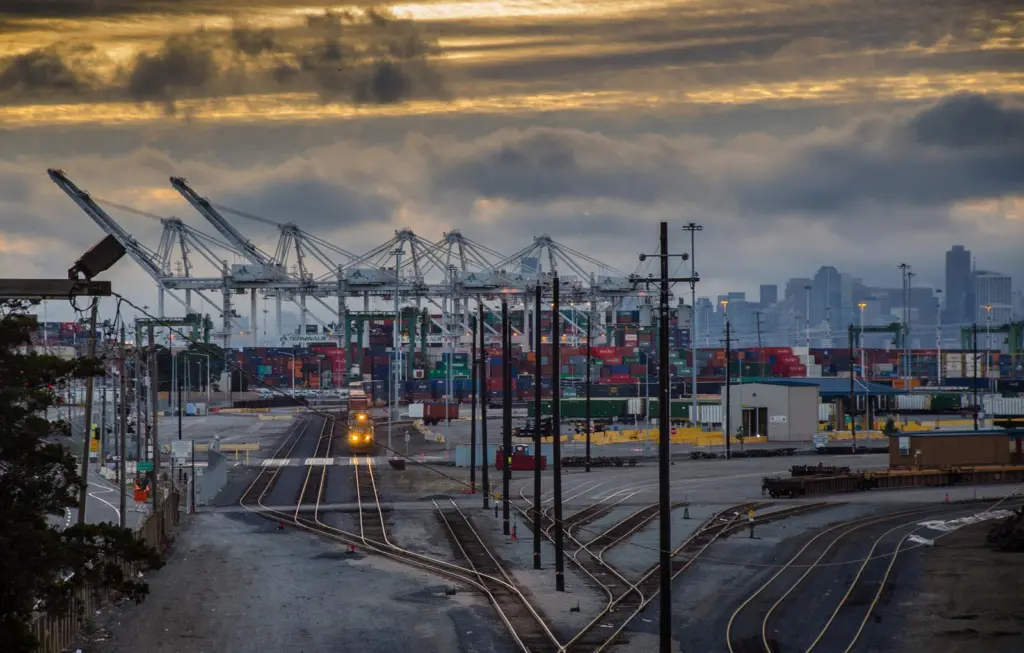
The predicted tug-of-war has developed over US East Coast prospects. Captained by Drewry, one side is pulling hard for a growing and bigger percentage of the traffic volume to the US because of the wider Panama Canal. The other side, led by credit ratings agencies and US consultants, is firmly anchored to the assessment that the shift has already happened and there will be no significant change in the trade lane pattern.
Drewry bases its analysis partly on trends from the first half of this year, which saw traffic to the US East Coast grow 23%. “On an annualised basis, the US West Coast ports are handling 275,000 teu of additional Asian imports compared to three years ago, whereas the US East Coast facilities are attracting 1.2m teu of incremental volume.”
Drewry acknowledges that volumes through the US West Coast from August onwards climbed, but adds this “is not because importers have short memories or that they have been entirely forgiving of the chaos that arose from the ILWU/PMA dispute earlier in the year, but is more a function of the peak season which took place in Q3, 2015.” Zepol notes a 15% swing in volumes to the US East Coast in the first half of 2015.
In September there were definite indications of a swing back. Long Beach recorded the best month in its 104-year-history with 655,000 teu, and could top 7m teu for the full year for the first time since 2007. A remark by port chief executive Jon Slangerup – “in recent months, Long Beach has seen a robust return of once-diverted cargo” – is clearly aimed at assessments from Drewry and others.
Further support
Others pulling for the US East Coast are still sure that the Panama Canal will make a big difference. This difference ranges from 10% from the Boston Consulting Group to as much as 25% (for imports) from Bridgewater State University, Massachusetts. Industry sources caution heavily against believing the latter figure, with one consultant calling the conclusions “simplistic and ludicrous. The author appears to have little knowledge of the intermodal system – claiming that most of the cargo arriving at Los Angeles/Long Beach is sent onwards by air and rail.”
The author also makes the claim that Boston is poised to compete seriously with New York/ New Jersey, which would come as a surprise even to Boston.
Boston Consulting bases its analysis on the corridor from Chicago southwards to Houston, and predicts this will become the “battleground” area for the west and east coasts. Acknowledging that the choice for importers is between opting for lower cost – the Panama Canal – or shorter time – the West Coast – the consulting firm says the transport economics for some products will definitely change, leading to the 10% switch.
Even Oakland shows signs of getting through the doldrums. Containerised import volume was up for the seventh straight month in September, with 1.6% more containerised imports than a year before. Import totals for the first nine months of 2015 are the same as 2014.
Ben Hackett’s Global Port Tracker says the US West Coast is almost back to its previous market share, accounting for 59% of imports, against the US East Coast’s 37% and the Gulf Coast’s 4%.
Ratings thoughts
Moody’s ratings agency is at the forefront of those who say there will be no major change. The agency says that importers will probably opt for the speedier route by going via the US West Coast. And it highlights a little-publicised feature of terminal economics. “Ports’ long-term contracts contain minimum annual guarantees, [MAG] which will protect the West Coast ports from swings in cargo volume and revenues.” Many MAG contracts are for five years, which provide a powerful incentive to stay with a particular port.
Fitch ratings notes that at Los Angeles, “minimum annual guarantees from port tenants provided for over nearly $300m in 2015, accounting for about two-thirds of total port operating revenues. Minimum annual guarantees from port tenants are projected to continue to provide about $300m [annually] from fiscal years 2016-2020.”
Moody’s has stayed with its ratings for US East Coast ports: Aa3 for New York/New Jersey (outlook stable), Baa1 rating on Miami-Dade (outlook stable), upgrading Canaveral Port Authority to A2 (outlook stable), and A2 on Jacksonville (outlook stable).
Fitch, in its latest analysis of the financial/operational situation at US east and west coast ports, awards Los Angeles the highest rating in the country, AA, followed by Long Beach at AA/AA-. New York/ New Jersey gets AA- (stable) and almost all other East Coast ports Fitch covers range from A+ to A. North Carolina is rated BBB+.
Watching on the sidelines and hoping to cut the rope in the tug of war so that both sides land on their backs, are Caribbean and Panama Canal ports. Expansion projects continue, with Manzanillo upgrading equipment to incorporate automated stacking cranes using Tideworks technology.
DP World is cranking up its Caucedo transshipment hub in the Dominican Republic, and plans to reach 2.5m teu a year from today’s 1.6m teu.
East coast confidence
But at least one terminal operator, Ports America, is optimistic about US East Coast prospects. Says the company’s Port of Newark container terminal chief executive, Jim Pelliccio: “We have seen a shift in volume from the West Coast, and the opportunity to maintain this cargo on the East Coast is apparent to all stakeholders engaged in East Coast port operations.
“We expect growth on the East Coast with ultra large container vessels introduced as a result of the Bayonne Bridge’s raising and the widening of the Panama Canal. This will provide additional opportunity for all water transits to East Coast markets and greater access to discretionary cargo.“
Mr Pelliccio says that trans-loading (using ports as gateways for markets beyond the hinterland) “makes sense on many levels. As we continue to focus on discretionary cargo development at the port, we continue to consider our options and further growth in trans-loading cargo.
“At this point, I believe the potential for NY/NJ to act as a strategic short sea shipping hub in the Northeast has real possibilities. Planning and advancement of short sea shipping on the NY/NJ marine highway system is gaining interest and momentum.”
Ports America sees the Suez as a great bonus. “The second Suez Canal will allow for improved schedule reliability and greater routing, which should provide a more attractive all-water service to the East Coast.”
Mr Pelliccio says that Ports America “continues to invest in key operations on a tri-coastal basis. Specifically, at Port Newark, the company is currently investing more than $230m into the terminal alone, as part of a $500m rebuilding of this operation in the Port of NY/NJ.”
The terminal handles more than 20% of the entire port authority’s container volume and employs more than 1,200 people. The expansion will almost double the terminal’s lift capacity to 1.4m teu. Total spending on infrastructure and deepening at the twin ports is estimated to be $6bn.
Virginian drive
Possibly the most ambitious port system on the East Coast is the Port of Virginia. Allied with USACE agreement to dredge to 16.7 metres, the port wants to spend $2bn on terminal expansion. Of this, $350m will go to expanding the Norfolk terminals from 1.4m teu a year to 2.1m teu. Another $320m will be for doubling the size of the Virginia International Gateway – but the difficulty is that the lease has only 15 more years and this would need to be extended for the expansion to be economically sound. Another $1bn will be needed to develop the infrastructure of the port system.
Cargo traffic in September was the highest for the month in the port’s history, at 215,000 teu. For the financial year that ended in June, the port recorded a $13.6m profit in operating income compared with a loss of $16m the previous year.
Competition for Cuban goods can be expected to come from PortMiami, which has completed a $1bn project to deepen the main channel to 15.8 metres.
Related Articles
 NORTH AMERICA
 CONCESSIONS & INVESTMENTS