



Braving the elements
Extreme winter conditions neednt bring a port to its knees, explains Alex Hughes
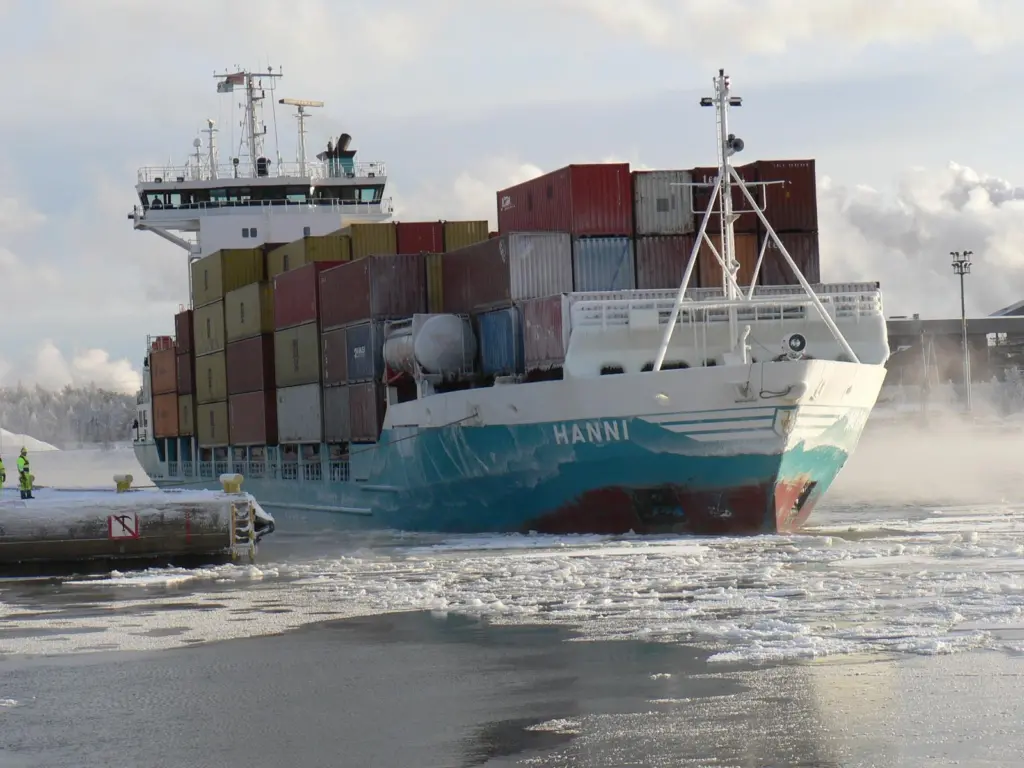
Many ports located in extreme northern latitudes manage to stay open in all but the most extreme weather conditions, yet ports further south close the gates at the mere mention of snow. How do they do it? It’s a combination of planning, perseverance and robustness – all qualities that those southern ‘softies’ could pay more attention to when the cold calls.
Kaarlo Heikkinen, director of the Port of Raahe (64º north), in Finland, says that the harbour has been kept open all year round for over 40 years, although milder Finnish winters over the past few years have made navigation easier. Ironically, the port is kept mostly ice free throughout the winter using the cooling waters from the SSAB steel factory, which empty into the harbour basins.
Sometimes, mainly during early spring, storm winds do bring ice from the sea into the port, but they do not cause major delays or damage, adds the port’s engineer Ilkka Harju.
Beyond the port, it is the responsibility of the Finnish Transport Agency (FTA) to break up ice formations, thereby keeping outer harbour areas and sea approaches open. During harsh winters, icebreakers are needed to do this. In the Bay of Bothnia, both Finnish and Swedish icebreakers are often called upon to cooperate to keep vessels moving.
According to Mr Heikkinen, the icebreaker contract, covering the entire harbour basin, is usually signed for a two to three winter month period, usually from December to the end of April as the transit of regular traffic has to be guaranteed, since 600-650 ships visit the harbour at Raahe each year.
“Northern harbours know how to prepare for normal winters, but during harsh winters, when most of the Baltic Sea freezes over, there can be a shortage of icebreakers. Because of this there may occasionally be delays in getting help to some vessels,” he says.
Safety first
However, shipping companies nowadays use vessels that have been specifically reinforced to resist ice, while the FTA sets ice restrictions for harbours depending on the ice situation at any given moment.
“Ice fields moving outside the harbour are invariably a safety risk,” says Mr Heikkinen, who points out that, if a ship gets stuck on a moving ice field, it can drift into shallow waters. In certain situations, this can result in the short-term closure of certain harbours, when conditions become potentially dangerous. The decision on whether this happens or not is down to the head of FTA’s Winter Navigation Unit.
Despite freezing weather, port workers in northern harbours are used to the sometimes challenging conditions and this hardiness is mostly down to choosing the right type of outdoor clothing, says Mr Harju.
“There is no official frost limit,” he says. “So, during very cold weather the importance of taking turns while working can’t be stressed enough.”
However, it is wind rather than sub-zero temperatures, that tends to interrupt work more frequently. Indeed, it is only when temperatures dip below the -25 to -30 degrees Celsius range that some cranes are unable to work, although this does depend on the type of cranes.
“If the temperature does drop below -30ºC,more heaters will be needed in the engine room. Work might still be able to continue in this circumstances, although much depends on the technical properties of the crane. If the crane can continue to manoeuvre, then work will continue,” says Mr Harju.
US challenges
Further south, the 2013-14 winter proved to be the worst in the Port of New York and New Jersey’s history. According to Beth Rooney of the authority’s Port Commerce Department, 60 inches of snow and ice fell, compared with an average winter where snowfall amounts to 20 inches over a typical four-month winter period.
“Twenty inches is not catastrophic and doesn’t normally significantly impede operations,” says Ms Rooney. “However, the cumulative effect of 60 inches closed the port on several different occasions.”
Now, a winter plan is produced every year and distributed to all customers and stakeholders, allowing the port authority to co-ordinate with all those involved. In advance of every predicted winter event, representatives from the various stakeholders – terminals, labour, rail carriers, trucking associations and customs – meet to discuss the impending storm and make a joint decision on what to do.
“On occasions, they decide that it is neither cost-effective nor safe for the port to open,” says Ms Rooney, adding that port closure is not taken lightly. Indeed, if the storm is due to strike overnight, the various representatives may decide to put back the following day’s opening time to make sure that conditions in the morning are amenable to operations re-starting.
In such circumstances, those involved in maintenance duties can also be offered accommodation on port premises to ensure that snow and ice can be cleared in time for the arrival of the following morning’s early shift.
“Good preparations in advance of a storm are key to maintaining operations,” says Ms Rooney, adding that this means ensuring that a snow removal contractor with sufficient equipment is always on hand, in addition to there being rock salt and brine available to break up the accumulation of snow and ice.
“Getting that preparation right is absolutely critical to our ability to continue operating,” she says.
Frozen fever
Significantly, it tends to be ice rather than snow that is the main reason for shutting the port, although more usually it is a combination of both. Gales involving sustained wind speeds of more than 30mph can constitute an even greater menace, with equipment at real danger.
When there is heavy snowfall, however, getting the terminals back into a condition where they can recommence work can be a challenge. Snow, for example, needs to be cleared from around thousands of containers in a stacking yard in order for heavy equipment to work safely there. And that clearing operation takes time.
When a port shut down is reluctantly agreed, all terminals cease operations, since it is highly unproductive for one terminal to remain open while the others are closed. Ms Rooney says that this is an expensive decision as the terminal operators, the ocean carriers and the chassis owners all agree to waive fees that would normally be accrued on an operating day. On the plus side, casual labourers do not have to be paid during such closures.
“Despite what you might think, it isn’t low temperatures impacting on equipment that cause us to close down; rather the main concern is one of safe working. In fact, we can continue to operate even when temperatures plummet, even though working conditions for the longshoremen can become unpleasant,” she says.
Inevitably, in freezing temperatures, operations become slower, because those longshoremen working outside have to be rotated in and out of jobs, with longer recovery times needed. Yet despite this, Ms Rooney points out: “In my 26 years in the industry, I have never seen a work stoppage brought about by temperature considerations. Furthermore, except in really extreme conditions, productivity throughout the port is the same year round.”
SUB ZERO CHALLENGES FOR EQUIPMENT
Liebherr container cranes are designed to work in temperatures as low as -40 °C. However, Trevor O’Donoghue, of the company’s sales & marketing department, acknowledges that there can be problems with extreme snow and ice.
“In these types of situations, it is up to the port operator to de-ice the crane and clear the working environment as appropriate,” he says.
Asked when – or, indeed, whether – operators need to prepare their equipment for winter conditions, Mr O’Donoghue says that a container crane supplied to a cold weather/ wintry climate will have been designed for such a climate, incorporating snow covers, ice scrapers, specially rated motors and components, as well as heaters.
“The crane will also incorporate extreme temperature rated lubes and oils,” he says. “In the cab, heating helps the crane operators achieve significant levels of comfort.”
That said, some bad weather events make it impossible for any crane to operate, he adds, pointing to frozen harbours and excessive wind speeds.
In respect of whether harsh winter environments imply shorter equipment lives, Mr O’Donoghue says that this is not the case for Liebherr container cranes, although adherence to the maintenance schedule is a necessity to allow cranes to function at their maximum capacity. Cold weather cranes will, for example, have been designed with special grades of material and lubricants.
Crane productivity should not suffer during the winter months, although extreme weather can, of course, have an effect on the human working environment.
Related Articles
 CONTAINER & CARGO HANDLING
 CONTAINER & CARGO HANDLING