![GreenPort[PortStrategy]](https://www.portstrategy.com/greenport/wp-content/uploads/sites/4/2026/09/GreenPortPortStrategy.svg)


Environmental Site Selection Studies for Oil Terminals
Oil jetties are gates of commerce among different nations. However, they have been identified as old threats for the port environment due to their different potentialities for causing coastal pollution and risk. Mansoureh Hasanzadeh from the Iran Ports & Maritime Organization, and Emran Moradpour Tayebi, MSc student at the University of Hormozgan explain the risks and impacts of oil terminals in the Persian Gulf region.
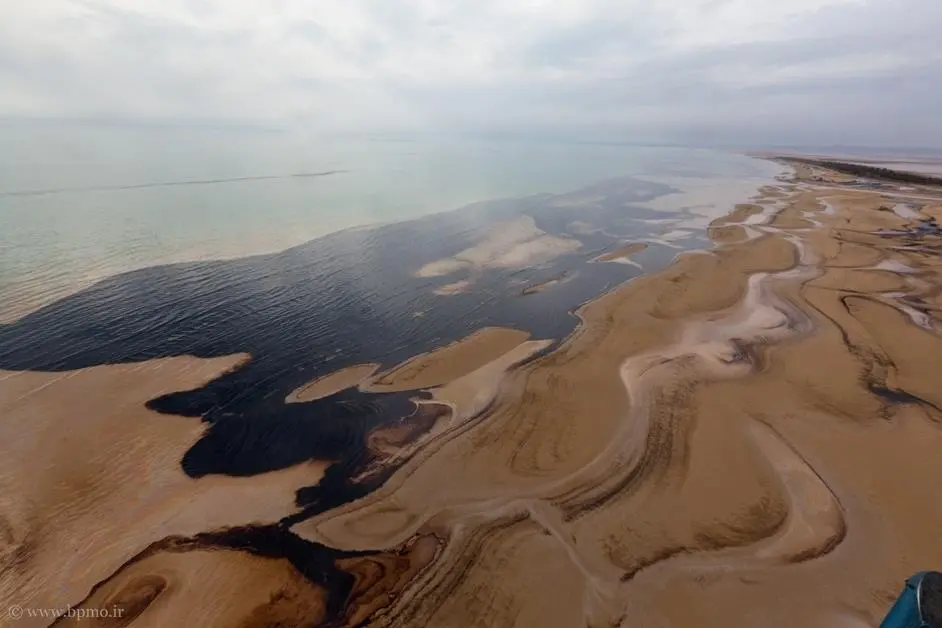
The high traffic of oil tankers and the product transition in this area, which ignore occupational health and environmental rules, and the non-standard site selection of these coastal constructions, have made a large amount of marine and coastal destruction in this region. As most of the Persian Gulf region oil terminals are located in inshore regions, they can affect both marine and terrestrial ecosystems.
Coastal regions, being transitional parts between these ecosystems, have a delicate structure, which makes them more sensitive to oil pollutions. Therefore, it is evident that undertaking an environmental site selection study for oil jetties and ports can be recommended as the primary and most rational solution for this problem. So, identification of factors (criteria) is the first step of these studies.
Oil port site selection survey
Our survey has shown that two types of environmental and technical factors have an effect on the selection of appropriate sites for an oil jetty and for ports. The target area and its special geographical location may require some different local factors too. By surveying oil ports in the Persian Gulf region and finding the environmental problems and technical necessities, other factors were added to the identified criteria.
Controlling marine pollution in the Persian Gulf region requires the consideration of Environmental Performance Indicators (EPIs) which enables us to evaluate possible sites to find the best one with respect to an oil jetty or terminal. Environmental expenses will decline if we have an environmental approach in coastal construction. The motivation of having a sustainable coast management has had a key role in the port construction, especially in such critical condition. In order to assess construction and maintenance costs, environmental protection and further natural resource restoration, three criteria were identified.
Environmental Criteria
So, a series of classified factors can be introduced with the consideration to the oil port site selection survey. All these criteria are classified in three ‘environmental criteria’: the social, the economic, and the ecologic.
Every selected criterion has a category of environmental factors which have different effects on the way to find an appropriate location for oil ports. So, they acquired an importance based on their role in the oil port site selection in the study area.
These criteria are described as below:
Social criteria:
Human Population Density: This criterion describes the effects of human density on oil port performances, and compares low-density areas to high-density areas with respect to the goal;
Threat for the Local Economy: This criterion describes the effects of oil port locations on losing job opportunities in coastal and marine regions such as fishery and shipping. So, it compares the alternatives according to the level of economic dependencies of these regions;
Effect on Habitats: This criterion describes the effects of oil port location on human societies, such as environmental pollutions and other challenges, and compares different levels of this problem on the final selected site.
Economic criteria
Accessibility to Oil consumption Regions: It describes the effects of oil consumption distance to the oil port (negative and positive impacts);
Possibility of Berthing Bigger Ships: It describes the possibility for bigger ships entrance to the port and, consequently, the arrival of more volumes and different types of products;
Possibility for Port Developing: It depends on the existence and availability of the area for port development;
Neighbouring Compatibility: This is about locating different land uses and businesses around the oil port, and it is obvious that these land uses should have enough compatibility with each other;
Job Opportunities: It describes the possible increase in job opportunities at an oil jetty and its surrounding sites;
Land Value: Different ecological, economic and social value of the land will affect the location of the oil port;
Distance to infrastructure: Distance to main roads plays an important role in port performance, distributing and receiving products, and meeting the current needs.
Ecologic criteria:
Depth: The depth of the water in the coastal region;
Slope: The slope of the sea bed at depth;
Bathymetry: This criterion depends on sea-bed conditions and their impact on port making processes;
Seismic: The seismic intensity of the study area has an impact on port construction and its stability;
Marine Meteorology: The general meteorological condition has a big role on port safety and ships berthing;
Backshore Instability: The stability level of backshore region has effects on the port stability and safety.
The analysis of current oil ports and other oil constructions, which are allocated to receive and distribute petroleum products demonstrated that political limitations determine the importance of crucial factors such as economical and social criteria. The Persian Gulf region and its key role bring about more challenges for maritime ports. Hence, political ties and commercial limitations have a big influence in the port site selection and oblige managers to favour environmental values above other preferences.
Integrated environmental approach
But what could be a rational solution for this disaster? Based on the specific situation of the Persian Gulf and its ports, we concluded that congregating all effective factors which lead us to having the best coastal management, port maintenance and environmental protection is to carry out such comprehensive ‘site selection’.
Our survey has revealed that some criteria such as “Depth”, “Sedimentation” and “Threat for the Local Economy” play a significant role in environmental problems of oil ports. Many terminals in Iran have a low mean depth and most of the maritime navigations need dredging operations. These technical processes lead to the inflow of sediment compounds to water column. On the other hand, a dredging regime and its intensity increase the solubility of heavy metals and current costs.
Therefore, in order to prevent all these environmental problems in oil ports, we need to use all our expertise in the field of coastal environmental science. This creates an opportunity to determine all essential criteria and reduce common biases. Through an integrated environmental approach, we should analyse all ecologic, social and economic aspects of the target area in order to find the best approach for a proper ‘environmental site selection’.
Related Articles
 ENERGY & TECHNOLOGY GREENPORT
 ALTERNATIVE FUELS GREENPORT
 ALTERNATIVE FUELS GREENPORT