


Beyond environmental goals
Ports need to consider the broader picture when setting sustainability goals, finds Alex Hughes
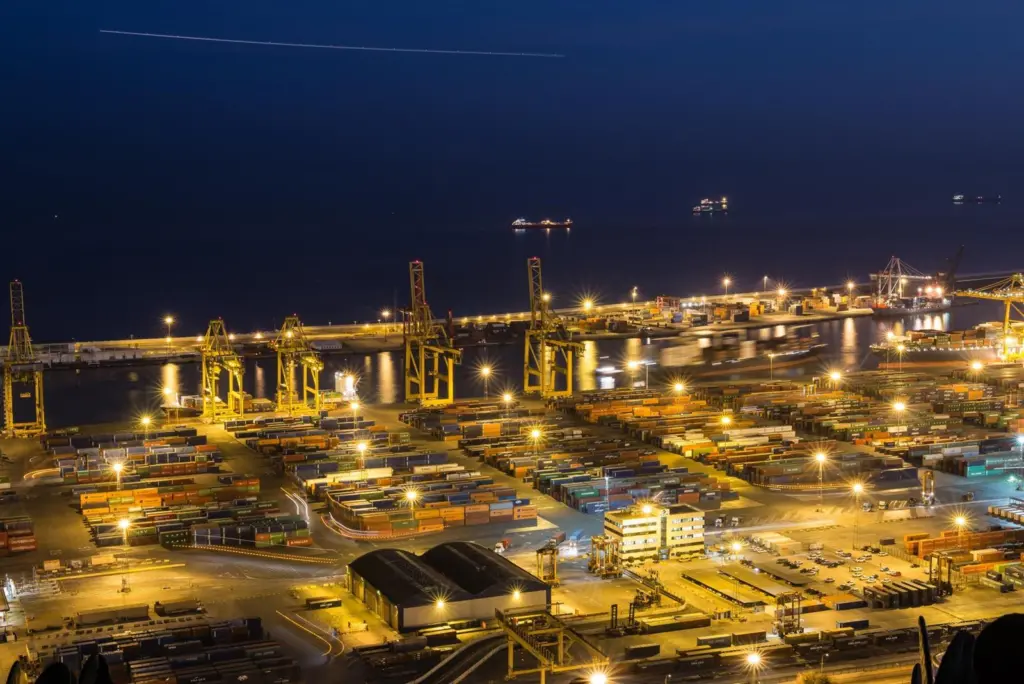
Ports that restrict their definition of sustainability to purely environmental issues are missing a trick; paint a broader brush and it’s easier to score sustainability points with the public, stakeholders and government.
Isabelle Ryckbost, secretary general of the European Sea Ports Organisation (ESPO), includes maintaining political and social equilibrium by generating traffic, employment and wealth in her example of sustainability.
Additionally, she points out that many ports are active in education and training; some are even investing in university level education programs. There is therefore a two-way flow generating a lot of added value for both sides in such transactions and, in her opinion, this should be seen as a form of sustainability, too.
“Ports have something of a hybrid character: they serve in parallel both commercial and public interests. Ports are socio-economic motors of their regions and most of them are located in close proximity or even surrounded by urban agglomerations. In that sense, ports have to take into account the surrounding city and the needs of the local community, which implies a social element to what they do. As a result, they have to be accepted by the residents, who effectively grant them a licence to both operate and grow,” says Ms Ryckbost.
She adds that a port’s geography and overall positioning in the transport chain may also have an impact on its overall sustainability..
“Location is a very important aspect of any port. If you have a market behind you and you serve a substantial hinterland, with important industry in the neighbourhood or important clusters of industry in the port area, your operations may be considered more “sustainable” in the broad sense.”
Ports are complex and diverse structures, she argues, playing many different roles. Some, simply focus on a niche, which is based on local industry; other, smaller ports even become hubs for the offshore industry. Some perhaps initially struggle to find their vocation, but become more “sustainable” in the longer term due to changing market conditions.
Hinterland links
How ports are connected to their hinterland, she adds, is often key to their success. “Environmentally sustainable hinterland links are important and they will become ever more important in the future,” she says, noting that rail and, if possible, inland waterway connections, are a must. “Most big ports already have these in place or are working on that.
“However, I believe ports need both good road and good rail links,” says Ms Ryckbost. “Although road traffic is becoming cleaner, there is still a struggle with congestion, so rail is a major factor in port development.”
The European Union has designated more than 100 ports in Europe as core ports. To be in this category, they must have high quality rail and, where possible, inland waterway links in place by 2030.
Interoperability, is another important aspect of rail into ports. The break-in gauge between France and Spain is therefore a problem, since infrastructure has to be interoperable to be effective if ports are to become sustainable traffic hubs over the longer term.
It is also in a port’s interest to have direct links to national highway networks, rather than having to route road traffic through already congested city centres and this is an area many cities and ports are already working on.
Some existing urban ports that lack the ability to easily connect to a highway network have already been forced to move to more sustainable out-of-town sites.
“In many cities that are housing big ports, one hardly sees port activity in the centre. Virtually all new terminal developments have taken place outside the main urban area, with much traditional cargo handling activity having moved there. However, in many cases, some port activity remains close to the city centre. This is especially the case for ferry and cruise ship traffic, which has remained at the very heart of the city, which is good because it allows the citizens to ‘live’ the port experience somehow.”
While many ports have developed independent intermodal terminals, Mr Ryckbost also stresses the need, where possible, to ensure all terminals have direct rail links. Nevertheless, she recognises that for many smaller ports this is not an option, since there is simply insufficient traffic to justify the investment needed. These smaller ports do therefore benefit from having intermodal terminals, even though this means that other ways have to be deployed to bring cargo to the rail head.
Price tag
Whether end-users are prepared to pay more for their goods if they are channelled through more sustainable ports is an issue carriers, rather than ports at the moment. “There is the example of a supermarket chain in France promoting its use of inland waterway traffic to ship containers into central Paris. This is clearly a marketing tool, since the company can show it is generating less CO2 by using this mode,” she says.
Port authorities are, nevertheless, keen to promote their environmental performance. ESPO itself backs a port specific certification scheme, PERS, within the framework of Eco Ports. For this, ports have to prove that they are meeting a certain level of environmental standards.
As for technology making ports more sustainable, she points out that better technology invariably leads to more efficiency. “By making better use of infrastructure and equipment, ports can certainly become more sustainable. Digitalisation and Big Data can help in that respect. This allows operators to use existing infrastructure in a more optimal way. By itself, this could help reduce the negative aspects of transport, because each unit will use less energy.”
Smoother operations all round also means fewer vehicles being used and fewer movements of empty containers. “Ports can do more with less by using technology better. In itself this will make everything more sustainable,” says Ms Ryckbost.
However, as to whether better technology always works is open to debate. “Automation is definitely a challenge for social equilibrium. But while there might be fewer people working in terminals, there is still work being generated in moving cargo in and out of the port and processing it. So employment is still being generated, meaning that the port’s relationship with the neighbouring city is sustainable in the longer term,” she says.
And if ports add value to a region, benefiting the local population in terms of more employment and boosting local business, this is another example of ports being “sustainable” entities. “The port of Barcelona has actually done some research to find out what would happen if a port didn’t exist. If you can prove that your port adds value then this is a plus,” Ms Ryckbost concludes.
QUEENSLAND TAKES SUSTAINABILITY TO HEART
In Australia, the Queensland Government is advancing master planning for the priority ports of Gladstone, Abbot Point, Townsville and Hay Point/Mackay under the Sustainable Ports Development Act 2015 (Ports Act).
Queensland has a maritime economy that is heavily reliant on ports for international seaborne trade, particularly the major bulk-commodity exporting ports adjacent to the Great Barrier Reef World Heritage Area (GBRWHA).
According to a spokesperson for the Department of State Development: “Priority port master planning will support the sustainable development of critical economic development infrastructure — the state’s priority ports — in a way that will balance growth, job creation, environmental values and community interests.”
Priority port master planning considers marine and land-based impacts, port and supply chain capacity and connectivity, and environmental and community values. The hope is that such planning will enable better management of areas essential for the development of each priority port, while protecting community and environmentally sensitive areas, in particular the Outstanding Universal Value of the GBRWHA. These essentials include corridors for road and rail, power, water and gas pipeline corridors, bulk materials handling and construction lay down areas for both the present and the long term.
“Through priority port master planning, Queensland will set national standards as the first state to co-ordinate planning and sustainable development beyond the port boundary; and be the first state to require mandatory consultation with stakeholders and the community on the future direction of its major bulk commodity ports,” the spokesperson tells Port Strategy. “One important outcome will be to deliver certainty for investors, the state’s port network and the community.”
At the Port of Gladstone, a draft master plan is expected to be released for public comment in mid to late 2016, with those for Abbot Point, Townsville and Hay Point/Mackay commencing as of mid 2016.
Related Articles
 BULK HANDLING
 BULK HANDLING
 BULK HANDLING