


Green shipping corridor
Two port authorities are looking to establish what they call the ‘world’s longest’ green digital shipping corridor.

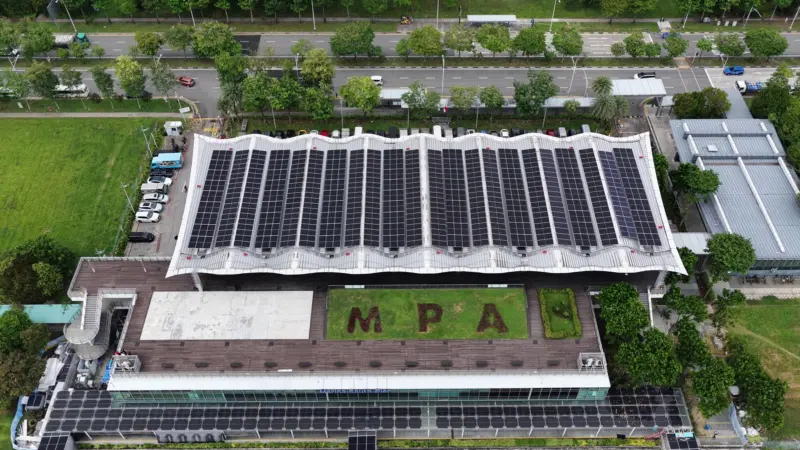
A memorandum of understanding (MoU) signed by the Maritime and Port Authority of Singapore (MPA) and the Port of Rotterdam aims to use future fuels and digitalisation to enable low and zero carbon shipping.
“Shipping is among the most important industries to decarbonise, owing to its large international reach and volume, which continues to grow. By bringing together parties across the supply chain along one of the world’s biggest trade lanes, we can enable carriers to switch to zero-carbon fuels and speed up the transition to more sustainable shipping,” said Allard Castelein, CEO of the Port of Rotterdam.
Coalition
The MoU aims to bring together stakeholders across the supply chain to realise the first sustainable vessels sailing on the route by 2027.
Each future fuel has its own challenges relating to costs, availability, safety and restrictions in range due to lower energy density compared to fossil fuels. To tackle these challenges, the two port authorities will work together with shippers, fuel suppliers and other companies to collectively work on potential solutions.
Beyond alternative fuels, the MoU also aims to optimise maritime efficiency, safety and the transparent flow of goods by creating a digital trade lane where relevant data, electronic documentation and standards are shared. This should facilitate the seamless movement of vessels and cargo and optimise just-in-time arrival of vessels from port to port.
The port authorities will work with the Global Centre for Maritime Decarbonisation and the Mærsk Mc-Kinney Møller Center for Zero-Carbon Shipping as action partners, as well as other industry partners across the supply chain, including bp, CMA CGM, Digital Container Shipping Association, Maersk, MSC, Ocean Network Express, PSA International and Shell.
It’s hoped this will enable the Green and Digital Corridor project to raise investment confidence, attract green financing and kickstart joint bunkering pilots and trials for digitalisation and the use of low- and zero carbon fuels along the route.
Related Articles
 ASIA GREENPORT
 PRODUCTS & SERVICES GREENPORT
 ALTERNATIVE FUELS GREENPORT