![GreenPort[PortStrategy]](https://www.portstrategy.com/greenport/wp-content/uploads/sites/4/2026/09/GreenPortPortStrategy.svg)

A greener low-emission shortsea shipping route
Finnlines has launched its new Green Lane shortsea service, offering low-emission sea transportation using biofuels, methanol and electrification.
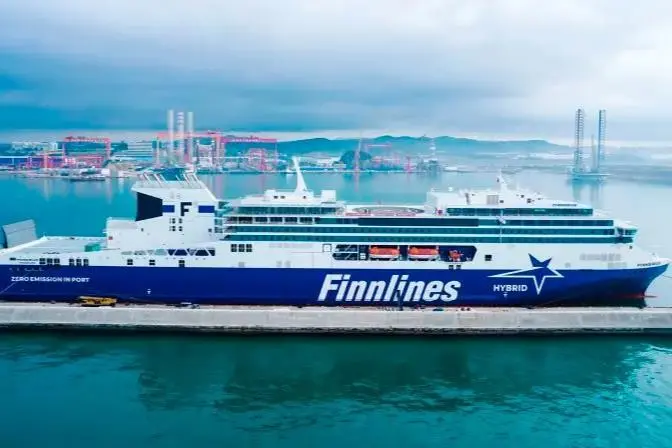
The Green Lane is designed to help freight customers and passengers meet tough environmental standards and reduce emissions. The primary focus is on transhipments powered by alternative fuels, with fully electric options also available on select routes.
“Our utmost goal is to reduce emissions and we are already seeing concrete results,” said Antonio Raimo, line manager at Finnlines.
“With the introduction of our new vessels, Finnsirius and Finncanopus, we have entered the hybrid era and can now offer our customers even more efficient and sustainable sea transport services.”
Green shipping
On the Naantali to Kapellskär route, Finnlines will offer 100% electric shipments using 5 MWh battery-powered hybrid ro-pax ships. The electricity is sourced from onshore power, drastically reducing fossil fuel reliance.
For wider shortsea routes, including Malmö to Świnoujście, Malmö to Travemünde, Hanko to Gdynia and Naantali to Kapellskär, Green Lane shipments will use biofuels derived from renewable sources. Finnlines said this can cut greenhouse gas emissions by up to 90%.
“Both solutions ensure low emissions – for example using biofuel can reduce carbon dioxide emissions by up to 700 kg per trailer on the Hanko to Gdynia route,” added Merja Kallio-Mannila, commercial director at Finnlines.
Looking ahead, Finnlines has ordered three new methanol-powered vessels set to join the Helsinki to Travemünde route between 2028 and 2029, further strengthening its alternative fuels strategy.
The Green Lane officially opens on 22 May 2025, marking a major step toward fossil-free shortsea shipping in the Baltic region.
Related Articles
 ALTERNATIVE FUELS GREENPORT
 ALTERNATIVE FUELS GREENPORT
 ALTERNATIVE FUELS GREENPORT