![GreenPort[PortStrategy]](https://www.portstrategy.com/greenport/wp-content/uploads/sites/4/2026/09/GreenPortPortStrategy.svg)
Alt fuels bolster Rotterdam’s market position
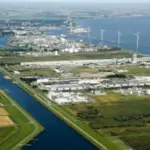
A major expansion of container capacity is strengthening Rotterdam’s position along with its continued work to make room for the energy transition.
This is despite the volume of total cargo throughput in the port of Rotterdam being 5.5% lower in the first half of the year than in the same period in 2022.
“Despite economic uncertainties and geopolitical tensions, major advances were made in the first half year in the construction and issuance of new land and quay walls to make room for, among other things, the production and imports of green hydrogen and additional capacity in the container segment,” said Boudewijn Siemons, interim CEO and COO of the Port of Rotterdam Authority.
Positive outlook
In the first half of the year, the agreements were signed for the expansion at the container terminals in the Princess Amaliahaven. This expansion will, in time, result in a potential flow of some 4 million teu.
The other major continued spend is on the energy transition. Some seventy projects are currently progressing in various phases and the energy transition is becoming increasingly visible at the port.
Green hydrogen plays a central role in the new carbon-neutral port and economy.
Alliance agreements for the large-scale imports of green hydrogen were signed this year with parties in countries including Brazil, Spain and Namibia.
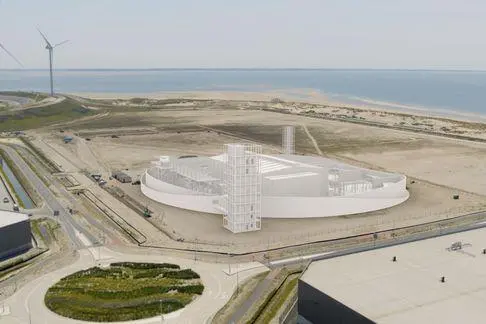
To produce green hydrogen, two conversion facilities are being set up on Maasvlakte 2. Several companies have plans to build green hydrogen plants here with a capacity of 200-250 MW each, with Shell having already started work on the construction of the first hydrogen plant.
Elsewhere on the Maasvlakte, space is now being created for a new electrolysis cluster. An eleven-hectare site was set aside in April 2023 for a hydrogen plant up to 1 GW in size for the party that wins the tender for the Beta section of the IJmuiden Ver windfarm.
The Port Authority’s ambition is 2 to 2.5 GW of electrolysis by 2030. The national government is aiming for 4 GW nationwide by 2030.
Gasunie took the investment decision in June for the first section of a national hydrogen network from Maasvlakte 2 to Pernis. Work will begin after the summer. From 2030 onwards, the hydrogen network will connect the major industrial regions in the Netherlands and surrounding countries such as Germany and Belgium with one another.
The work on the sustainability of inland shipping also took more concrete shape with ongoing investment in Zero Emission Services (ZES), a company that focuses on the electrification of inland shipping and the launch of the Condor H2 project.
Condor H2 will provide hydrogen storage and fuel cells with a battery pack on a pay-per-use basis so that vessels can make the transition to being emission-free with a limited upfront investment for shipowners.
This alliance between the Port of Rotterdam Authority, the Province of Zuid-Holland and more than forty partners will make it possible for fifty vessels to sail emission-free by 2030.
Related Articles
 ALTERNATIVE FUELS GREENPORT
 ALTERNATIVE FUELS GREENPORT
 ALTERNATIVE FUELS GREENPORT