![GreenPort[PortStrategy]](https://www.portstrategy.com/greenport/wp-content/uploads/sites/4/2026/09/GreenPortPortStrategy.svg)
Alternative fuel readiness
Lloyd’s Register’s alternative fuel ‘readiness’ whitepaper seeks to help ship owners develop strategies to ensure that all vessels can keep pace.
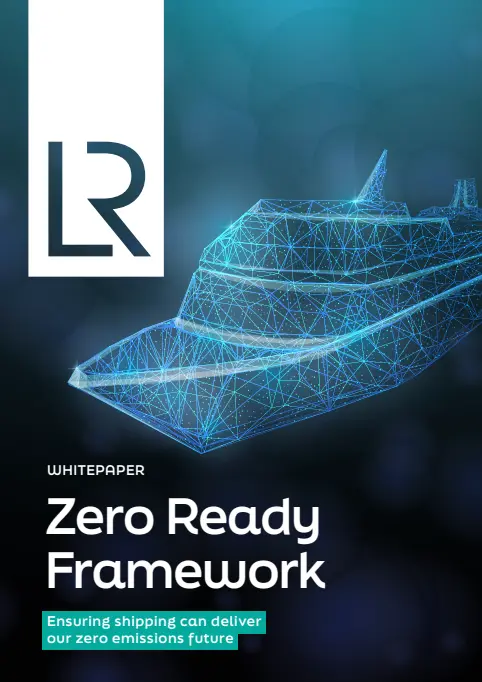
Zero carbon shipping solutions are being developed but are not yet commercially widespread. The industry therefore talks in terms of ‘readiness’, a term which can encompass many concepts and apply equally to newbuilds and retrofits.
“It is not always clear to the investor, charterer, insurer or prospective owner what these claims entail,” says the whitepaper. “How can we ensure that existing and newly built ships are truly ready for the energy transition?” it asks.
The whitepaper defines a ‘Zero Ready Framework’ comprising five levels from 1 (the highest level of readiness) to 5 (the lowest). It can be applied to existing vessels, newbuilds and those on order and is designed to accommodate any vessel that is, or could be, zero greenhouse gas emissions-fuelled, measured on a well to wake basis.
Independent of class societies’ notations or current regulations such as EEXI or CII, the framework does not address the particular resources used, nor their production methods, instead focusing solely on the vessel’s capability to burn green fuel.
Lloyd’s Register is intending the framework be used across business to help shipowners and operators develop appropriate strategies for readiness, enable fuel suppliers to determine the demand for new fuels, give policy makers and regulators better information to create the right incentives, give manufacturers better insight into the required skills and technologies and to allow financiers and insurers to better optimise portfolios.
Related Articles
 ALTERNATIVE FUELS GREENPORT
 ALTERNATIVE FUELS GREENPORT
 ALTERNATIVE FUELS GREENPORT