![GreenPort[PortStrategy]](https://www.portstrategy.com/greenport/wp-content/uploads/sites/4/2026/09/GreenPortPortStrategy.svg)



Ammonia investment challenges
Ammonia needs to be treated with caution but has valuable green credentials.
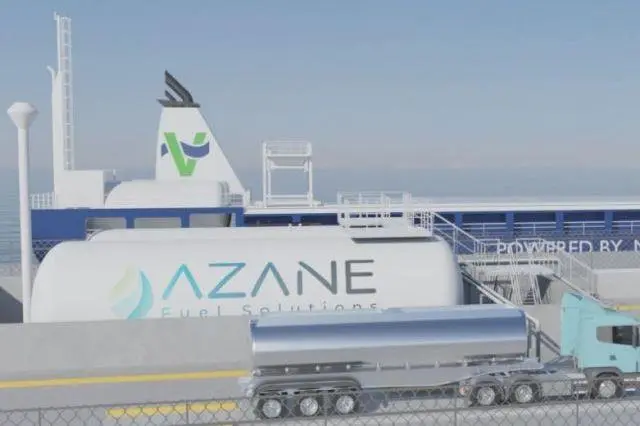
Speaking exclusively to GreenPort, Malte Siegert, head of environmental policy at Naturschutzbund Deutschland (NABU) said that while ammonia use comes with safety concerns, green ammonia has zero emissions and is therefore an attractive development prospect.
“Ammonia has no carbon and you don’t have to have any after treatment, which makes it most likely cheaper to use.” Money plays a very important role in the energy transition, he pointed out.
“There are safety aspects that have to be dealt with in the ports, but you can use ammonia for fuel cells, therefore it seems to be a very good thing,” he added.
Aiding green hydrogen
Ammonia demand comes to the fore when looking at the challenges of using more green hydrogen and how this can be financed.
“The biggest problem is to produce the ammonia needed for hydrogen because in the future everybody wants it. If hydrogen is also the base for other e-fuels then you need it in a huge amount,” stressed Siegert.
Establishing production sites that produce enough hydrogen to supply the whole maritime industry, and also other sectors where it is in demand remains to be seen, he said.
“We have lots of hydrogen, but not green hydrogen, so it’s important to produce it in a way that it’s sustainable.”
Is methanol a winner?
Although ports have been working on safe LNG handling for years, and have extended their learnings to other fuels, the dangers of ammonia shouldn’t be underestimated, said Siegert.
“The bad thing is it’s so toxic – it has an impact on the marine environment. There have always been solutions for flammable and toxic goods in ports, and the good thing is ammonia doesn’t last as long as HFO in water, but you cannot avoid the outcome of an accidental spill in the instance of it being used as a shipping fuel.”
Ammonia appears difficult to handle and it’s doubtful that it will be used for large-scale applications, said Siegert. Instead, it might be better to focus on methanol development.
“There might be some specific areas where it is used, but for a larger scale application I doubt it, methanol might be the better thing because you don’t have to cool it down. It has an ambient temperature that is easy to handle. But it still requires carbon capture and that makes it more energy intensive, so it might be a little bit more expensive.”
Related Articles
 ALTERNATIVE FUELS GREENPORT
 ALTERNATIVE FUELS GREENPORT
 ALTERNATIVE FUELS GREENPORT