![GreenPort[PortStrategy]](https://www.portstrategy.com/greenport/wp-content/uploads/sites/4/2026/09/GreenPortPortStrategy.svg)

Ammonia safety study
A major study into the safety requirements of ammonia bunkering is in motion.
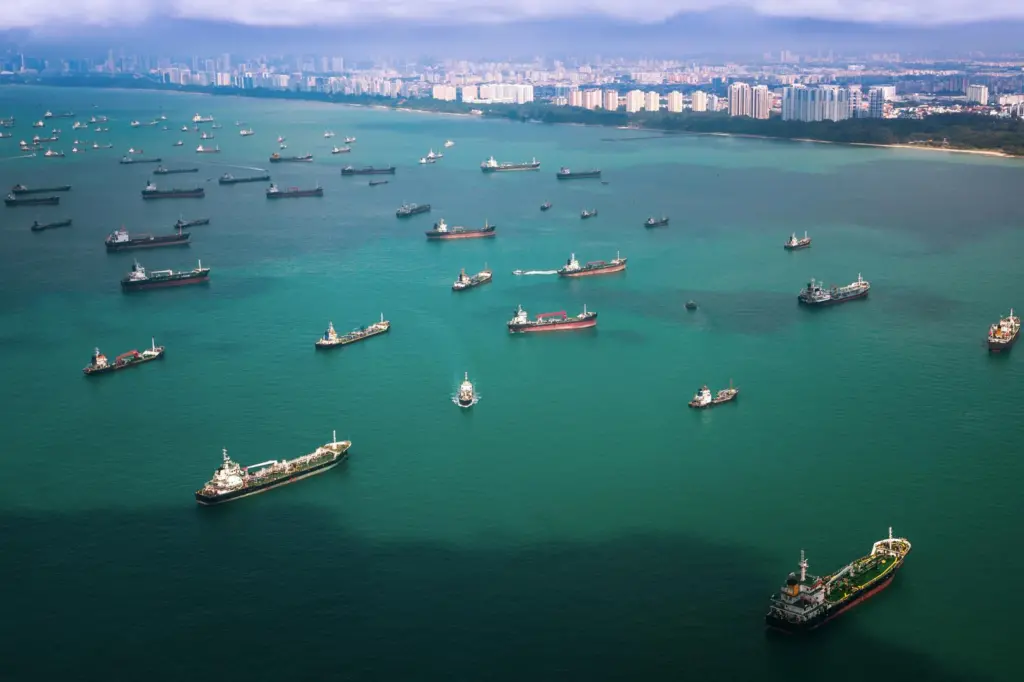
DNV will be conducting the study on behalf of the Global Centre for Maritime Decarbonisation in Singapore with the aim of defining a set of safety and operational guidelines for bunkering trials at two local sites.
Ammonia shows promise as a fuel to help decarbonise shipping but safety gaps have the potential to disrupt its take up. “The safe handling of ammonia is one such gap which urgently needs to be closed, given the threat it poses to seafarers and ships unless properly managed,” Knut Ørbeck-Nilssen, chief executive of DNV Maritime.
“We are therefore thrilled to partner with Surbana Jurong and the Singapore Maritime Academy on this pioneering initiative, which we hope will lay the foundations for robust ammonia bunkering safety guidelines with industry wide applicability,” he said.
Scope of study
The scope of DNV’s study will comprise ammonia demand forecasting, bunkering site recommendations, the development of conceptual designs of bunkering modes like truck to ship or ship to ship, HAZID/HAZOP/QRA studies, as well as drafting of technical and operational guidelines.
DNV has been working in this area for some time, launching its ‘Fuel Ready’ notation in 2021. “Safety is the prerequisite for the successful and timely introduction of new fuels such as ammonia, hence joint research and development, testing and setting standards is crucial at this point,” said Cristina Saenz de Santa Maria, DNV Maritime’s regional manager South East Asia, Pacific and India.
Related Articles
 ALTERNATIVE FUELS GREENPORT
 ALTERNATIVE FUELS GREENPORT
 ALTERNATIVE FUELS GREENPORT