![GreenPort[PortStrategy]](https://www.portstrategy.com/greenport/wp-content/uploads/sites/4/2026/09/GreenPortPortStrategy.svg)




Atlantic ports partner up on energy transition
North Sea Port will cooperate intensively with the Canadian ports of Montréal, Québec, Saguenay, Sept-Îles en Trois-Rivières on trade, innovation and energy transition.
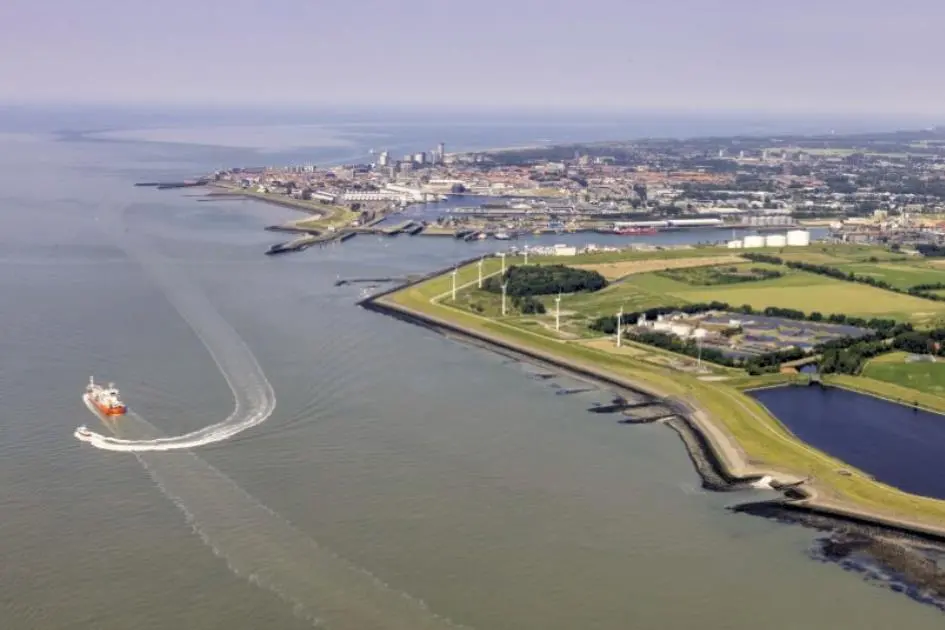
This new cooperation focuses on strengthening trade between the Saguenay-Saint Laurent sea corridor and North Sea Port. Canada is North Sea Port’s fourth trading partner.
”Canada is North Sea Port’s fourth most important trading partner in terms of cargo throughput. Our location in Western Europe is of great strategic importance for cooperation with [these ports],” said Maarten den Dekker, chief sustainability and digital officer of North Sea Port.
”Cooperation with these five Canadian ports can only be beneficial.”
Strategic importance
The agreement builds on a previous cooperation agreement from 2018 between the Port of Quebec and North Sea Port, but now adding these three new Canadian ports.
One focus will be on further developing the bulk sector and optimising logistics chains between the Saguenay-Saint Laurent’s Canadian hinterland, the port area of North Sea Port and north-western Europe.
In addition, the ports will share knowledge and insights to improve port planning and port operations.
The ports will also actively cooperate to reduce their carbon footprint spearheading initiatives such as low-carbon energy production, greening of port areas, alternative fuels and energy efficiency initiatives.
There will also cooperation in the field of technology and circular economy with the ports cooperating with customers, research institutes, universities and start-ups. Sharing knowledge will help promote technological innovations such as artificial intelligence for port operations.
North Sea Port already has a key position in Vlissingen as a key hub for the production, handling and distribution of sustainable products.
The port has the goal of becoming climate-neutral by 2050, with hydrogen playing a pivotal role in the energy transition.
Related Articles
 ALTERNATIVE FUELS GREENPORT
 ALTERNATIVE FUELS GREENPORT
 ALTERNATIVE FUELS GREENPORT