![GreenPort[PortStrategy]](https://www.portstrategy.com/greenport/wp-content/uploads/sites/4/2026/09/GreenPortPortStrategy.svg)


Australian ports eye ammonia potential
A benchmark feasibility study has highlighted the potential for using clean ammonia to refuel ships visiting the PIlbara region of western Australia.
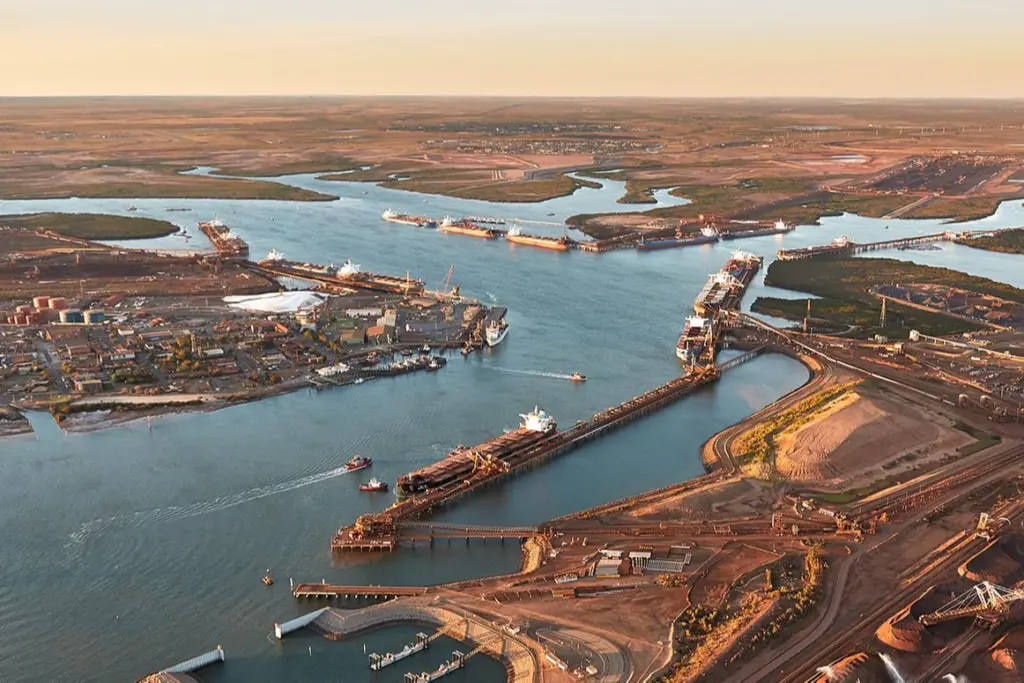
Key results of the study, commissioned by Yara Clean Ammonia (Yara) and Pilbara Ports, show that ammonia bunkering is both economically and operationally viable within the Pilbara region, particularly for iron ore carriers.
Samuel McSkimming, chief executive officer, Pilbara Ports, said that with the carbon reduction efforts in the steel industry supply chain, bulk carriers are a natural starting point for the early adoption of alternative marine fuels.
“The Pilbara contains the world’s largest bulk export ports. This scale of operations cannot be found anywhere else in the world and it makes the Pilbara’s ports the natural beachhead from which the global bulk carrier fleet will decarbonise,” he said.
“We are proud to contribute to a green transition in the Pilbara region and more broadly in the global shipping industry. Pilbara Ports is progressing on several strategically significant projects, including major port infrastructure upgrades at Dampier and Port Hedland, to support the production of clean fuels in the Pilbara.”
Important step
The study, undertaken by Lloyds Register, looked at key areas including the estimated demand and likely availability of ammonia as a replacement shipping fuel. The potential risks and regulatory requirements for ammonia bunkering (refueling) at the ports were also considered.
The study indicated that ship-to-ship bunkering operations could be performed within acceptable risk levels at anchorages in Dampier and Port Hedland.
Moreover, it confirmed that existing ammonia production and export infrastructure within the Pilbara, such as Yara’s Karratha plant and Pilbara Ports’ Bulk Liquids Berth at Dampier, could be leveraged to initiate bunkering operations in the near-term.
The results also show the demand for ammonia as a fuel to decarbonise the international iron ore trade, reaching a volume potential of 1 million to 1.5 million tonnes in 2035.
“The study has shown that a key enabler for meeting this demand is Yara’s existing assets including the world-scale Yara Pilbara Fertilizers ammonia plant near Karratha,” said Murali Srinivasan, senior vice president commercial, Yara Clean Ammonia.
He added that the current development of Yuri renewable hydrogen project on the Yara Pilbara site will be the first in Australia to inject green molecules into an existing ammonia plant.
”Yara is vigorously exploring options to ramp up volumes of clean and low carbon ammonia to lay the foundation for a reliable supply chain to serve the emerging shipping fuel market.” Mr Srinivasan said.
He said that a domestic bunkering industry in the Pilbara would create new industry and job opportunities for Western Australia and the Pilbara community.
Related Articles
 ALTERNATIVE FUELS GREENPORT
 ALTERNATIVE FUELS GREENPORT
 ALTERNATIVE FUELS GREENPORT