![GreenPort[PortStrategy]](https://www.portstrategy.com/greenport/wp-content/uploads/sites/4/2026/09/GreenPortPortStrategy.svg)

Barcelona moves ahead with its energy transition
The Port of Barcelona is creating a new zero emission nautical bus service to be powered by solar panels or hydrogen which will also be connected to the electrical grid.
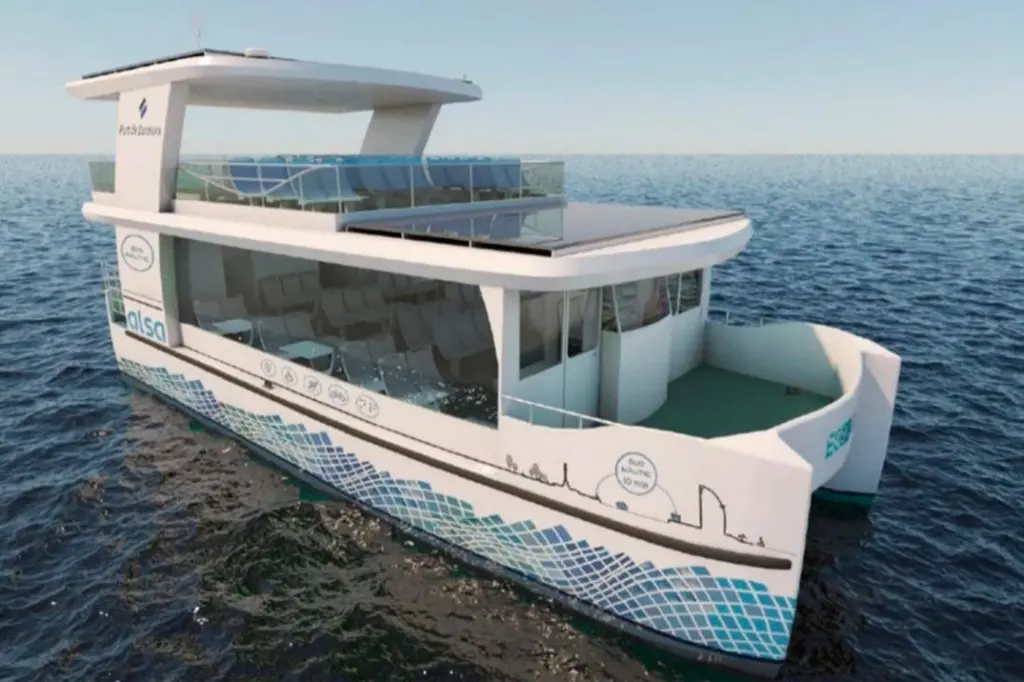
This new service will be created between Drassanes and Llevant wharves to Nex Continental Holdings, S.L.U, with a commitment to enter a joint venture with Bahia Zero, S.L. (ALSA Group).
Nex Continental Holdings, S.L.U. with a commitment to enter a joint venture with Bahia Zero, S.L. will undertake several investments at both ends of the new service: Llevant wharf and Drassanes wharf.
Alt fuels focus
The nautical bus stop at Llevant wharf will be located in the new passenger terminal that will occupy the former sheds, currently being refurbished.
It will be available for at least 12 hours a day using two vessels with a capacity for 70 passengers and will have an automated docking and boarding system.
The concession extends for 15 years and the successful tenderer, who will start operating on 1 July, will make an initial investment of €1,872,000 in the two vessels and the fitting out of the passenger terminal and the stop at Portal de la Pau.
Meanwhile, the Port of Barcelona’s Management Board has also approved the advance recovery of six hectares of the concession held by Muelles y Espacios Portuarios, S.A.U. (MEPSA), located on the energy wharf, to be used for the future green fuels manufacturing plant.
MEPSA has a 42-hectare concession on the energy wharf that expires in 2035. This space is occupied by various activities (liquid and dry bulk storage, chemical products logistics, special services, vehicle and container storage, etc).
This is an important step in developing the Port of Barcelona’s Energy Transition Plan. The future zero-emission fuel plant is expected to generate new maritime traffic with cleaner fleets of ships and facilitate the use of such new fuels in other port and logistics activities in the port and the surrounding area.
Related Articles
 ALTERNATIVE FUELS GREENPORT
 ALTERNATIVE FUELS GREENPORT
 ALTERNATIVE FUELS GREENPORT