![GreenPort[PortStrategy]](https://www.portstrategy.com/greenport/wp-content/uploads/sites/4/2026/09/GreenPortPortStrategy.svg)


BP bows out, but Rotterdam’s biofuel ambitions go on
News that BP has abandoned its plans for a biofuels plan at Europoort is a setback for the Port of Rotterdam, but but there is other development in the pipeline nonetheless.
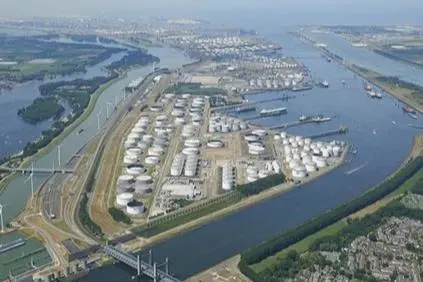
BP’s decision follows earlier setbacks for Rotterdam’s green energy hub. Shell halted construction of a partly built biofuels plant in Pernis earlier this year, while Finnish group UPM cancelled its construction plans in May.
”Unfortunately, for various reasons, the developments have been halted. Current market conditions, characterised by overproduction and slow growth in demand for biofuels, are also cited as reasons why the developments are not going ahead,” a Port of Rotterdam spokesperson told GreenPort.
”The Port of Rotterdam as a location has an excellent starting position due to the knowledge, space and infrastructure of the existing cluster, so this is a setback and a missed opportunity for Rotterdam and for the Netherlands.”
Not viable
UPM, Shell and BP were all engaged in far-reaching developments for the construction of biofuel plants; Shell even started construction.
Had they gone ahead, the plants would have been a significant boost to the biofuel cluster in the Port of Rotterdam, which is now the largest in Europe.
A BP spokesperson told Reuters that the project, which had plans to produce 10,000 barrels of the fuel per day, had become too expensive to continue. It had already invested millions of euros in preparing the site.
Despite the loss, the port plans to continue other developments in has in the pipeline including the expansion of Neste refinery for biofuels and the development of VARO.
Collaborations such as EVOS and Metafuels and Power2X and Advario are also developing production facilities for fuels based on sustainable electricity (e-saf) for aviation.
”The use of low-CO₂ fuels is already mandatory in aviation and that obligation is increasing,” the spokesperson told GP, “in other sectors, demand for alternative fuels needs to be further stimulated.”
Related Articles
 ALTERNATIVE FUELS GREENPORT
 ALTERNATIVE FUELS GREENPORT
 ALTERNATIVE FUELS GREENPORT