![GreenPort[PortStrategy]](https://www.portstrategy.com/greenport/wp-content/uploads/sites/4/2026/09/GreenPortPortStrategy.svg)

Brazilian milestone in HVO tug bunkering
Brazil has completed its first hydrotreated vegetable oil (HVO) fuelling operation, marking a major step in its adoption of alternative fuels in marine transport.
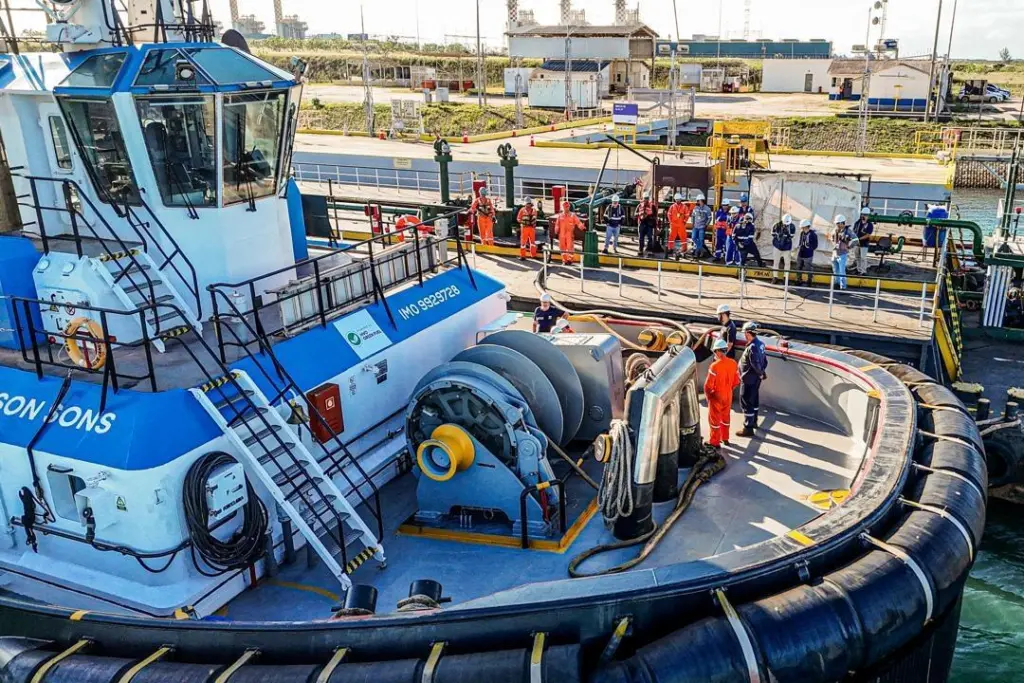
In a milestone for the decarbonisation of Brazil’s maritime sector, the energy company efen partnered with Wilson Sons to conduct Brazil’s first fuelling of a tugboat using HVO at Vast Infraestrutura’s Açu Liquid Bulk Terminal (TLA).
“This is a major milestone for efen and all other companies involved and is a relevant step towards decarbonization in the Brazilian maritime and port sector,” said Rafael Pinheiro, CEO of efen.
“We supplied the first cubic meters of HVO and expect to expand the supply to other vessels shortly.”
Bunkering first
This port bunkering operation follows February’s approval by Brazil’s ANP to test HVO on marine vessels.
The HVO-fuelled tug will help reduce emissions, maintenance impacts and increase fuel efficiency at the port. According to efen, HVO is estimated to cut CO₂ equivalent emissions by over 80% across its life cycle.
Wilson Sons, which operates over 80 vessels, is looking to integrate HVO as part of its emissions strategy.
“We believe that using HVO, a fuel 100% compatible with our engines, is a significant step in our emissions reduction journey,” said Marcio Castro, executive director, Wilson Sons.
“Only with partners aligned towards a more sustainable operation will we achieve our decarbonisation goals. With Porto do Açu, Vast and efen, we can be sure that we are on the right path.”
With growing demand for alternative fuels, Vast said it plans to expand TLA infrastructure for storing and blending biofuels.
This will also help further position the Port of Açu as a leader in Brazil’s green energy transition.
Related Articles
 ALTERNATIVE FUELS GREENPORT
 ALTERNATIVE FUELS GREENPORT
 ALTERNATIVE FUELS GREENPORT