![GreenPort[PortStrategy]](https://www.portstrategy.com/greenport/wp-content/uploads/sites/4/2026/09/GreenPortPortStrategy.svg)




Competition for biofuels may harm shipping
Scarcity of greener fuels will lead to a fight for resources between the road transport and shipping sectors, says Transport & Environment.
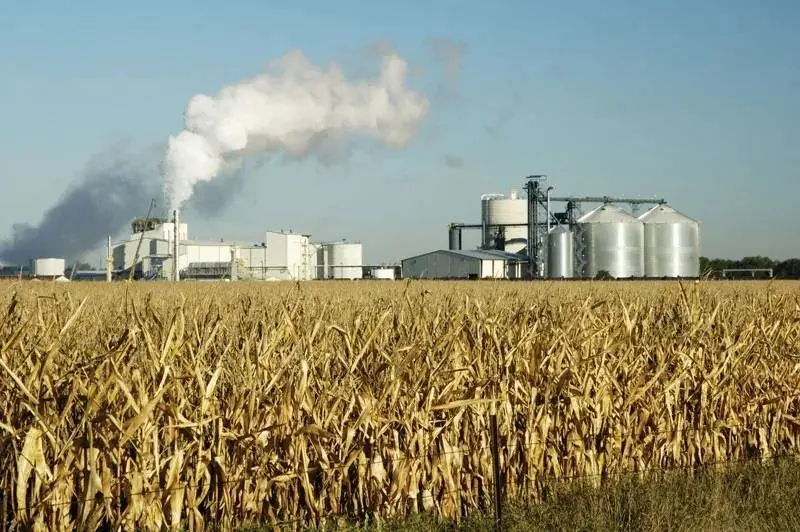
In its newly released ’Biofuels and e-fuels in trucks will make it harder for aviation and shipping to go green’ paper, the NGO says that fuel suppliers are looking to maximise the number of sales markets for e-fuels and biofuels and are trying to persuade aviation and shipping that they will benefit if road transport has a greater demand for these fuels.
In the paper, T&E say that fuel suppliers are claiming that ‘using e-fuels in trucks and buses will help scale up production, reduce their costs, and make them more available for planes and ships. Road hauliers will bear most of the high cost, making e-kerosene almost free for airlines’.
However, the NGO warns that widespread availability of such fuels is still some way off. “Scaling up green hydrogen production, direct air capture, and renewable power all require time, land, and investments,” says the paper. “Total e-fuel volumes will therefore be limited by 2030.”
“Refining of e-crude should therefore be optimised for e-kerosene, and any co-products left should be used to decarbonise hard-to-abate sectors such as shipping or chemical industries.”
Unintended consequences
The NGO is saying that under European Union’s Renewable Energy Directive (REDIII) ‘fuel suppliers are correctly incentivised to focus on aviation and shipping’ – but changing the CO2 crediting system and ‘opening the door to fuels in road transport could incentivise the exact opposite’.
“If e-fuels and biofuels are credited in the CO2 standards for heavy-duty vehicles,” said T&E, “fuel producers would have an incentive to only provide the minimum volume of e-fuels and biofuels to the aviation and shipping sector that is needed to fulfil regulatory sub-targets.
“They would tool their refineries to the detriment of kerosene output and try to maximise the fuel volume going into road transport.”
T&E believes the same would apply to biofuel feedstocks where competition is already limiting access, it says, adding that its priority use should be for non-electrifiable transport.
Related Articles
 ALTERNATIVE FUELS GREENPORT
 ALTERNATIVE FUELS GREENPORT
 ALTERNATIVE FUELS GREENPORT