![GreenPort[PortStrategy]](https://www.portstrategy.com/greenport/wp-content/uploads/sites/4/2026/09/GreenPortPortStrategy.svg)


Enabling large scale green hydrogen production
Ralph Windeatt, ABP head of business development, discusses how the port group is enabling green hydrogen production
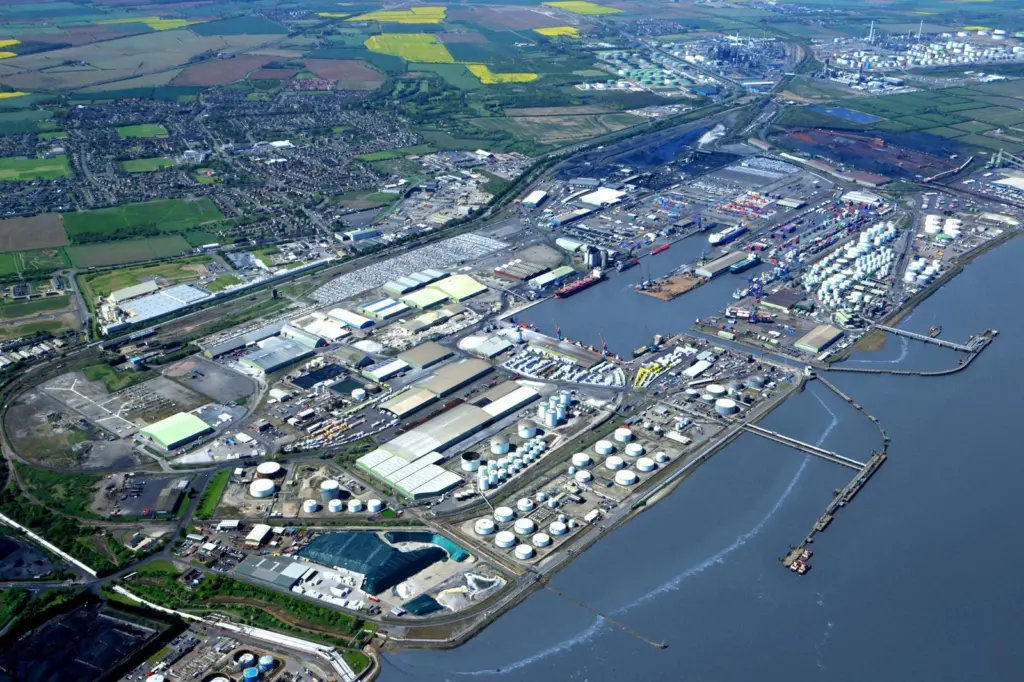
Associated British Ports (ABP) is the UK’s leading ports group with a network of 21 ports across Britain, including four ports on the Humber, which is the UK’s largest industrial cluster. As such, the Humber offers the biggest decarbonisation opportunity in the country and achieving net zero it is critical to supporting jobs and delivering economic growth for the region.
The Humber as a region has delivered for the UK before, with extensive recent history and experience in delivering large scale green energy projects, including the world’s largest installed windfarm, the 1.3GW Hornsea 2, as well as five other arrays. Together ABP’s ports on the Humber at Grimsby, Hull and Goole, Immingham provide a gateway for the trade and prime locations for green energy generation projects, connecting businesses across the UK, Europe, and beyond.
Collaborating to transition
The need for renewable energy generation has never been clearer, with the UK adopting the role as a global leader in addressing climate change and achieving greater sustainability to ensure that we can preserve the world for future generations.
As part of its commitment to combating climate change, the UK Government has committed to reaching Net Zero greenhouse gas (GHG) emissions by 2050. To achieve this, support from traditional industry sectors is critical, to be able to save the planet whilst creating new jobs through innovation and green technologies. On the Humber, there are multiple nationally critical energy and decarbonisation projects, which need to be delivered for the UK to achieve its ambitious target. These include a wide rangeof projects, ranging from carbon capture and storage to green hydrogen. ABP recognises the vital role ports must play as enablers in the UK clean energy transition.
In addition, in 2019, the UK Government published its ‘Clean Maritime Plan’, which provides a route map for achieving zero emissions from shipping. The plan reflects the need to respond to the challenges of climate change and air pollution to meet the International Maritime Organization (IMO)’s target of halving total annual GHG emissions from international shipping by 2050. To deliver these plans, major investments in infrastructure and incentives are needed, to help transform the maritime industry. When it comes to finding the best locations for onshore wind and solar projects, ports are increasingly important with 17 of ABP’s 21 ports now hosting onsite renewable energy projects helping to reduce emissions and generate clean energy for port users and the grid.
The Humber is also among the leading areas in developing carbon capture, utilisation, and storage (CCUS) technology that will be critical for reducing industrial emissions. An example of this is Zero Carbon Humber, a consortium of energy and industrial companies and academic institutions seeking to turn the Humber into the UK’s first net zero carbon region by 2040.
Ports have a crucial role in CCUS by providing a solution for shipping CO2, which is critical for region’s of the UK that do not have direct access to geological storage. It also provides an opportunity for the UK to exploit the storage potential on the continental shelf for CO2 captured within the EU, where the plans for capture exceed the capacity of available storage.
The hydrogen economy
Accelerating the development of the hydrogen economy is a vital component of achieving net zero and indeed, hydrogen production is an important element of the UK’s clean energy transition. The UK Government’s hydrogen strategy seeks to achieve 10 GW of low carbon hydrogen production capacity by 2030. In relation to this, the primary challenge is that currently there is no significant domestic production of such hydrogen in the UK.
Whilst the global green hydrogen market is expected to significantly in the coming decades, it is still at an early stage in the UK. As an example of a low carbon type of hydrogen, green hydrogen is generated using electrolysis process, in which water is separated into hydrogen and oxygen by using electricity generated from renewable resources.
Ports provide critical infrastructure for the efficient handling of energy-related products. As hubs for transport and logistics, often adjacent to major industries and sources of renewable energy, they are ideally located to serve as generation, storage, and distribution sites for green hydrogen. Major projects already under way in the Humber ports illustrate the range of potential applications, from energy to transport fuel.
Immingham green energy
In August this year, ABP and Air Products announced their partnership project to bring the first large-scale green hydrogen production facility to the UK, the Immingham Green Energy Terminal. The facility, will contribute at least 150MW of hydrogen production capacity and will import green ammonia from production locations operated by Air Products and its partners around the world. The location will provide the required maritime infrastructure and offers good proximity to markets and the required utilities. The Port of Immingham also provides a critical link in business supply chains throughout Britain, supporting 10,500 jobs nationally and contributing over GB£700 million to the economy every year.
ABP will invest in new infrastructure with a new jetty to service the import and export handling of liquid bulk products. In addition to handling green ammonia, the jetty is being designed so that it can accommodate other cargoes connected to the energy transition, including the import of liquified CO2 from carbon, capture and storage projects for sequestration in the North Sea – thereby playing a significant role in the UK’s energy transition.
Immingham sits within the UK’s largest industrial cluster and in close proximity to proposed offshore transport and storage networks for CO2. The scheme follows on from an existing Air Products’ plan to develop the UK’s largest blue hydrogen facility in Immingham, making the Humber a major location for low-carbon energy production, businesses, and jobs.
Benefits to the UK
The project will bring a wide range of benefits to Immingham and the UK, including eliminating up to 580,000 tonnes of greenhouse gas emissions each year, the equivalent of taking 20,000 diesel HGVs off UK roads, as well as reducing nitrous oxide and particulate emissions. In addition, the project will bring up to GB£4.6 billion in growth and financial benefits to the region and provide 1,400 direct jobs and approximately 1,600 indirect jobs for supply chains and local businesses.
This first-mover project stimulates demand and will support the development of a local and national green hydrogen market. It will be an important contributor to the Government’s plans to make the UK a “global leader in low-carbon hydrogen.”
ABP is making significant investments to support a range of renewable energy generation projects. The development of the offshore wind sector is already a UK success story, and ABP has long been at the forefront of investment and delivery to support this. Opened in 2017, the offshore wind manufacturing facility at Green Port Hull has created skilled long-term jobs in the region and established a hub for future growth. Across the Humber Estuary in Grimsby, the port has evolved to become the world’s largest base for offshore wind operations and maintenance activity. This project was part of a £310 million joint venture between ABP and Siemens creating a renewable energy hub.
Ambitious sustainability targets are key to saving our planet and are a very positive step in the right direction. However, the journey to get there will require close collaboration between Government, businesses, and the Humber region, as the UK’s leading industry cluster. The energy transition provides both a generational opportunity to deliver clean and secure energy, while levelling up the economy in the process.
Related Articles
 ALTERNATIVE FUELS GREENPORT
 ALTERNATIVE FUELS GREENPORT
 ALTERNATIVE FUELS GREENPORT