![GreenPort[PortStrategy]](https://www.portstrategy.com/greenport/wp-content/uploads/sites/4/2026/09/GreenPortPortStrategy.svg)


HVO fleet expedites Liverpool’s net zero goal
Peel Ports is somewhat of a success story when it comes to the use of Hydrotreated Vegetable Oil (HVO100), over the last four years the Port of Liverpool has been working steadily to transition its port equipment from diesel to biofuel.
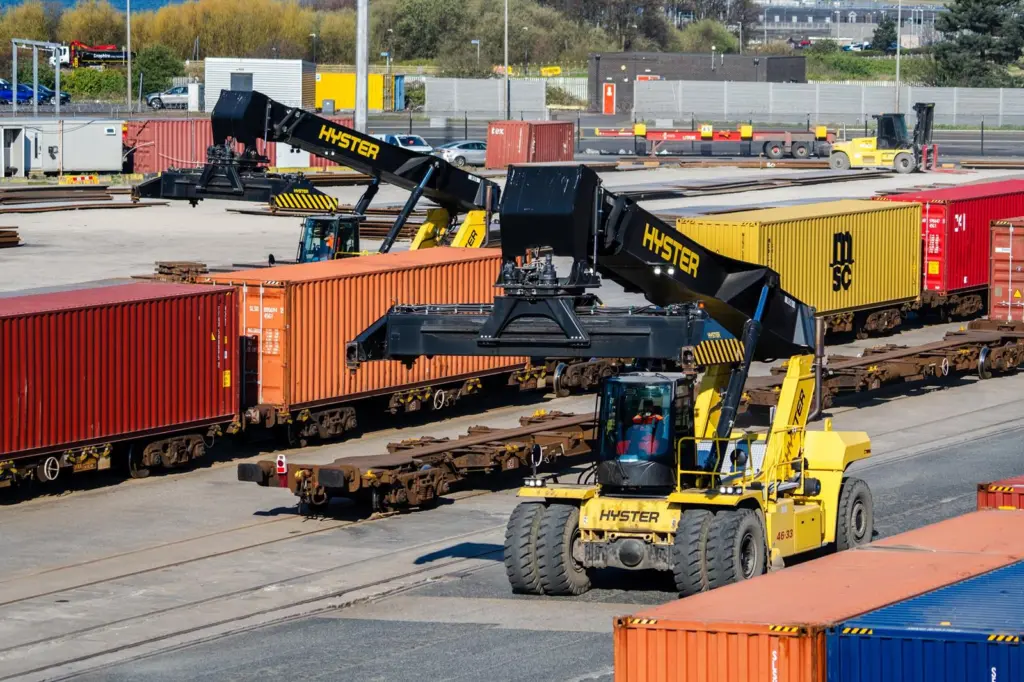
So far, the UK port operator has transitioned 118 of its 136-machine Hyster fleet to run on HV100, replacing conventional diesel as part of its strategy to achieve net zero emissions by 2040.
“Everybody’s looking for the next step forward. In an ever more competitive market, how can we make trucks more efficient, more productive and reduce the total cost of ownership for the end user?,” says Matt Lea, big truck sales manager, UK, Belgium, & Netherlands, Hyster.
”The level of commonality and familiarity makes it easier for operators to transition between different machines and different operations.”
Team effort
Hyster and dealer Briggs Equipment, working together with Peel Ports have worked to introduce the alternative fuels solution across lift trucks, reach stackers and empty container handlers at Liverpool, where approximately 900,000 teu are handled annually.
The Hyster fleet, equipped with Stage V/Tier V engines adapted to operate on HVO, support a wide range of cargo handling applications, including steel, containers, paper and timber.
Hyster said that HVO100 can reduce exhaust emissions by around 90% compared with conventional diesel while allowing existing equipment to continue operating with minimal changes.
The solution delivers more for Peel Ports than just emissions savings though, as Tony Worrall, national account manager at Briggs Equipment, says.
“Hyster as a manufacturer fits very well with ports and terminals. Hyster makes anything from a powered pallet truck, all the way up to a reach stacker.”
”We’re able to source it from one manufacturer and our engineers are then comfortable looking after one brand of machine. They’re doing extremely high hours and the truck manages that.”
Emissions reduction
Peel Ports said the transition to alternative fuels, combined with wider infrastructure investment, has contributed to a 37% reduction in Scope 1 and 2 carbon emissions over the past four years.
Chris Ingham, group environment, health and safety director at Peel Ports Group, says: “Our ESG goals are vitally important. We understand our responsibility to minimise the environmental impact of our operations for the benefit of the planet and our local communities.”
”That’s why we have set ourselves an industry-leading target of net zero emissions by 2040 – ten years ahead of the UK Government’s target.”
The partners said the project demonstrates how lower-emission port equipment can help ports decarbonise while maintaining reliable cargo handling performance as the sector progresses towards zero-emission operations.
Related Articles
 ALTERNATIVE FUELS GREENPORT
 ALTERNATIVE FUELS GREENPORT
 ALTERNATIVE FUELS GREENPORT