![GreenPort[PortStrategy]](https://www.portstrategy.com/greenport/wp-content/uploads/sites/4/2026/09/GreenPortPortStrategy.svg)




Hydrogen project looks to clean up the cruise industry
An EU project aims to convert six cruise ships to hydrogen fuel cell power using innovative refuelling technology which requires no modifications portside.
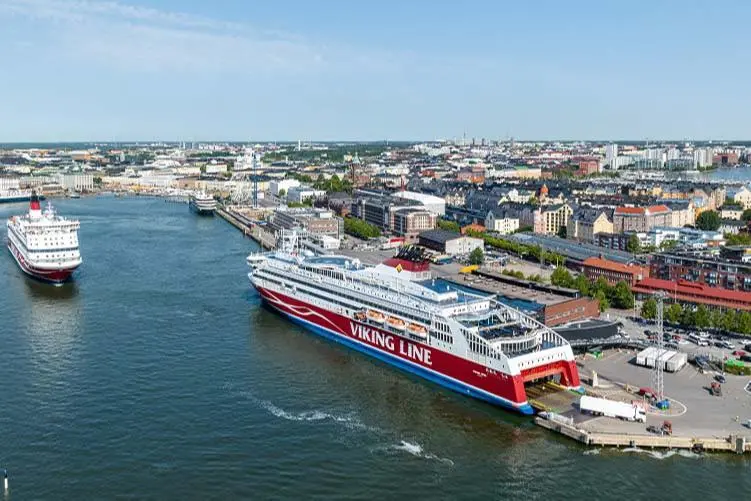
The US$15 billion EU Sustainable Hydrogen-Powered Shipping Project (sHYpS), will also see modular shipping container fuel cell systems supplied in 40-foot shipping containers, giving ports the same flexibility in refueling and distribution of the fuel as it would by container ship.
“The cruise and shipping industry’s journey toward decarbonization is non-negotiable, and the sHYpS project will drive us towards a more sustainable and environmentally responsible future for the maritime industry,” said Sprintex CEO Jay Upton, CEO, Sprintex.
“The industry is navigating uncharted waters as it confronts one of its most formidable challenges yet: achieving zero-emission navigation and the clock is ticking.”
Modular supply
The sHYpS project, which involves involves 13 partner companies in six countries, will see one of Viking’s newbuild fjords cruise vessels be equipped with around 100 megawatts (mW) of electrical power, derived from modular hydrogen fuel cells.
As project lead, Naval Progetti will design the fuel gas handling system. Sprintex has delivered high-speed electric compressors which are essential for the overall efficiency and performance of the fuel cell systems.
“The beauty of this collaboration is that the hydrogen fuel cell systems can be stored in standard 40-foot shipping containers,” Mr Upton added.
“This also eliminates the need for any new or additional infrastructure to allow these hydrogen powered zero emission liners to operate any route worldwide. So, a cruise line can have these containers with the fuel cell systems on standby in a port of their choice and then just swap them out like battery packs.”
A hydrogen fuel cell compressor is a crucial component of a hydrogen fuel cell system.
In hydrogen fuel cells, hydrogen gas is combined with oxygen from the air to produce electricity, with water vapour as the only byproduct.
However, the hydrogen used in fuel cells needs to be at a specific pressure for efficient and optimal performance. This is where the hydrogen fuel cell compressor comes into play.
Sprintex secured an initial order of its S26 fuel cell compressors from the UK-based company Ricardo and expects to generate revenue of US$1 million from the deal.
Related Articles
 ALTERNATIVE FUELS GREENPORT
 ALTERNATIVE FUELS GREENPORT
 ALTERNATIVE FUELS GREENPORT