![GreenPort[PortStrategy]](https://www.portstrategy.com/greenport/wp-content/uploads/sites/4/2026/09/GreenPortPortStrategy.svg)


India’s green hydrogen ambitions
India has a mission clearly set out on World Hydrogen Day – that is to develop its expertise in the green fuel in order to expedite the country’s energy transition.
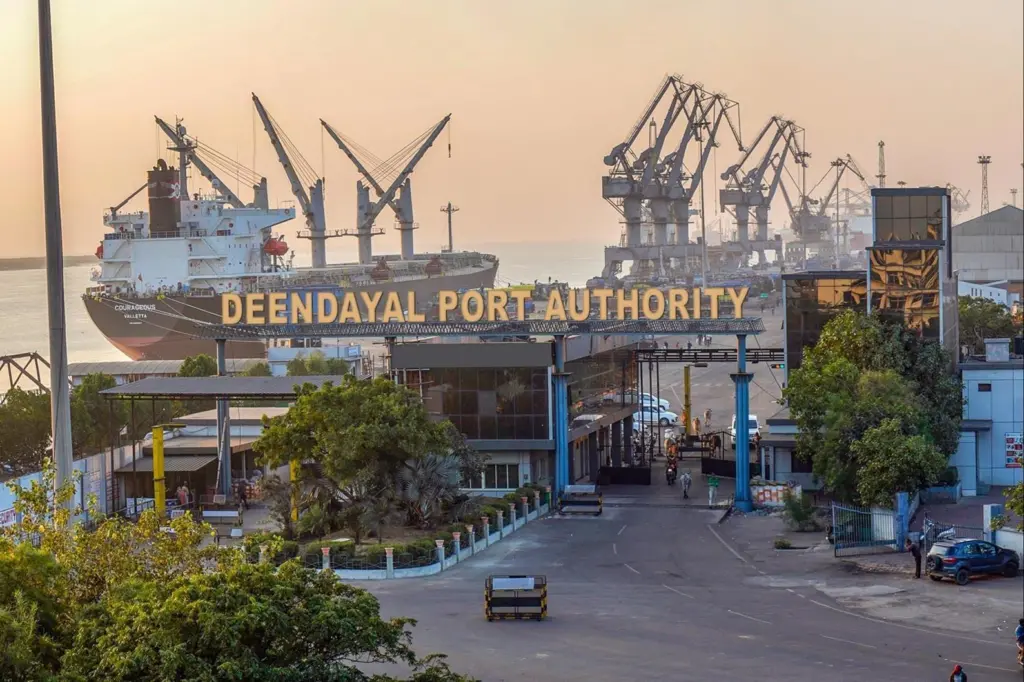
It has formally recognised three major ports as ‘Green Hydrogen Hubs’ under its National Green Hydrogen Mission – Deendayal Port Authority in Gujarat, V.O. Chidambaranar Port Authority in Tamil Nadu and Paradip Port Authority in Odisha.
The Ministry said in a statement that this recognition marks a “significant step towards creating an integrated hydrogen ecosystem and advancing India’s transition towards clean energy.”
World Hydrogen Day
India’s Ministry of New & Renewable Energy (MNRE) celebrated World Hydrogen and Fuel Cell Day 2025 at Atal Akshay Urja Bhawan, New Delhi, under the theme “Green Hydrogen for a Greener Tomorrow.”
Shri Santosh Sarangi, Secretary, MNRE delivered the inaugural address in which he expressed optimism over India’s growing green hydrogen economy.
He highlighted the strong commitment from both Government and private sectors, significant project progress and heavy private investments driving the sector.
Green hydrogen is playing a pivotal role in energy security, transportation and global market expansion, with India achieving competitive prices, marking a promising future for the nation’s green hydrogen journey.
“India stands at the threshold of a new era of energy transition. Green hydrogen plays a unique role in advancing our climate goals, strengthening energy security and driving industrial innovation,” he said.
”The National Green Hydrogen Mission aims to make India a global hub for Green Hydrogen production, consumption and export. With significant progress underway — including a projected production and supply of 7.24 lakh tonnes per annum of Green Ammonia at the lowest global price of ₹49.75/kg – our focus on research and development is laying the foundation for a self-reliant and future-ready India.”
Under the country’s National Green Hydrogen Mission, the Government has set out clear and ambitious goals: Producing 5 million metric tonnes of green hydrogen by 2030, building 125 GW of renewable capacity, mobilising ₹8 lakh crore of investment, creating 6 lakh jobs and reducing 50 million tonnes of CO₂ every year.
Having gone from vision to action in just two years, India is certainly charging forward to help lead the global clean energy transition.
Related Articles
 ALTERNATIVE FUELS GREENPORT
 ALTERNATIVE FUELS GREENPORT
 ALTERNATIVE FUELS GREENPORT