![GreenPort[PortStrategy]](https://www.portstrategy.com/greenport/wp-content/uploads/sites/4/2026/09/GreenPortPortStrategy.svg)

Kandla advances green hydrogen storage
Deendayal Port Authority is working on a pilot-scale green hydrogen project at Kandla, Gujarat, centred on metal hydride storage and fuel cell power generation integrated with existing port infrastructure.
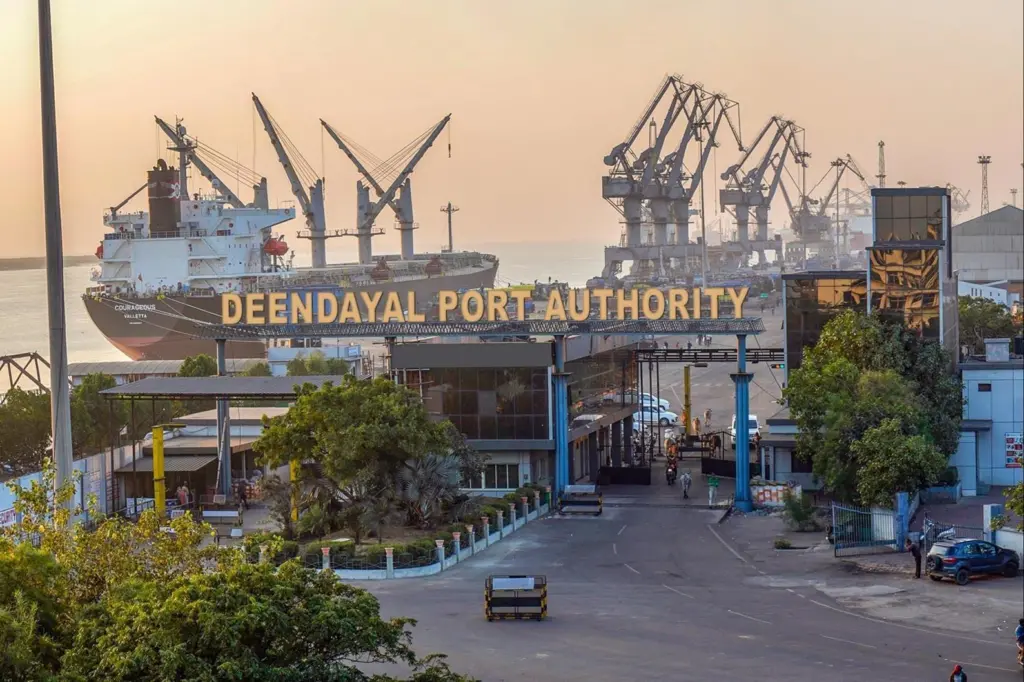
The US$350,000 project will establish a hydrogen storage system with a minimum capacity of 3 kg using metal hydride technology, coupled with a fuel cell system capable of generating at least 4 kW of electricity. The installation is designed as a compact, containerised unit, enabling portability and deployment flexibility within port operations.
A key feature of the system is its integration with the port’s existing 1 MW green hydrogen plant at Oil Jetty-7. This connection is intended to demonstrate how stored hydrogen can be converted into usable power for port applications, supporting a hybrid energy ecosystem. The system will be configured to deliver output compatible with both single-phase and three-phase electricity supply.
The technical scope includes hydrogen purification and filtration units, along with a pressure regulation system to ensure consistent fuel quality. Equipment such as the metal hydride storage units, fuel cells and associated batteries will be housed within protective containers engineered to withstand Kandla’s saline coastal environment.
Beyond installation, the project includes testing, commissioning and a two-year operational phase. This comprises a defect liability period followed by comprehensive operation and maintenance, allowing performance validation under real-world conditions.
The system must be completed within six months and designed for interconnection at 220/440 voltage levels. Once operational, it will serve as a demonstration of decentralised hydrogen storage and on-demand power generation within a port setting.
The initiative aligns with Gujarat’s wider push to scale green hydrogen production and infrastructure, positioning Kandla as an early adopter of emerging storage and usage technologies in India’s maritime sector.
READ MORE: India’s green hydrogen ambitions
Related Articles
 ALTERNATIVE FUELS GREENPORT
 ALTERNATIVE FUELS GREENPORT
 ALTERNATIVE FUELS GREENPORT