![GreenPort[PortStrategy]](https://www.portstrategy.com/greenport/wp-content/uploads/sites/4/2026/09/GreenPortPortStrategy.svg)
LA’s zero-emission harbour craft drive
The Port of Los Angeles will test renewable diesel and zero-emission technologies for harbour craft thanks to a US$31 million California Air Resources Board (CARB) grant.
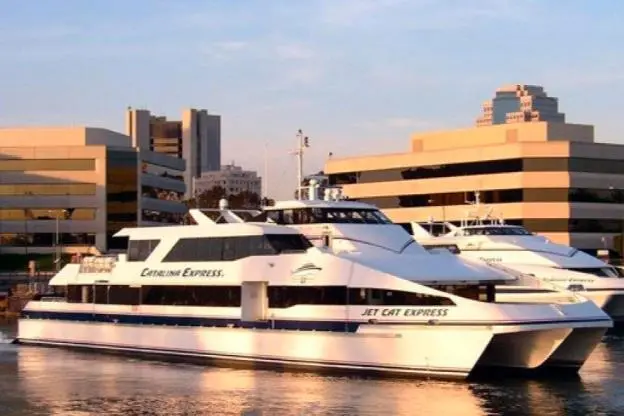
The Los Angeles Marine Emission Reduction (LA MER) project in partnership with Catalina Express and Harbor Breeze Cruises, includes building a passenger ferry and two zero-emission-capable port vessels to advance cleaner marine technologies.
“To achieve our goal of becoming a zero-emission port, we need to incorporate a range of emission-reduction technologies throughout our port complex, as well as promote their commercialisation,” said Gene Seroka, executive director, Port of Los Angeles.
Renewable power
Catalina Express will construct a new ferry powered by Tier 4 engines and renewable diesel, replacing older vessels to improve efficiency and emissions.
“In addition to the re-engine projects, the company has worked with their fuel provider to migrate a majority of the Catalina Express vessels to renewable diesel, which is derived from a base of soybean oil and other vegetable stocks,” said Greg Bombard, president and CEO of Catalina Express.
Meanwhile, Harbor Breeze Cruises will introduce two zero-emission-capable excursion boats, designed to operate in emission-free mode for up to 100% of trips.
“The forward-thinking San Pedro Bay ports are tackling local and global challenges to reduce pollutants and create a healthier community,” said Capt Dan Salas, founder of Harbor Breeze Cruises.
Grant partners Catalina Express and Harbor Breeze Cruises will each contribute a US$15 million match toward their respective demonstration programme. The Los Angeles Harbor Commission has approved US$650,000 of Port of Los Angeles funds to help fund the project evaluation study.
Port of Long Beach will contribute approximately US$340,000 to support the Port of Los Angeles’ technology evaluation in coordination with harbour craft operators, regulators, engine manufacturers, technology developers and the U.S. Coast Guard.
The project will also look at workforce development needs related to training harbour-craft workers in new engine technologies and advanced battery-electric solutions for tugs, ferries and pilot boats operating in the San Pedro Bay.
Related Articles
 ALTERNATIVE FUELS GREENPORT
 ALTERNATIVE FUELS GREENPORT
 ALTERNATIVE FUELS GREENPORT