![GreenPort[PortStrategy]](https://www.portstrategy.com/greenport/wp-content/uploads/sites/4/2026/09/GreenPortPortStrategy.svg)


Methanol-to-hydrogen: Shorepower alternative?
Methanol-to-hydrogen technology presents a viable and scalable alternative to the challenges ports face in adopting grid-based shorepower solutions.
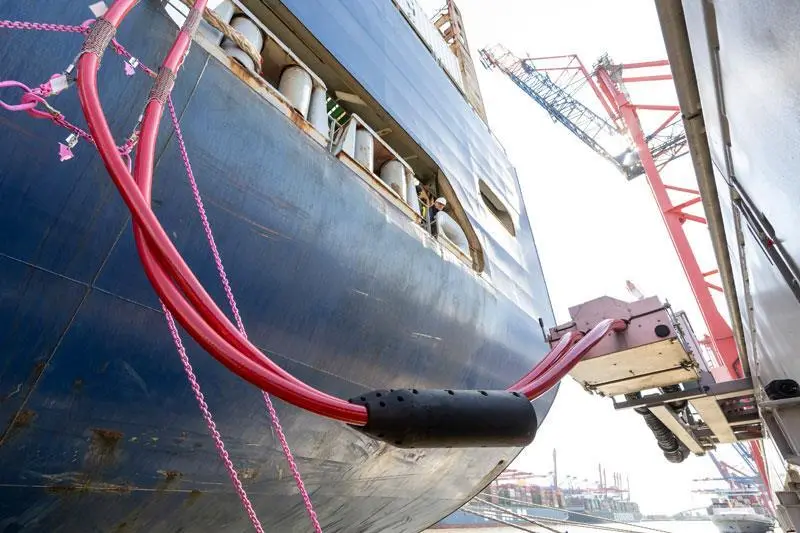
Traditional shorepower – often seen as the key to decarbonising ports – faces significant hurdles, including infrastructure limitations, high costs and reliance on electricity grids that are often already stretched thin.
Unlike shorepower, which requires costly upgrades and faces grid limitations, methanol-to-hydrogen technology can generate fuel-cell-grade hydrogen on-demand by reforming methanol with water, eliminating the need for high-capacity shore power connections.
This approach offers significant environmental benefits, reducing up to 85% of greenhouse gas emissions and eliminating 99% of pollutants like NOx, SOx and particulate matter.
What makes methanol-to-hydrogen especially attractive is its energy density. Methanol is six times more energy-dense than compressed hydrogen, already available at over 125 ports globally.
The technology provides a stable, uninterrupted energy supply, enabling ports to scale their decarbonisation efforts without waiting for costly grid upgrades or depending on inconsistent power sources.
Additionally, this solution can be applied beyond vessel shorepower, powering port operations such as cranes and container handlers, which streamlines infrastructure investments and accelerates emissions reductions.
By embracing methanol-to-hydrogen technology, ports can meet sustainability goals more quickly while ensuring long-term energy independence, making it a practical and effective alternative in the global push for maritime decarbonisation.
Related Articles
 ALTERNATIVE FUELS GREENPORT
 ALTERNATIVE FUELS GREENPORT
 ALTERNATIVE FUELS GREENPORT