![GreenPort[PortStrategy]](https://www.portstrategy.com/greenport/wp-content/uploads/sites/4/2026/09/GreenPortPortStrategy.svg)
Newcastle accelerates push towards clean energy
Australia’s Port of Newcastle has further increased its commitment to clean energy by joining the Platform Zero Global Partnership for Hydrogen Innovation.
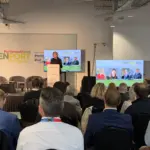
Craig Carmody, CEO and Simon Byrnes, CCO, signed a Memorandum of Understanding to join the collaborative global partnership for hydrogen innovation during the World Hydrogen Summit in the Netherlands.
“This partnership is another milestone of our diversification strategy. It puts Port of Newcastle at the table alongside like-minded global leaders in the sector, enabling us to work together to develop and scale innovative hydrogen technologies and overcome key bottlenecks to enable the hydrogen and clean energy transition and trade pathways,” says Mr Carmody.
Hydrogen transition
Newcastle is the only Australian port represented in the partnership, which seeks to accelerate the transition towards renewable energy.
Mr Carmody said the benefits of this virtual global innovation hub will be exponential, allowing Newcastle and its surrounding region to learn from international ports, researchers and clean energy producers.
As a finalist at the World Hydrogen 2023 Awards in the Port of the Future Award category, and being the designated hydrogen hub for the Australian state of New South Wales, Newcastle is looking to develop infrastructure to support storage, transportation and scaling of innovative hydrogen technologies that enable the clean energy transition.
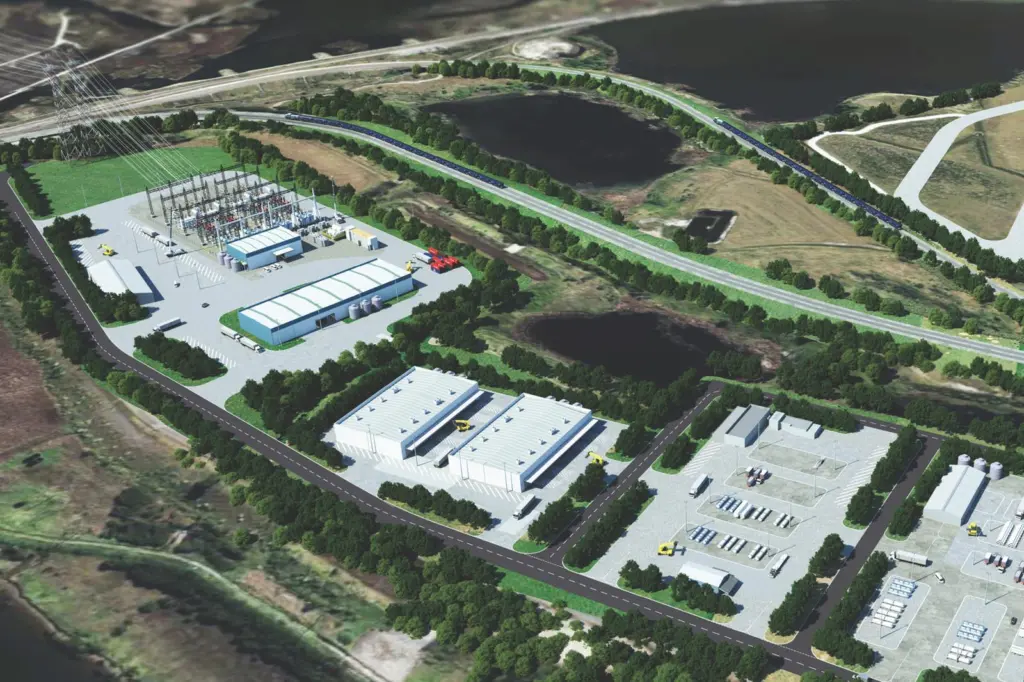
In May, Newcastle unveiled its blueprint for the Port of the Future, releasing artist’s impressions of Stage 1 of its future Clean Energy Precinct site.
A 220-hectare parcel of port land has been earmarked for development to position Newcastle and the Hunter Region as a leading production, storage and export hub for future clean energy products and technologies, including hydrogen and green ammonia.
The Clean Energy Precinct will leverage economies of scale by co-locating hydrogen producers, users and exporters in one location, while common-user shared infrastructure will drive down the cost of hydrogen.
Port infrastructure
Stage 1 of the project will comprise establishment of lead-in infrastructure including ancillary and civil works such as site buildings, offices and administration facilities, internal roads, car parking, warehousing, laydown areas, storage yards, staging areas and a clean energy storage facility with associated pipelines.
Electrical infrastructure will include grid connections, transmission infrastructure, a substation and switchyard. Water and wastewater infrastructure will include network connections and supply corridors.
Construction is targeted to commence in 2025, subject to relevant planning approvals, with the port aiming to have the Clean Energy Precinct fully operational in 2028.
Newcastle has worked for over two years to accelerate plans for hydrogen readiness, domestic decarbonisation and clean energy export. The Clean Energy Precinct is a cornerstone of that diversification strategy and is seen as a once-in-a-generation opportunity to reshape the Hunter region’s energy economy and drive the development of new trade flows and industries of the future.
“Through the Clean Energy Precinct, Port of Newcastle will support all hydrogen, and clean energy projects in the Hunter by providing land, utilities, storage, transport and export infrastructure and services – in turn generating over 5800 jobs, new educational pathways and expanded economic growth,” Mr Carmody says.
Minister for the Hunter and NSW MP for Newcastle, Tim Crakanthorp, says the benefits of the port’s Clean Energy Precinct for the region cannot be understated.
“The Hunter’s economy is changing, and the opportunities in this Clean Energy Precinct will be massive. As we diversify our skills, business and jobs market, the benefits of this precinct will be felt all across the Hunter.”
The landmark project has received a A$100-million Federal Government funding commitment.
Related Articles
 ALTERNATIVE FUELS GREENPORT
 ALTERNATIVE FUELS GREENPORT
 ALTERNATIVE FUELS GREENPORT