![GreenPort[PortStrategy]](https://www.portstrategy.com/greenport/wp-content/uploads/sites/4/2026/09/GreenPortPortStrategy.svg)


Ports unite on carbon capture infrastructure
Key UK and European port and infrastructure players have signed agreements to advance carbon capture and transport in the North Sea, with a view to strengthening port infrastructure for the energy transition.
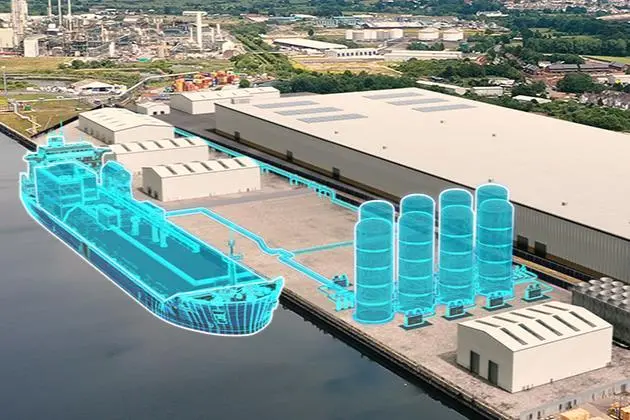
The partnership brings together Associated British Ports (ABP), LBC Tank Terminals, North Sea Port and the Port of Esbjerg to study carbon capture shipping corridors between Northern Europe and the UK, sharing expertise across this emerging market.
“Ports have always been gateways for energy. Today, they are at the forefront of the energy transition,” said Henrik Pedersen, chief executive officer of Associated British Ports.
”This agreement is about building the infrastructure and partnerships needed to decarbonise industry and create new opportunities for sustainable growth.”
Infrastructure focus
The Memoranda of Understanding focus on developing port infrastructure for CO₂ handling, storage and shipping, building a robust cross-border value chain and driving efficiencies in carbon capture, utilisation and storage transport.
Shipping captured CO₂ is positioned as a vital step in decarbonising heavy industry while safeguarding jobs and creating a new energy commodity.
ABP has already secured planning approval for a carbon capture handling terminal at the Port of Immingham, linked to the Viking CCS cluster, supported by the UK’s world-leading geological storage capacity.
LBC contributes operational expertise in temporary storage, processing and shipment, while North Sea Port’s central location and logistics capabilities support cross-border carbon capture initiatives.
The Port of Esbjerg plays a central role in the Greensand CCS project, with construction under way on a CO₂ transit terminal to support the EU’s first full CCS value chain.
Together, the partners aim to position ports as critical enablers of carbon capture shipping, reinforcing their strategic role in the energy transition and Europe’s decarbonisation ambitions.
Related Articles
 ALTERNATIVE FUELS GREENPORT
 ALTERNATIVE FUELS GREENPORT
 ALTERNATIVE FUELS GREENPORT