![GreenPort[PortStrategy]](https://www.portstrategy.com/greenport/wp-content/uploads/sites/4/2026/09/GreenPortPortStrategy.svg)


Revised Alternative Fuels Infrastructure Regulation
The European Union’s Alternative Fuels Infrastructure Regulation (AFIR) mandates member states to develop port infrastructure that supports alternative fuels, in order to reduce greenhouse gas emissions and promote sustainable maritime transport.
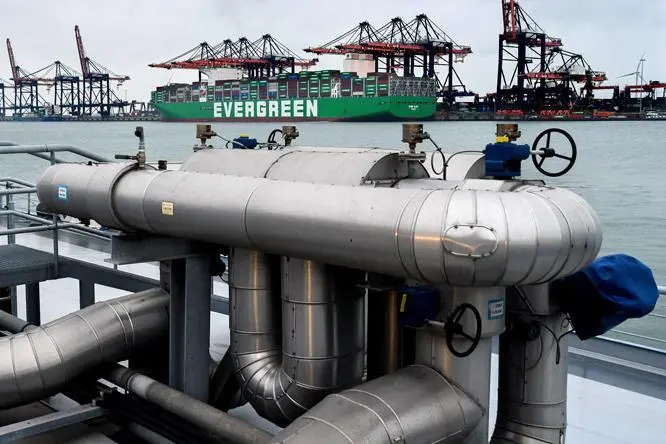
Lloyds Register highlights that EEA member states now have to submit their own national policy frameworks (NPFs) with their national targets for rolling out infrastructure to support the uptake of renewable and low-carbon fuels.
In addition, under the EU Fit For 55 package, the existing Alternative Fuels Infrastructure Directive (Dir 2014/94/EU) is being revised and recast as a Regulation in EU law, some of which enters into force in January 2025.
Green port development
The regulation emphasises the development of port infrastructure to support alternative fuels, including electricity, hydrogen and biofuels.
By focusing on the provision of alternative fuels, AFIR aims to significantly reduce port emissions, contributing to the EU’s broader climate neutrality goals.
It also seeks to eliminate market barriers and ensure the availability of necessary infrastructure for renewable and low-carbon fuels, facilitating compliance with the FuelEU Maritime regulations.
Going forward, AFIR will introduce more requirements and technical specifications around provision of hydrogen, methanol and ammonia and electricity supply for battery recharging.
But it’s also introducing mandatory provision of onshore power supply (OPS) facilities and providing the technical specifications to standardise this.
What this means for maritime ports is that by 1 January 2030 maritime ports will need sufficient OPS to meet demand for at least 90% of the average annual number of port calls in the last three years for container and passenger ships.
Inland waterway ports will need at least one OPS installation in all TEN-T core ports by 1 January 2025 and at least one OPS installation in all TEN-T comprehensive ports by 1 January 2030.
Going forward, there will also need to be appropriate LNG refuelling points in TEN-T core ports.
Related Articles
 ALTERNATIVE FUELS GREENPORT
 ALTERNATIVE FUELS GREENPORT
 ALTERNATIVE FUELS GREENPORT