![GreenPort[PortStrategy]](https://www.portstrategy.com/greenport/wp-content/uploads/sites/4/2026/09/GreenPortPortStrategy.svg)


Rotterdam readies itself for ammonia bunkering
The Port of Rotterdam has completed its first ammonia bunkering pilot, a key step in preparing the port for the future safe and efficient transfer of the fuel.
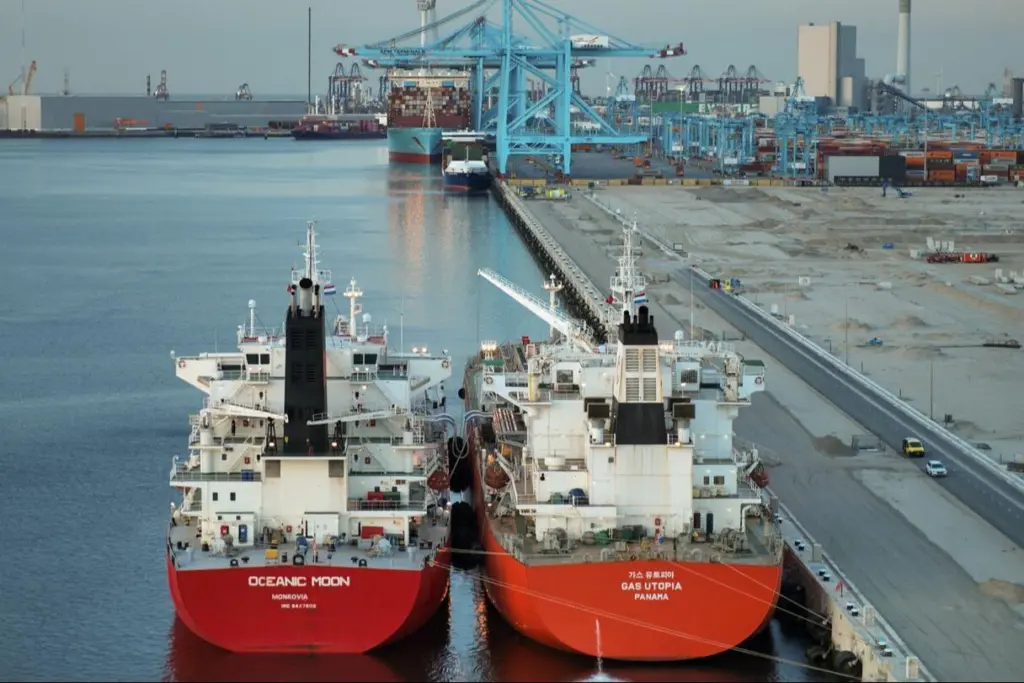
In the port’s first ship-to-ship transfer, 800 cubic metres of liquid ammonia was bunkered at the Maasvlakte 2 APM terminal in an operation conducted by Trammo, OCI and James Fisher Fendercare.
“This pilot shows that ammonia bunkering can be done without releasing emissions into the port environment,” said a spokesperson from the Port of Rotterdam Authority.
“It’s a milestone in making shipping more sustainable.”
Bunkering milestone
Ammonia, a zero-carbon fuel, does not emit CO₂ when combusted. Although grey ammonia was used in the test, the port aims to facilitate clean ammonia bunkering in the future.
The initiative is part of a wider ambition to transform Rotterdam into a hub for alternative fuels. Already the world’s second-largest port for marine fuel, Rotterdam is preparing to enable bunkering for all low-carbon alternatives.
Rotterdam uses the international Port Readiness Level assessment tool to prepare for all new marine fuels. This ensures that various steps will be taken to ensure that all regulatory, safety, infrastructural and supply factors are in order.
The port has already fully implemented this method for LNG and, to a large degree, for methanol. For ammonia, the pilot concludes level 6 and raises the port’s readiness to level 7, with all safety procedures ready to allow bunkering on a project basis.
Supported by the EU’s Horizon 2020-funded MAGPIE programme, the pilot project involved collaboration from multiple safety and logistics organisations. It also aims to share best practice ammonia bunkering procedures with ports across Europe.
The first ships capable of using ammonia as a bunker fuel are expected in Rotterdam 2026 or 2027.
Related Articles
 ALTERNATIVE FUELS GREENPORT
 ALTERNATIVE FUELS GREENPORT
 ALTERNATIVE FUELS GREENPORT