![GreenPort[PortStrategy]](https://www.portstrategy.com/greenport/wp-content/uploads/sites/4/2026/09/GreenPortPortStrategy.svg)
Rotterdam tackles hydrogen demand uncertainty
The Port of Rotterdam Authority is working to accelerate the import of hydrogen carriers but market uncertainty needs to be overcome first.
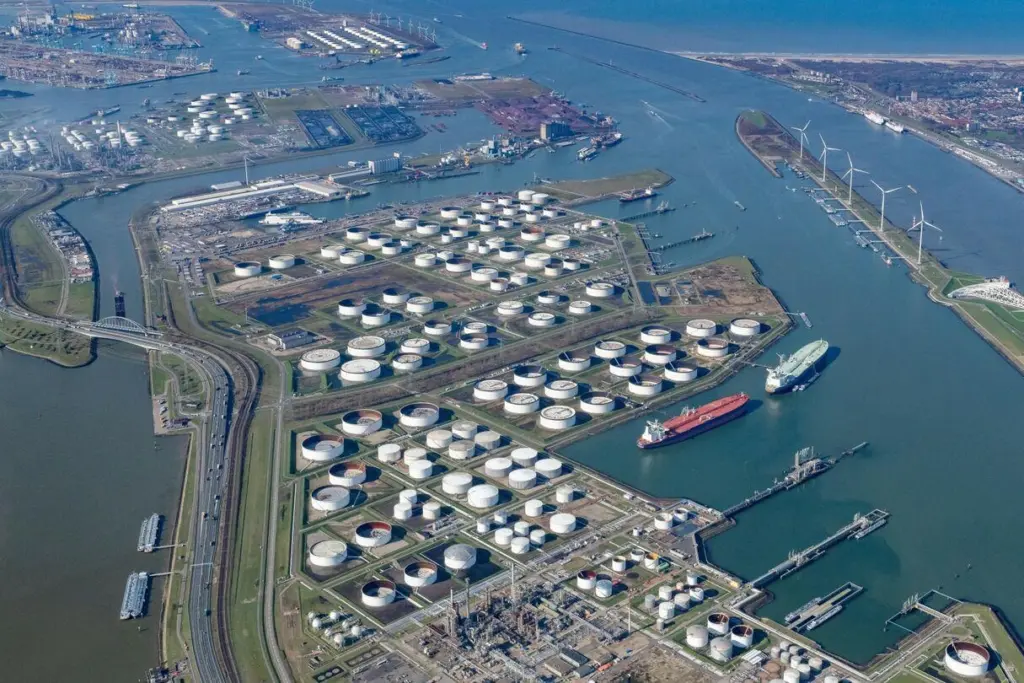
To this end, the port authority has conducted a market consultation to gain insight into the concrete bottlenecks and possible solutions.
Research has shown that various financial and non-financial risks are the reason why companies are hesitant to invest currently in import terminals and conversion plants.
Risk factors
One of the main risks, according to the port, is the demand uncertainty for renewable energy carriers, which is connected to unclarity about the implementation of policies to stimulate demand.
Next there is the issue of power grid congestion and lagging pipeline infrastructure.
The market consultation shows that at least nine companies are making plans for terminals that can handle ammonia, methanol, liquid hydrogen, or LOHC, with or without conversion on site into hydrogen via ammonia cracking or LOHC dehydrogenation plants.
Most companies expect that terminals will not be operational until after 2030.
Construction of these new terminals quickly amount to several hundred million euros, which is why companies want a certain degree of certainty that they can recover their investment.
In addition companies see uncertainty about permits, especially regarding nitrogen deposits and the unpredictability of procedure timelines and the lack of infrastructure to the hinterland (such as the Delta Rhine Corridor to Germany), as key issues.
There is also uncertainty about policies, including a stable long term climate policy stimulating demand.
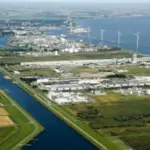
A hydrogen system is under construction in the Port of Rotterdam, combining production and use primarily in industry, as well as the import and transit of hydrogen to other parts of Northwest Europe.
The port authority said that despite challenges posed by increased costs and economic uncertainties, the system is steadily taking shape. This is largely down working closely together with both public and private partners to achieve a common objective.
Related Articles
 ALTERNATIVE FUELS GREENPORT
 ALTERNATIVE FUELS GREENPORT
 ALTERNATIVE FUELS GREENPORT