![GreenPort[PortStrategy]](https://www.portstrategy.com/greenport/wp-content/uploads/sites/4/2026/09/GreenPortPortStrategy.svg)



SAGT unveils decarbonisation plans
South Asia Gateway Terminals has unveiled a raft of measures aimed at decarbonising port operations.
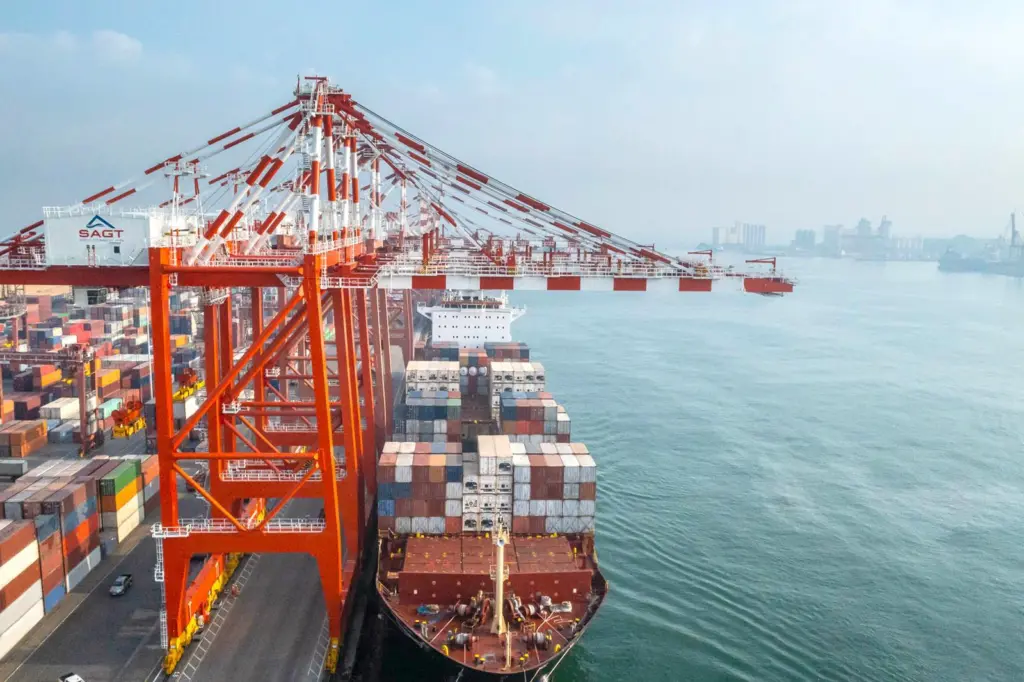
Celebrating its 25th anniversary this year, the terminal operator is exploring electrification, renewable energies and alternative fuels in a bid to increase sustainability at the Port of Colombo in Sri Lanka.
With a current fleet of 31 rubber-tyred gantry cranes, of which 22 are hybrid, SAGT plans to hybridise six more to reduce the company’s scope 1 emissions.
So far the move to hybrid cranes has halved diesel consumption per RTG move, saving 3,900 tonnes of CO2e emissions.
The operator is also keen to embrace alternative fuels and is exploring whether the RTGs could be run on hydrogen. It is also planning to electrify 30 prime movers from its fleet as well as a diesel-powered forklift.
SAGT is currently exploring fitting solar panels with a capacity of 461.6kW on the roof of its office building, which would generate around 7% of the annual power requirement from the company’s yard and building areas.
In its efforts to reduce its freshwater use, SAGT is upgrading its effluent treatment plant, increasing capacity to 60 cubic metres of water per day, which equates to around 30% of the company’s daily usage. SAGT has also partnered with a shipping line on a pilot project to use water desalinated on board vessels in the terminal.
The company also partners with the Marine Environment Protection Authority, running annual beach cleans as well as being a member of the World Ocean Council.
Related Articles
 ALTERNATIVE FUELS GREENPORT
 ALTERNATIVE FUELS GREENPORT
 ALTERNATIVE FUELS GREENPORT