![GreenPort[PortStrategy]](https://www.portstrategy.com/greenport/wp-content/uploads/sites/4/2026/09/GreenPortPortStrategy.svg)
Ship-to-ship methanol bunkering milestone
The first-ever ship-to-ship methanol bunkering on a non-tanker vessel has taken place at the Port of Gothenburg helping realise another marine alternative fuels milestone.
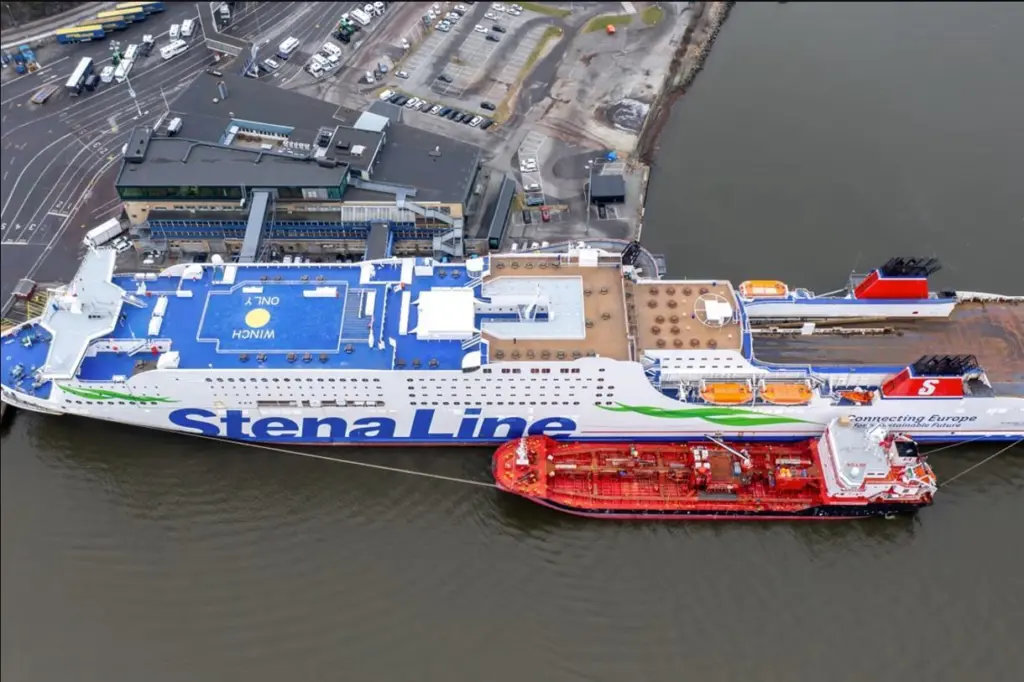
Stolt Tankers was part of the team that conducted the bunker operation at the port on Stena Line’s methanol-propelled roll-on/roll-off and passenger vessel Stena Germanica.
“This is a door-opening demonstration, proving that there is a feasible way to handle ship to ship methanol bunkering. This strengthens our position as a bunker hub and is also showcasing for other ports that this can be done in a safe and efficient way – not only here, but in other ports around the world as well,” said Christoffer Lillhage, senior business development manager energy at the Gothenburg Port Authority.
”The key to success is working together over the full value chain to find a pragmatic and safe approach for implementing bunker procedures for methanol.”
‘World-first’
Stena Germanica became the world’s first methanol-powered ferry in 2015 and, until now, it has been bunkered from trucks.
The successful bunkering was a collaborative effort between the Port of Gothenburg, which was the first in the world to publish operating regulations for methanol bunkering in April 2022; Stena Line, the owner of the vessel, the purchaser of the methanol; methanol producer and supplier Methanex; and Stolt Tankers, which carried out the bunkering itself.
Methanol as a marine fuel has positive environmental and climate properties and is making strong progress in international shipping.
For example, the world’s largest container shipping company Maersk Line has 19 larger methanol propelled container ships on order. X-Press Feeders is another major player that will start launching eight methanol propelled vessels already this year, and many other shipping companies are placing new methanol vessels in the order books.
The Port of Gothenburg has a long history of advocating and facilitating alternative fuels in the transition to greener shipping. It has the belief that a mix of alternative fuels is required going forward, where methanol is a key component.
Related Articles
 ALTERNATIVE FUELS GREENPORT
 ALTERNATIVE FUELS GREENPORT
 ALTERNATIVE FUELS GREENPORT