![GreenPort[PortStrategy]](https://www.portstrategy.com/greenport/wp-content/uploads/sites/4/2026/09/GreenPortPortStrategy.svg)



US hydrogen hubs plan moves closer to fruition
Ambitious plans to establish a number of regional hydrogen hubs across America moved closer after the US administration announced funding for seven regional projects.
The seven shortlisted H2Hubs have been allocated a proportion of a US$7 billion fund. If all the shortlisted projects proceed, they will produce 3 million tonnes of hydrogen per year, representing almost one-third of the US’s 2030 production target of 10 mt.
The initial tranche of the US$7bn award will be allocated for the development of detailed project proposals, with the bulk of the funding awaiting US Department of Energy (DoE) approval for the project plans prior to disbursal.
The projects are expected to attract co-funding from individual project participants of up to US$40bn, which could potentially lead to a US$50bn investment in renewable hydrogen production in the US if all the projects are delivered.
Strategically placed
The seven regional hubs are widely distributed geographically, ranging from the Pacific Northwest and California to the Midwest states and the mid-Atlantic seaboard.
These hydrogen hubs have been chosen to cover a wide range of potential production routes for renewable hydrogen, including a blue hydrogen focused hub incorporating carbon capture in the Appalachian region, that is likely to seek to make use of the region’s disused mining areas as potential locations for carbon sequestration.
The Midwest Hydrogen Hub is seeking to produce electricity from regional nuclear generators to produce hydrogen.
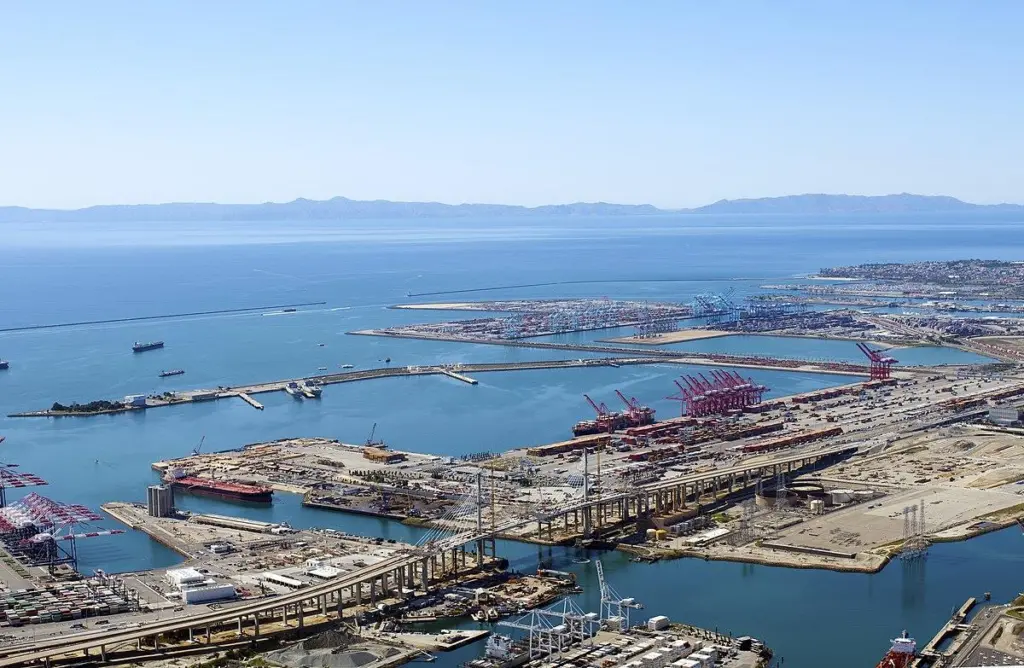
Several of the potential hydrogen hubs will have direct maritime applications, with the California hub focused on producing green hydrogen via electrolysis which could then help to decarbonise port operations at the Port of Long Beach.
The Gulf Coast hydrogen hub, which includes ExxonMobil and Chevron among its project participants, was awarded US$1.2bn. The project includes the production of e-methanol for maritime fuel among its end-use markets.
Among projects that are expected to have an indirect impact on improving the feasibility of exporting US hydrogen is the Pacific Northwest Hydrogen Hub, which cites improvements in the efficiency of hydrogen electrolyser technology among its objectives. The US administration is targeting an 80% reduction in the cost of producing hydrogen to US$1/kg by 2030 as part of a drive to develop a flourishing hydrogen vector export sector.
The range of hubs include a number of different potential end-user markets, including heavy transportation, steel production and fertiliser production.
The seven shortlisted projects
Appalachian Hydrogen Hub West Virginia, Ohio, Pennsylvania Up to $925M
California Hydrogen Hub California Up to $1.2B
Gulf Coast Hydrogen Hub Texas Up to $1.2B
Heartland Hydrogen Hub Minnesota, North Dakota, South Dakota Up to $925M
Mid-Atlantic Hydrogen Hub Pennsylvania, Delaware, New Jersey Up to $750M
Midwest Hydrogen Hub Illinois, Indiana, Michigan Up to $1B
Pacific Northwest Hydrogen Hub Washington, Oregon, Montana Up to $1B
Source: US Department of Energy
Related Articles
 ALTERNATIVE FUELS GREENPORT
 ALTERNATIVE FUELS GREENPORT
 ALTERNATIVE FUELS GREENPORT